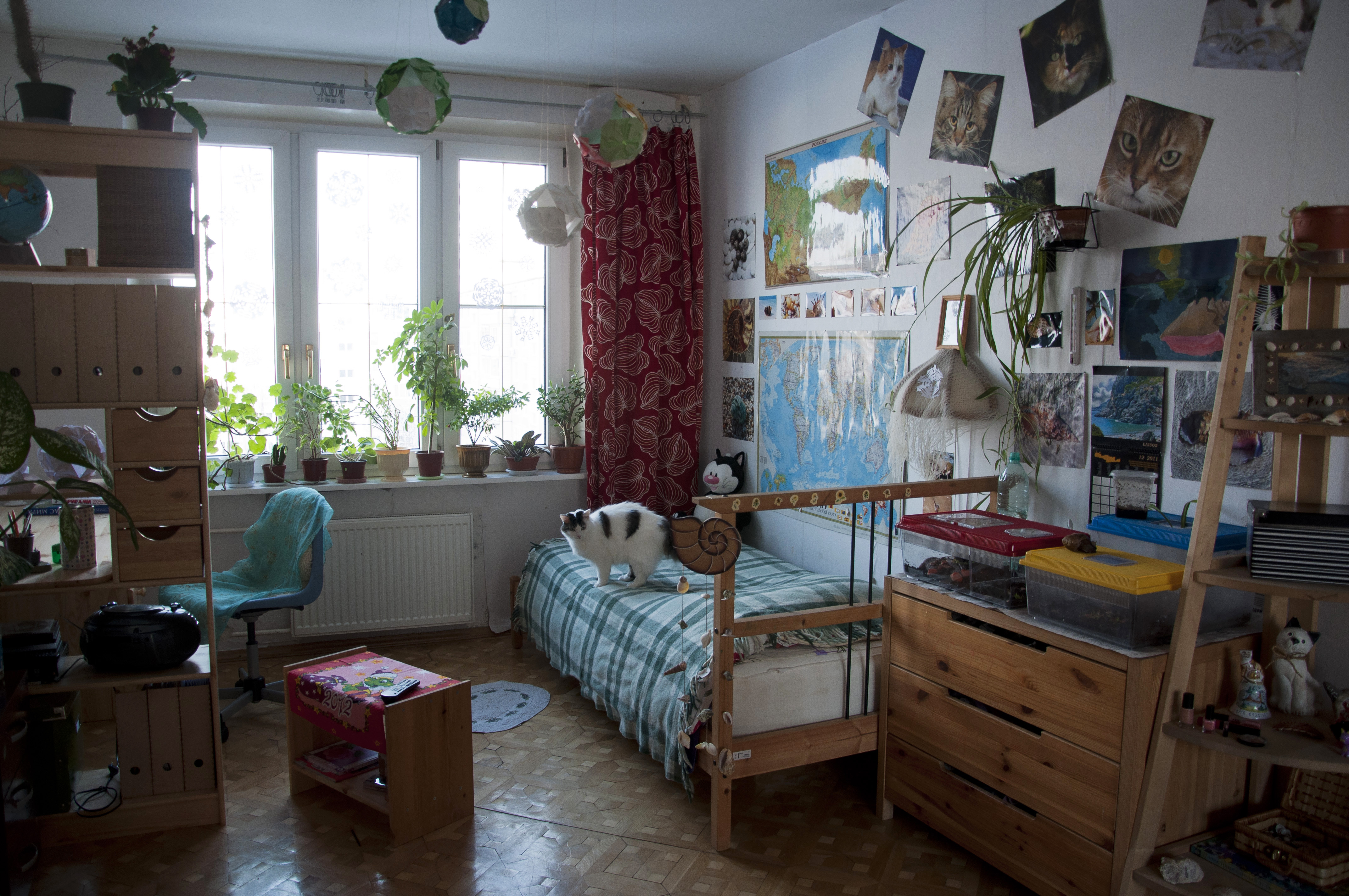
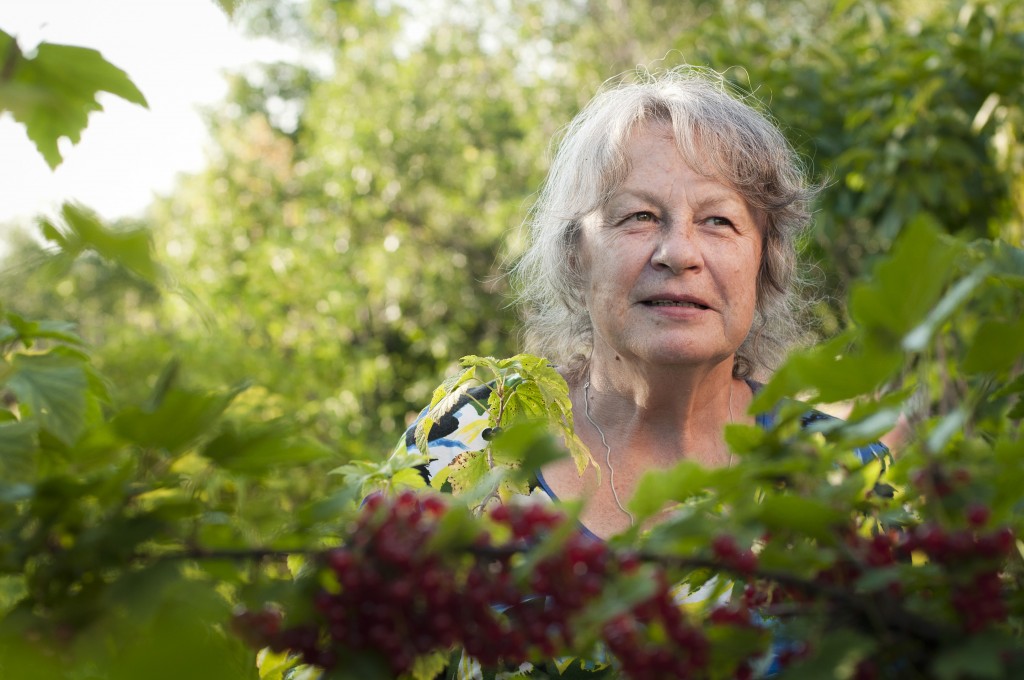
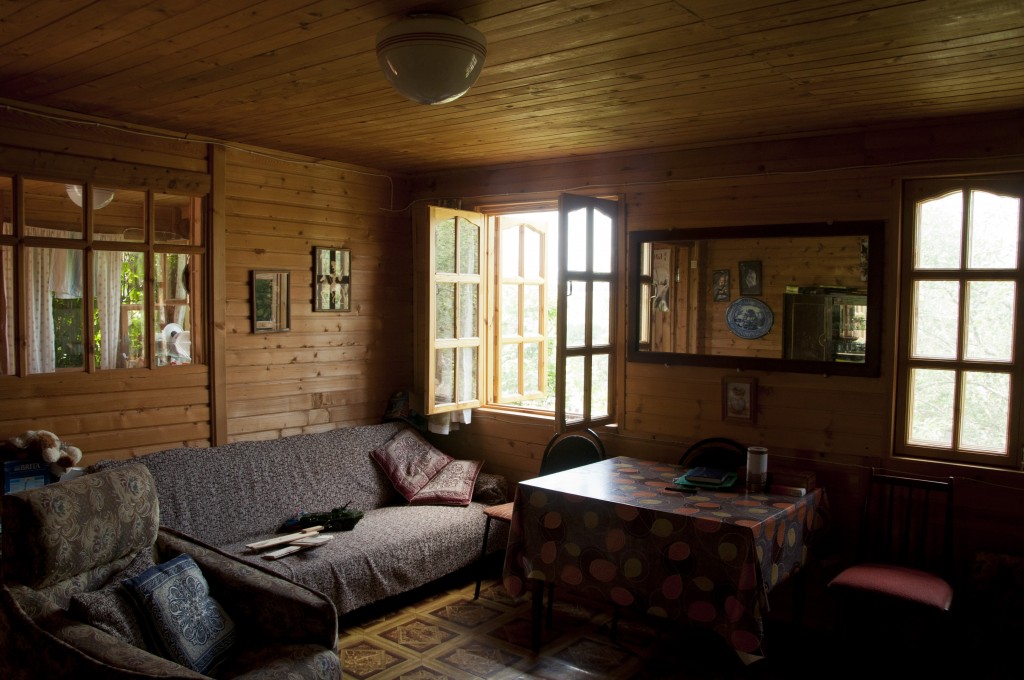
Russian Rooms is a multimedia project created and curated by Maria Rubin, Visiting International Scholar at Dickinson for the 2012-2014, showing portraits of average Russians in their home environment. You can read about each person and listen to an interview with them (in Russian) while viewing their portraits and the picture of the room they call their own. As discussed an earlier post, all the material created in this project becomes a part of the open teaching resources of the Dickinson Russian department, and is available to anyone else who wishes to use it.
In the spring of 2014 the students in Prof. Alyssa DeBlasio’s Russian translation class (RUSS 334) worked on translating these texts, and completed 15 additional entries. The work was carried out by four students: Chase Philpot, Abby Preston, Peter Sisson, and Maxim Demidov. Prof. DeBlasio reports that all the students did excellent work, and it was hard to pick one to highlight. When pressed, however, she suggested the following narrative, about a Tajik migrant worker in Moscow. The translation is by Abby Preston:
Roma is an illegal immigrant, a migrant worker. He came from Tajikistan to work in Moscow about ten years ago. Since then he has already changed jobs many times, and eventually he ended up in Moscow’s suburbs. In his homeland, Roma worked as a lawyer in a notary’s office and lived with his family in a historic stone house in the center of the city. Here in Russia he has worked as a guard, an administrator, a plant manager, and a construction worker.
Roma has lived in an old building in the greater Moscow area for almost four years, searching for a full-time job, getting acquainted with the locals, and earning money by working part time on the construction of country homes for some “new Russians”—Russians who became very wealthy after the fall of the Soviet Union. Roma would like to marry a Russian woman, but right now he is single. He maintains his room, cooks, and does laundry. He shares his room with a few other countrymen. During the day they work, and at night they sleep.
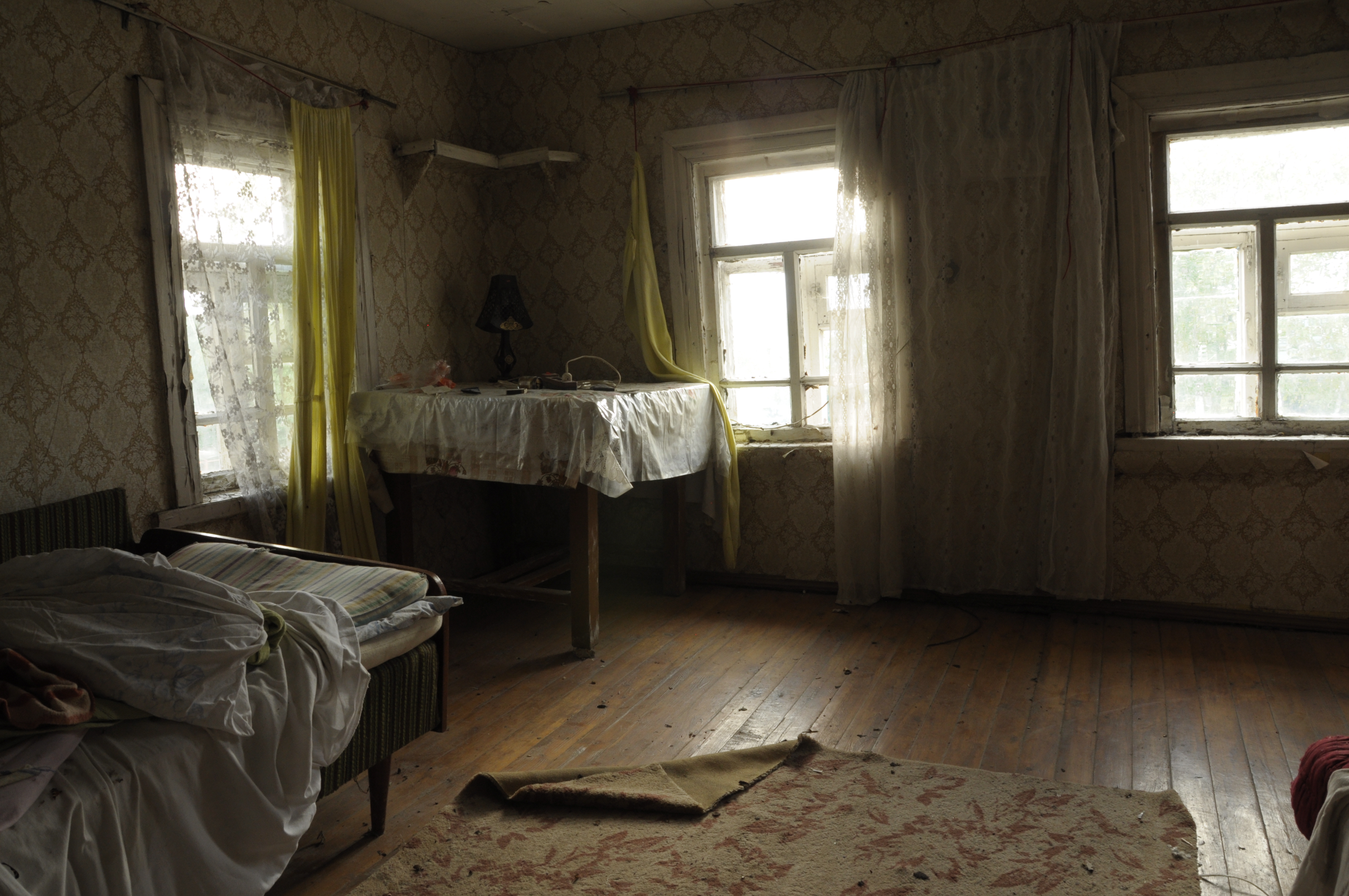
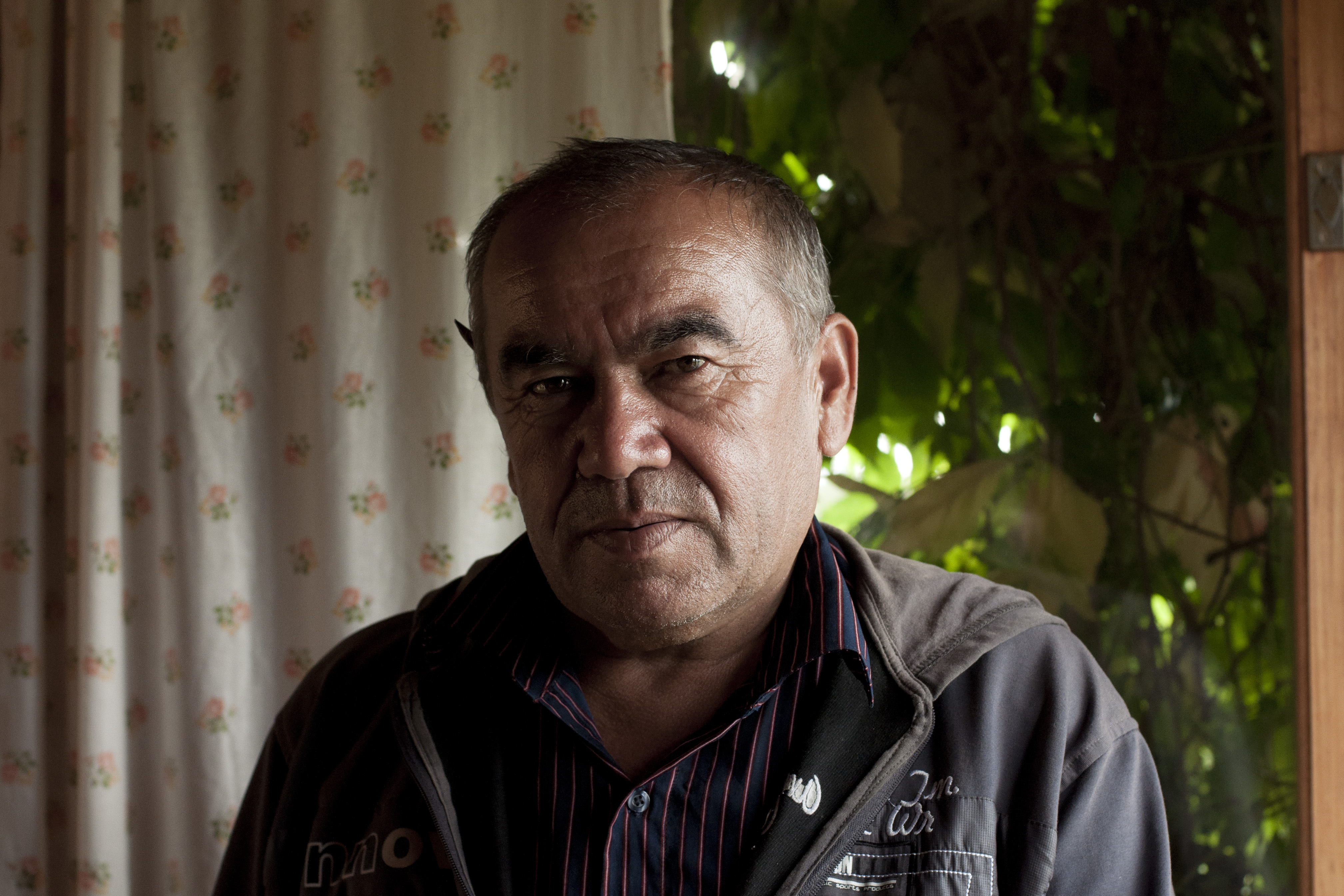
Photos by Maria Rubin. Source: http://blogs.dickinson.edu/russianrooms/2012/11/01/47/
For more, check out Russian Rooms!
 According to contemporary Russian philosopher Michael Epstein, the boundaries of private and public space are drawn differently in Russian and in the West: in Russia, private and public are demarcated far more sharply, and private space is warmer and more intense than in the West. This project seeks to test this premise. The site’s creator and curator is Maria Rubin, Visiting International Scholar in Russian. Prof. Rubin takes an intimate, close-up portrait of each subject standing next to or holding an object he or she values. She also takes a picture of the subject’s empty room. The viewer is invited to guess what sort of person inhabits the space, a curiosity which can be satisfied by referring to the portrait, the audio interview, and a transcribed version of the interview.