DCC Summer High School Internship Report

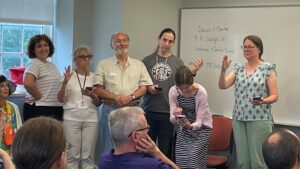
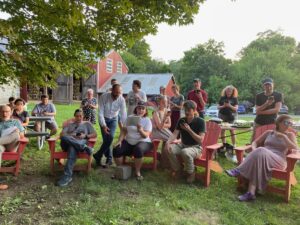
2026 was the third year of the DCC Summer High School Internship Program, which meant to give high school Latin and Greek students a chance to contribute to the site, learn digital humanities skills, improve their language skills, and collaborate with others under the supervision of professional classicists. Students contribute to publications on the site and receive credit on the site for all their contributions. An example of a completed project with student credits is now available on the site here, and several more texts are in the pipeline.

A huge thank you to everybody involved!!!

The internship lasted 6 weeks (June 22–July 31, 2026), and involved meeting over Zoom approximately 3–5 hours per week, depending on the project, plus asynchronous work.

Participants: this year the program grew from 75 participants last year to include

  • 96 students in 8 groups working on DCC with supervisors overseen by Christopher Francese.
  • About 60% were HS class of 2027 (having just completed their junior year), and the rest were class of ’28 (just completed sophomore year), apart from one from class of ’29 and one class of ’26.
  • Twenty-two states were represented, the top being New York (25), Massachusetts (10), Maryland (7), Pennsylvania (5), and California (5).

Supervisors:

  • Dr. Emma Dyson, Visiting Assistant Professor of Classical Studies
  • Ashley Roman Francese, Adjunct Faculty in Classical Studies
  • Dr. Christopher Francese, Asbury J. Clarke Professor of Classical Studies
  • Dr. Luther Karper, PhD in Ancient History, Brown 2019; Web Developer with Schweb Design, LLC, based in Shippensburg, PA
  • Christopher Martin, Chair of the Art Department, Shippensburg Area High School
  • Dr. Lucy McInerney, Director of the Writing Center, PhD in Classical Philology, Brown 2025
  • Dr. Alvaro Pires (PhD in Classical Philology, Brown 2025; Adjunct Faculty, Writing Program, Dickinson College)

Projects

Augustine, Confessions selections. 11 students working with Emma Dyson. The goal was to revise a draft commentary by William Turpin on excerpts from Augustine’s Confessions. The group read through selections 1-8 and 11. In the sessions they read Latin together at sight, and students made suggestions for the notes. Emma edited live based on their suggestions. When we came across especially difficult grammar, Emma assigned a student to draft a note at home in asynchronous work. They used Mondays to re-read the previous week’s material and double-check notes. The commentary is now ready for final editing and posting.

Petronius, Cena Trimalchionis. 10 students working with Christopher Francese. The goal was to start a commentary from scratch using a new tool developed by one of last year’s interns, Raana Thacker (Trinity High School, New York, now a student at Yale University). Commentarius.org uses ClaudeAI to streamline DCC workflows. It helps harvest notes from older public domain commentaries, drafts vocabulary lists, and even generates fresh notes. It needed testing and fine tuning. Feedback from the students helped with a major upgrade for the tool. We used Commentarius to harvest and create notes and vocabulary lists for Petronius’s novel the Satyricon, the portion known as the Dinner of Trimalchio (Cena Trimalchionis). The groups read Petronius at sight and edited notes. Asynchronous work included creating a digitized Latin text based on that available in PHI, Background reading on Roman daily life, harvesting notes from older school commentaries, creating notes using generative AI, and identifying images of archaeological artifacts relevant to or illustrative of the text. One of the interns created further AI based tools to clean the Latin text and search museum sites for relevant images. Deliverables: Latin text of all selections from the Cena; Draft vocabulary lists all selections from the Cena; Combined notes for sections 26-30.

Vergil, Aeneid. 19 students in two groups working with Lucy McInerney. This group collected and edited notes to fill in the gaps in the DCC edition of Vergil’s Aeneid, especially those passages on the AP exam and Book 12. They sight-read new passages together, re-read and discussed the previous day’s sight passage using notes from various commentaries. Selected the most helpful published commentary notes collaboratively, and worked asynchronously using Google Docs with track changes to refine notes. Deliverables: Notes on Book 4 (294 lines), Book 6 (47 lines), Book 12 (215) ready for final editing by a DCC editorial board member.

Anthon’s Greek Reader. 7 students working with Luther Karper. The goal of this project was to revise and update the first part of the classic introductory Greek Reader by Charles Anthon (1854). The group read and annotated chapters 10-17 (~2,900 words). Students edited notes, created and translations, worked collaboratively on editing these documents and correcting typos. They also prepared quiz questions for later inclusion on the site. This project is almost ready for final editing.

 Ilias Latina. 16 students working with Ashley Roman Francese. The goal was to edit notes and vocabulary lists for a partly drafted commentary on this Latin version of Homer’s Iliad. Students read Latin, helped revise and create notes. Revised Latin text and notes are complete and ready for final editing by a DCC editorial board member.

Catullus 64. 17 students working with Ashley Roman Francese. The goal was to revise a draft commentary by William Turpin on Catullus’s 600-line mini epic telling the story of Ariadne. Students read Latin, helped revise and create notes. Revised Latin text and notes are complete and ready for final editing by a DCC editorial board member.

Core Vocabulary Images Project. 10 students working with Christopher Martin. The purpose of this ongoing project is to create memorable illustrations and images to go with the words in the DCC Core Latin Vocabulary list to help students learn and remember the words. Many of these are visible on the site (example). Students met on Zoom 2 hours per week. They researched meanings and nuances of words they chose. Students each created two artistic renderings per week for words from the DCC Latin Core Vocabulary list. In weekly meetings, students presented their artwork, gave feedback on each other’s work, and selected words for the following week. Supervisor prepared by selecting target words and managing project files. This campaign resulted in another hundred words illustrated.

Caesar, Gallic Wars Book 2. 8 students working with Alvaro Pires. The goals was to check and proof-read a draft commentary on Caesar’s Gallic War, Book 2. Notes originally harvested by Raana Thacker using Commentarius.org. Students read 8 sections, about 1,000 total of Latin, discussed and edited notes, and created vocabulary lists using bridge.haverford.edu

Student Feedback

We solicited feedback from students via Google Forms. 48 responded to that survey.

What students learned

The strongest learning outcome was increased confidence and fluency in reading authentic Latin and Greek, especially sight-reading. Students repeatedly described becoming faster, less intimidated, and more attentive to syntax, vocabulary, word choice, and context. Roughly half the respondents explicitly discussed improvement in translation, grammar, parsing, vocabulary, or reading comprehension, and at least 13 specifically singled out sight-reading or increased speed.

A second major outcome was something more distinctive to DCC: students learned how scholarship and commentary-making work. Many entered the program thinking of notes as something simply supplied to a reader; they left understanding that commentary is an editorial product involving judgment—what needs explanation, how much help to provide, what is important, and how to make notes useful to another learner. At least 16 responses explicitly discussed learning about commentary, notes, or editorial work.

A third theme was close reading and interpretation. Students learned to move beyond getting the basic meaning and to think about nuances of diction, authorial style, metaphor, poetic technique, historical context, mythology, religion, and literary interpretation. Several responses suggest that the process of writing commentary actually changed how they read: having to explain something to another student forced them to understand it more precisely themselves.

Finally, students learned collaborative scholarly habits: listening to competing translations, defending interpretive choices, editing other people’s work, accepting criticism, and recognizing that there is not always one correct translation or one ideal commentary. That seems to have been especially important because many students had not previously encountered a community of peers who were equally interested in Classics.

One especially good summary is:

“Having to articulate clear and concise notes helped clarify my own understanding of the Latin grammar as well as the text itself.”

And another captures the shift in students’ understanding of commentaries:

“Producing a commentary is far from a simple task—it requires careful analysis, thoughtful decision-making, and significant attention to detail.”

What they enjoyed most

By far the most common pleasure was actually reading and translating ancient texts, particularly in the live sessions. About half the responses explicitly mention translation, sight-reading, or reading as a favorite activity.

But the social dimension seems nearly as important. Students repeatedly praised working with other students who shared their interest in Classics, hearing different interpretations, debating translations, and working through difficulties together. At least 19 responses explicitly mention peers, discussion, collaboration, group work, or Zoom interaction as something they particularly enjoyed.

This suggests that the live sessions were valuable not merely as instructional meetings but as a kind of intellectual community. A number of students appear to come from schools where they do not ordinarily have many peers who are seriously interested in Latin or Greek. The internship gave them access to such peers.

The mentors also mattered substantially. Several students singled out professors or project leaders for their encouragement, grammatical explanations, historical knowledge, and willingness to let students try things without fear of being wrong.

Some particularly good quotations:

“I had a fantastic time just getting to collaborate with other Latin scholars who I felt were enjoying the experience as much as I was!”

“The sight-reading was really fun; it was very casual and stress-free.”

“The discussions made the text feel much more interesting and alive.”

“I like how we felt encouraged to try, even if it wasn’t going to be 100% right the first time.”

“Even when encountering difficulty, the ability to talk about it and discuss potential solutions felt very fulfilling.”

There was also genuine enthusiasm for the scholarly minutiae. One Ilias Latina student wrote:

“I loved checking all the little details… I found it really satisfying to notice things that I probably would have overlooked when simply reading the Iliad.”

The program gets high-school students to experience the pleasure of scholarly attention.

What could be improved

There wasn’t one overwhelming complaint. Quite a few students explicitly said that they could think of nothing that needed improvement. Among those who did make suggestions, however, several patterns recur.

The biggest issue is participation and group organization. Some groups were apparently large enough that a few students dominated the live translation or completed much of the asynchronous editing before others could contribute. Students asked for smaller groups, more equitable participation, more collaboration, or mechanisms ensuring that everyone has something substantive to do. The problem therefore seems less “too much sight-reading” than how to structure sight-reading so everyone participates.

Relatedly, several students wanted a better division between synchronous and asynchronous work. Some thought more work could be assigned individually beforehand so that meetings could concentrate on difficult passages and editorial decisions. Others specifically valued asynchronous work because it gave them time to think.

A second recurring suggestion is clearer onboarding for editorial work. Students sometimes did not initially know what constituted a good DCC note, how much scaffolding to provide, or what sort of comments were expected. Suggestions included seeing a completed model at the beginning, receiving clearer written instructions, and getting feedback on their first few editorial contributions.

A third issue concerns editing infrastructure/workflow. In at least some projects, students found Google Docs/commenting cumbersome or disconnected from the actual DCC text. One Caesar student summarized the problem very clearly:

“I feel that we should have been editing the text directly.”

Another described the document as “unwieldy/disorganized.” That suggests a practical opportunity to streamline the pathway between reading → discussing → proposing an edit → seeing that edit incorporated.

A fourth request was for more time for discussion and contextual material. Several students wanted longer conversations after translating, more historical/philosophical/literary background, or supplementary readings. Notably, they generally did not ask for less demanding material. They wanted more opportunity to understand why the material mattered.

There are also some project-specific comments: one group wanted a longer internship because it did not finish; one wanted faster pacing; another wanted a text with more unfinished editorial work; the vocabulary/art project had one request to permit AI; and one student wished promised ancillary Catullus activities had actually happened.

The most important takeaway

The feedback suggests that the program’s greatest strength may be the combination of authentic scholarly work and collaborative reading. Students weren’t simply receiving Latin instruction. They were being asked to behave like junior scholars: read difficult primary texts, notice problems, consult resources, make editorial judgments, explain those judgments, and negotiate interpretations with other people.

That combination seems to have improved their language skills while also changing their conception of Classics. A particularly strong quotation is:

“Working on a project designed to benefit the learning of others was a wonderful experience that was beneficial towards my own study of Classics.”

And perhaps the best short statement of the effect on reading is:

“I learned how much meaning can come from looking closely at an author’s specific word choices rather than just translating for the basic meaning.”

For 2027, the feedback points toward preserving the live collaborative translation as the core of the program, while tightening the structure around it: smaller groups or more deliberate turn-taking; a short orientation using an exemplary finished DCC passage; clearer initial editorial assignments and feedback; more efficient editing tools; and protected time in meetings for the contextual and interpretive discussions that students clearly relish.

One other striking result: several students explicitly said that sight-reading was something they did not normally do in school. The internship therefore seems to be filling a pedagogical gap rather than merely providing more of what students already receive in their Latin classes.

Dickinson Summer Latin Workshop 2026: Apuleius, Apologia (Pro se de magia)

July 13–18, 2026

The Dickinson Workshops are mainly intended for teachers of Latin, to refresh the mind through study of an extended text, and to share experiences and ideas. Sometimes those who are not currently engaged in teaching have participated as well, including students, retirees, and those working towards teacher certification.

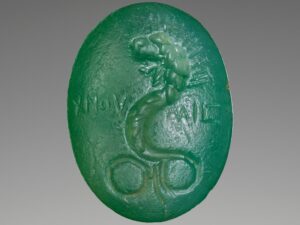
Engraved Gem with Chnoubis. A.D. 100–250. Getty Villa, Gallery 216, 83.AN.437.54. Oval stone engraved on each of its sides. On the obverse is the image of a lion-headed Chnoubis serpent, crowned by twelve rays. Horizontal inscriptions flank each side of the figure: XNOY __ MIS (Chnoumis, a variant for Chnoubis). On the reverse is a Chnoubis-sign (three parallel crooked lines with a crossbar running through them). Image and description source: Getty Museum.

The text for 2026 will be Apuleius’s Apologia, a courtroom speech delivered in the mid-second century AD in the Roman province of Africa by the author, orator, and philosopher Apuleius of Madauros. Apuleius is better known today for his beloved novel, Metamorphoses or The Golden Ass. He stood accused of successfully using magical means to entice a wealthy widow into marriage in an effort to control her very substantial fortune. His accusers were relatives of Pudentilla, including her son (by her first husband) Pudens, and members of her first husband’s family. The judge in the case was Claudius Maximus, who is known to have been governor of the province of Africa in AD 158-159, and is likely the same Maximus to whose teaching Marcus Aurelius pays tribute in Book 1 of the Meditations. The speech is unique in Latin literature, a literary-rhetorical tour de force, and a fascinating mine of information about ancient Roman daily life, magic, religion, toothpaste, and many other topics.

Moderators:

  • Thomas D. McCreight, Associate Professor of Classics, Loyola University Maryland
  • Odessa Asp, Latin Teacher, Tuscarora High School, Loudoun County Public Schools, Virginia
  • Keziah Armstrong, Latin Teacher, Shenendehowa High School, Saratoga County, New York

Fees, Meals, Facilities, and Lodging

The fee for each participant is $600 for those attending in person, $400 for those attending online. The fee for in person attendees covers lodging, breakfast and lunch in the Dickinson cafeteria, the facilities fee, which allows access to the gym, fitness center, and the library, as well as wireless and wired internet access while on campus. The fee does not cover the costs of books or travel, or of dinners, which are typically eaten in the various restaurants in Carlisle. Please keep in mind that the participation fee, once it has been received by the seminar’s organizers, is not refundable. This is an administrative necessity.

Lodging: accommodations will be in a student residence hall near the site of the sessions.

Daily Routine

The first event for those attending in person is an introductory dinner at 6:00 p.m., July 13. Starting July 14, sessions will meet from 1:00p.m. to 4:30 p.m. each day, with mornings left free for preparation. The final session ends at 4:30 p.m. on July 18.

To Register

Please email Mrs. Stephanie Dyson, Classical Studies Academic Department Coordinator (dysonst@dickinson.edu). Include your email, physical address, phone number, and the name of the workshop you plan to attend. A non-refundable fee is due by June 1, 2026 in the form of a check made out to Dickinson College, mailed to Stephanie Dyson, Department of Classical Studies, Dickinson College, Carlisle PA 17013.

For more information, please contact Prof. Chris Francese (francese@dickinson.edu)

2026 Dickinson College Commentaries High School Online Internship Program

Dickinson College Commentaries (DCC) provides Latin and Greek texts for reading, with explanatory notes, essays, vocabulary, and graphic, video, and audio elements. The commentaries are peer reviewed and edited, and freely available at dcc.dickinson.edu.

The DCC High School Online Internship program is meant to give you a chance to contribute to the site, learn digital humanities skills, improve your Latin (or Greek), and collaborate with others under the supervision of professional classicists. You will receive credit on the site for all contributions.

East College is home to Dickinson’s Classical Studies Department and is the mother ship of DCC.

The projects are flexible enough to allow students of different levels of Latin from intermediate to advanced to meaningfully participate, and to give scope to those with special artistic, technical, linguistic, or research skills. The application process is simple and requires no essay or letters of recommendation.

Eligibility: Open to all rising High School Juniors and Seniors who have completed Latin 3.

Dates: June 22–July 31, 2026 (6 weeks)

Time commitment: approximately 10 hours per week. The projects will involve a mix of independent work done on your schedule and mandatory Zoom meetings for approximately four hours per week.

Pay: this is an unpaid internship

Projects for 2026:

  • Catullus: edit notes and vocabulary on poem 64, add hyperlinks and media enhancements for this and other Catullus poems
  • Ilias Latina: edit notes and vocabulary on this Latin version of the Iliad, add hyperlinks and media enhancements
  • Core vocabulary images: create original artwork for words in the DCC Latin Core Vocabulary to help people remember them
  • Anthon Greek Reader: read and edit notes and vocabulary for an introductory reader for learners of ancient Greek, add hyperlinks and media enhancements
  • Caesar, Gallic War Book 2: read and edit notes, add hyperlinks and media enhancements
  • Augustine, Confessions: read and edit notes and vocabulary, add hyperlinks and media enhancements
  • Vergil, Aeneid: read and edit notes and vocabulary, add hyperlinks and media enhancements
  • Use AI to harvest and reformat notes from older commentaries on Trimalchio’s Dinner Party (Petronius, Satyricon) and possibly other texts

Application Deadline: March 15, 2026

Apply here: https://forms.office.com/r/CYrvfkA2c5

Conventiculum Dickinsoniense 2026

July 6-11, 2026

The Conventiculum Dickinsoniense is an immersion seminar designed for those who want to acquire some ability at ex-tempore expression in Latin. A wide range of people can benefit from the seminar: professors in universities, teachers in secondary schools, graduate students, undergraduates, and other lovers of Latin, provided that anyone who considers applying has a solid understanding of the grammatical essentials of the Latin language. (Participants must be at least 18 years of age, unless accompanied by an adult guardian).

Fabula Pygmalionis 2025

A minimum requirement for participation is knowledge of Latin grammar and the ability to read a Latin text of average complexity – even if this reading ability depends on frequent use of a dictionary.  But no previous experience in speaking Latin is necessary. Sessions will be aimed at helping participants to increase their ability to use Latin effectively in spoken discourse and to understand others speaking in Latin.

Concentus carminum Latinarum apud villam rusticam Dickinsoniensem 2025

After the first evening reception (in which any language may be spoken), Latin will be the language used throughout the seminar. Participants will be involved in intensive activity each day from morning until early evening (with breaks for lunch and mid-afternoon pauses). They will experience Latin conversations on topics ranging from themes in literature and art all the way to the routines and activities of daily life, and will enjoy the benefits of reading and discussing texts in the target language. Activities will involve both written and spoken discourse, both of which engage the active faculties of expression, and each of which is complementary to the other. The seminar will not merely illustrate how active Latin can be a useful tool for teachers, it will show how developing an active facility in Latin can directly and personally benefit any cultivator of Latin who wishes to acquire a more instinctive command of the language and a more intimate relationship with Latin writings.

Moderators:

Prof. Milena Minkova, University of KentuckyMinkova and Tunberg

Prof. Terence Tunberg, University of Kentucky

We can accept a maximum number of 35 participants. Deadline for applications is June 1, 2026. The participation fee for each participant will $600. The fee includes lodging in campus housing (and please note that lodging will be in a student residence near the site of the sessions), two meals (breakfast and lunch) per day, as well as the opening dinner, and a cookout at the Dickinson farm. Included in this price is also the facilities fee, which allows access to the gym, fitness center, and the library, as well as internet access. The $600 fee does not include the cost of dinners (except for the opening dinner and farm cookout), and does not include the cost of travel to and from the seminar. Dinners can easily be had at restaurants within walking distance from campus.  Please keep in mind that the participation fee of $600, once it has been received by the seminar’s organizers, is not refundable.  This is an administrative necessity.

Cena rustica 2025

Registered participants should plan to arrive in Carlisle, PA on July 6, in time to attend the first event of the seminar. This first event is an opening dinner and welcoming reception for all participants, which will begin at about 6:00 p.m., in which all languages are acceptable. The actual workshop sessions (in which Latin will the exclusive language) will begin early the next morning on July 7.

For more information and application instructions write to: Professor Terence Tunberg:

terence.tunberg@gmail.com

The 2025 DCC High School Internship Program Is a Wrap

It has been a wonderful summer for philology here at DCC. We hosted seventy-five high school students from seventeen states for online internships. They contributed to eight ongoing projects. Here are some sample quotes from participants:

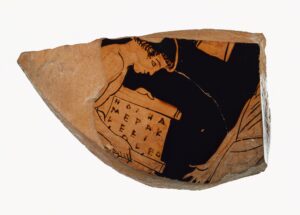
Attic red-figure otter fragment showing a boy reading from a scroll

Attic Red-Figure Cup Fragment
about 470–450 B.C.
Akestorides Painter (Greek (Attic), active about 470 – 450 B.C.).

“This project gave me hope for the study of Classics. There are no students at my school that share my excitement, but here I found other people like me from all over the country. I loved to see everyone ‘fighting’ to take the next sentence.”  (Ben Olson, Loyola Academy, Wilmette, IL)

“I got much better at sight reading and got more familiar with Medieval Latin and Latin in general.” (Cricket MacDonald, Concord Carlisle High School, MA)

“I really enjoyed communicating with my team about the projects but being able to actually finish each sprint on my own… I’m glad that I could help the process of organizing it.” (Josephine Xie, St. Andrew’s School, Middletown, DE)

“Lucy McInerney was great to have as the leader for my group! She was very passionate about the subject… which really enhanced the overall experience.” (Alexander Korb, Irvington High School, NY)

“One thing I really enjoyed about the program was how flexible it was… The mix of early morning meetings and asynchronous work worked well… and Mr. Karper’s enthusiasm for Ancient Greek made every session fun and engaging.” (Milin Torgalkar, Rye Country Day School, NY)

“The most valuable lesson I took away from DCC is that there is so much more nuance to Vergil than meets the eye… Selecting commentaries and translating the lines so closely really makes you recognize the small details.” (Sophie Yang, Lawrenceville School, NJ)

Huge thanks are due to everybody involved, especially our crack team of supervisors, who met with the students on Zoom for 3-5 hours per week, read with them, used their feedback to edit and create notes, and in many cases mentored them in the process of writing their own notes in the DCC style and edited their work.

  • Ashley Roman Francese (Adjunct Faculty in Classical Studies, Dickinson College)
  • Luther Karper (PhD in Ancient History, Brown 2019; Web Developer with Schweb Design, LLC, based in Shippensburg, PA)
  • Lucy McInerney (PhD in Classical Philology, Brown 2025; Assistant Director Norman M. Eberly Multilingual Writing Center and Writing Program, Dickinson College).
  • Bret Mulligan (Associate Provost for Faculty Scholarship and Professor of Classics at Haverford College; PhD in Classical Philology, Brown 2006)
  • Alvaro Pires (PhD in Classical Philology, Brown 2025; Adjunct Faculty, Writing Program, Dickinson College)

Be on the lookout for their work to appear on the site as soon as final editing is finished.

Dickinson Summer Greek Workshop 2025: Iphigenia in Tauris

Dickinson College Summer Greek Workshop July 14-18, 2025

on Zoom

Moderators:

Dr. Emily Kearns, Senior Research Fellow in Greek Literature and Language, St. Hilda’s College, University of Oxford

Dr. Scott Farrington, Associate Professor of Classical Studies, Dickinson College.

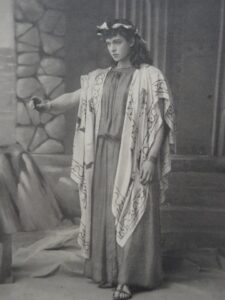
young woman in flowing ancient Greek dress with corona, pointing forward

R. Geike as Iphigenia in the Cambridge Greek Play production of Iphigenia in Tauris, 1894.

Euripides’ Iphigenia in Tauris provides a variety of rewarding avenues into the study of Euripides and of Greek tragedy. Already in the fourth century, Aristotle noted the thrill and intrigue of the inexorable progress of the siblings’ recognition, and Euripides’ inventive employment of anagnorisis and other structural elements of tragedy has fascinated readers ever since. Throughout this play are intricately wrought themes exploring the nature of human sacrifice, sanctuary, and cult, the complications of familial obligation and legacy, and the shadowy, shifting line between Greek and barbarian identities. Perhaps most notably, like many of Euripides’ plays, Iphigenia in Tauris presents a catastrophe averted, thus sharpening our conception and understanding of what precisely makes a tragedy “tragic.”

Dr. Emily Kearns has published widely on Greek religion, Homer, and tragedy. She is the author of The Heroes of Attica (University of London, Institute of Classical Studies) and Ancient Greek Religion: A Sourcebook (Wiley Blackwell). Her commentary on Euripides’ Iphigenia in Tauris (Cambridge University) appeared in the Cambridge Greek and Latin Classics Series in 2023. She is currently working on a book about blood in the ancient world.

The workshop is intended for intermediate and advanced readers of Greek who have an interest both in sharpening their language skills and exploring the themes and issues of the play in depth. Sessions will consist of translation and discussion.

The workshop will take place on Zoom July 14-18, 2025, from 9:00 a.m. to 12:15 p.m. Eastern Daylight Time (GMT -4). Each daily session will be comprised of two 1.5 hour periods of translation and discussion with a 15-minute break in between. We hope that the Zoom format will allow participants from around the world to join.

Please direct any questions to Prof. Scott Farrington, Department of Classical Studies, Dickinson College (farrings@dickinson.edu).

To register, a fee of $200.00 is due by June 13, 2025. It will not be possible to process refunds after that date. We prefer to collect the fee in the form of a check made out to Dickinson College and mailed to Stephanie Dyson, Department of Classical Studies, Dickinson College, Carlisle PA 17013. For international participants, and for others for whom paying by check is not feasible, other forms of payment are possible.

Who Killed Marrucinus Asinius?

My fourth semester Latin students have just started reading Catullus, and I wanted a sight-reading activity that would reinforce the vocabulary from poems 12 (Marrucine Asini) and 13 (Cenabis bene). I asked ChatGPT to create a brief murder mystery in Latin involving the characters from the poems. Here is the yarn it spun. Prompt and Latin critique to follow . . .

Quis Marrucinum Asinium Necavit?

Marrucinus Asinius, notus linteorum fur, subito mortuus repertus est in villa Catulli. Corpus eius iacebat in tricliniis, inter vinum et reliquias cenae. Fabullus et Veranius, amici Catulli, stupefacti spectabant. Candida puella, quae nuper ad convivium venerat, fletu oculos suos tegebat. Catullus ipse, pallidus et tacitus, stabat prope corpus.

Fabullus dixit: “O di immortales! Quis hoc fecit? Marrucinus mihi linteum subripuit, sed num homicidium meruit?”

Veranius respondit: “Estne hoc opus irati Catulli? Tu saepe minatus es, Catulle, hendecasyllabos trecentos componere contra eum. Fortasse ira tua excessit in caedem.”

Catullus oculos sublatis vocavit: “Non ego! Quamvis illum furti accusaverim, nunquam tamen violentiâ usus sum.”

Tum Fabullus: “Sed quid de candida puella?”

Puella, lacrimis plena, dixit: “Marrucinus mihi insultavit in convivio! Sed num credetis me, fragilem feminam, eum necavisse? Non ego id feci!”

Omnes oculos in Fabullum verterunt. “Fabulle, quid dicis?” inquit Veranius. “Tu saepe Marrucinum avaritiae accusasti.”

Fabullus caput movere coepit: “Certe fur erat! Sed nec ego necavi! Certe linteum meum mihi carum erat, sed hoc non est causa caedis.”

Tum Catullus ad corpus accessit et rem miram animadvertit. “Ecce! Linteum Saetabum prope corpus iacet. Hoc linteum mihi a vobis donatum est, Fabulle et Verani! Num hoc est signum?”

Puella subridens respondit: “Signum, fortasse. Sed cur linteum afferre me putatis? Potius, spectate versum in pariete scriptum: ‘Fur et iniustus iacet. Hendecasyllabi ultorem iustitiam tulerunt.’”

Omnes stupuerunt. Veranius tremens dixit: “Hendecasyllabi? Num versus tuae irae, Catulle, animati facti sunt?”

Catullus suspiravit: “Fortasse versus mei plus potentiae habent quam ego imaginatus sum.”

Fabullus: “Itaque, non puella, non ego, non tu, sed hendecasyllabi ipse Marrucinum necaverunt?”

Puella ridens: “Quis scit? Forsitan poesis ipsa vindicem aequitatemque tulerit.”

Omnes tacuerunt, linteum et corpus spectantes. Vino mox impleverunt pocula et memoriam Marrucini – furis invisi sed hominis tamen – saltem modico risu honoraverunt.

The prompt was as follows. I was careful to specify my role, what I was trying to do, what I wanted the AI to do, and the format in which I wanted the results.

I am a Latin teacher. I am trying to create an easy Latin story for my students, who are at the intermediate level. I want the story to be a murder mystery, entitled, Quis Marrucinum Asinium necavit, or “Who Killed Marrucinus Asinius?” It should be in Latin, and the characters should include the people mentioned in Catullus’ poems 12 and 13. I will put those poems in the prompt. One of the characters, the victim, is Marrucinus Asinius, a napkin thief. I want the story to be a murder mystery in which Marrucinus shows up dead and it is unclear who has killed him. It could be the beautiful girl (candida puella) mentioned in poem 13, or it could be Catullus’ friends, Varnius or Fabullus, or it could be Catullus himself, or it could be the hendecasyllables, or lines of invective poetry mentioned in poem 12. I would like to use as much of the vocabulary that appears in poems 12 and 13 as possible, but it is also fine to use other common Latin words. The story should be about 300-500 words long.

Here is poem 12:

Marrucine Asini, manu sinistra

non belle uteris in ioco atque vino:       

tollis lintea neglegentiorum.    

hoc salsum esse putas? fugit te, inepte:           

quamvis sordida res et invenustast.    

non credis mihi? crede Pollioni             

fratri, qui tua furta vel talento  

mutari velit: est enim leporum

differtus puer ac facetiarum.   

quare aut hendecasyllabos trecentos 

exspecta, aut mihi linteum remitte;     

quod me non movet aestimatione,       

verumst mnemosynum mei sodalis.    

nam sudaria Saetaba ex Hiberis           

miserunt mihi muneri Fabullus             

et Veranius: haec amem necessest     

ut Veraniolum meum et Fabullum.

Here is poem 13:

 Cenabis bene, mi Fabulle, apud me   

paucis, si tibi di favent, diebus,             

si tecum attuleris bonam atque magnam        

cenam, non sine candida puella          

et vino et sale et omnibus cachinnis.

haec si, inquam, attuleris, venuste noster,      

cenabis bene: nam tui Catulli 

plenus sacculus est aranearum.          

sed contra accipies meros amores      

seu quid suavius elegantiusvest:

nam unguentum dabo, quod meae puellae     

donarunt Veneres Cupidinesque;         

quod tu cum olfacies, deos rogabis,    

totum ut te faciant, Fabulle, nasum.

What the AI produced is not very elegant Latin. It knows to put the verb at the end of the sentence by default. But there are traces of English word order and style translated directly into Latin. ‘Plus … quam ego imaginatus sum’ sounds like English to me. I had to ask it what it meant by ‘Hendecasyllabi ultorem iustitiam tulerunt.’ It obliged by explaining:

“The hendecasyllables have brought avenging justice.”

It implies that the poetic lines themselves (the hendecasyllabic verses) acted as instruments of justice or vengeance against Marrucinus. It adds a mysterious, almost supernatural twist to the story!

But iustitiam ferre is not a thing, per TLL. I think the AI means something like supplicium sumpsit.

On the other hand, maybe I’m missing something, but I see only one genuine mistake: oculos (bolded above) should be oculis. Credetis (also bolded) should probably be creditis, but it’s not an outright error.

I was planning to use this to have the students spot and correct errors, but I really can’t find any other outright mistakes, as opposed to instances of sub-par Latin. Wow.


Digital Commentaries and Generative AI

A fascinating recent paper by Sarah Abowitz, Alison Babeu, and Gregory Crane, all of Tufts University, asks whether “general advances in machine learning could power alternative digital aids” to reading foreign-language sources more easily, “requiring less labor” than the immense effort required to create traditional print commentaries. In other words, how can we best use technology to transcend the limits of print in helping readers of classical works in the digital age? It’s a question at the heart of DCC, and of the other digital commentary projects they mention, the Ajax Multi-commentary Project and New Alexandria. After surveying classical commentary traditions past and present, print and digital (with some very kind words about DCC) they discuss a study conducted on sample commentaries aimed at different audiences on sections from Thucydides’ History and from the Iliad—Book 6 of both works. The authors do not consider the rich tradition of Hebrew and Christian exegesis, but their comments on the classical tradition could perhaps be extended to other traditions as well.

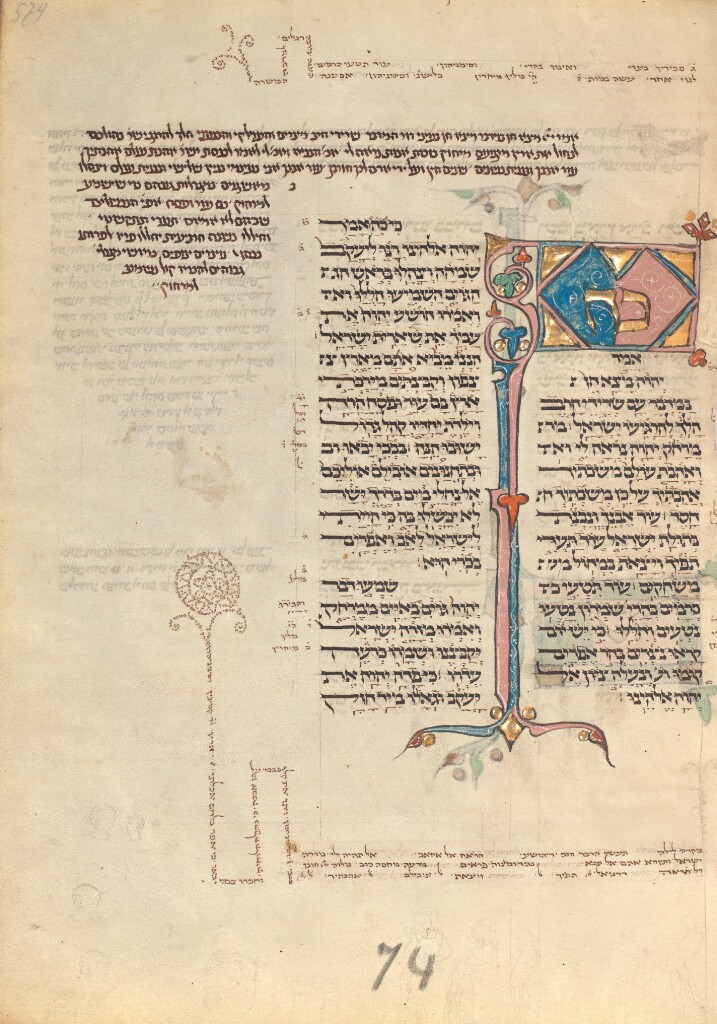
Unknown artist/maker, illuminator, Elijah ben Meshallum, scribe, Elijah ben Jehiel, scribe, et al. Decorated Text Page from the Rothchild Pentateuch, 1296. J. Paul Getty Museum, Los Angeles

For the study, two coders tagged the comments and categorized them by function into six varieties: syntactic aid, translation, semantic aid, inconsistency alerts (which informed the reader of changes the editor made to the original text), stylistic claims (which assert that a certain linguistic feature occurs in a certain way in the text, for example, “this is one of Nicias’ favorite adjectives”), and finally reference pointers, which refer to any specific reference work, primary source, or scholarly paper.

The authors acknowledge that these categories are not watertight, and that quite a few comments straddled more than one of the categories. Unsurprisingly, commentaries that are oriented towards scholars have a higher percentage of reference pointers and less the way of translation and syntactic aids. Those aimed at students have more in the way of syntactic aids and translation. The high number of bare reference pointers that are characteristic of scholarly commentaries (I call them “cf.” notes and attempt to rigorously exclude them from DCC) are often dead ends in an open digital medium, since the material referred to is copyrighted and behind paywalls.

The authors point out that there is very little research about user experience of commentaries, of the kind that would be standard procedure in creating any self-respecting digital interface. What do we really know about how students use commentaries on average, and which types of notes are most helpful? We all have opinions on this topic, but apparently little or nothing has been done formally to investigate the question.

DCC’s practice is now to road-test commentaries with students before publication. In some cases, students are involved in choosing notes from existing public domain commentaries for variorum editions. A new cohort of DCC high school interns is on the way for summer 2025. We’re not gathering any data about student preferences from this process, but we could.

Another interesting point the authors make, coming from a computer science perspective, is that the stylistic claims in commentaries are often based on data (for example the number of occurrences of a given word or phrase), yet classical commenters almost never provide the data to back these assertions up (Some notes in the Cambridge Green & Yellow series do, and Ronald Syme’s Tacitus is a notable pre-digital exception). In a digital medium, it would be quite possible to provide the data, for example using treebank data.

The goals of this kind of discussion, it seems to me, are two: first to serve readers better, and second to use computational means to create more content with less labor. To what extent can artificial intelligence and generative AI aid in this enterprise? This paper suggested to me an interesting approach to testing and moving forward. The creating of a typology of comments is an important advance. This could be refined by analyzing a larger sample of older commentaries, akin to the corpus collected for the Ajax project on Sophocles’ Ajax, though these are all very scholarly, and not very useful for most readers, in my opinion. It would be better to work with school commentaries where multiple parallel school commentaries exist, say Caesar, Cicero, or Vergil, Xenophon, Homer, or Lysias.

Once a refined and well-understood typology of notes is ready, the types can be evaluated in terms of their relative utility for different audiences, and serve as a basis for creating prompts for generative AI. A specific, well-designed prompt might elicit from AI a certain type of comment, and a combination of those could be used to create a draft commentary on new texts, to be evaluated and edited by humans.  

Another key piece of the puzzle is something that Gregory Crane mentioned at the recent SCS panel, the fact that Hathi trust now has marvelously good multilingual OCR in its back end. In theory it will be possible to do a much larger harvesting of existing public domain commentaries, tag and use that data to create a more extensive collection of note types and do a kind of sifting operation in which the users select the notes that they find particularly helpful. The knowledge thus gained could be used on creative AI prompts. Obviously, anything produced by generative AI would have to be extensively edited by humans. But getting us part way would be extremely helpful. My own experiments on generating vocabulary lists with ChatGPT seem promising.

SCS 2025 Panel on Using AI in Classical Philology

Every year the Digital Classics Association (DCA) sponsors a panel at the meetings of the Society for Classical Studies (SCS), and this year, appropriately, it was all about the potential of LLMs and AI in classical philology. Organized by Neil Coffee, the driving force behind DCA, it was a star-studded panel. Here is (was) the program:

Opening Up Classics with AI (organized by the Digital Classics Association)
Neil Coffee, University at Buffalo, SUNY, Organizer

  1. Neil Coffee, University at Buffalo, SUNY
    Introduction
  2. Samuel Huskey, University of Oklahoma
    Opening Up Bottlenecks in Digital Classics Workflows with Human-in-the-Loop AI
  3. Patrick Burns, New York University
    Prompt Engineering for Latin Teachers
  4. Edward Ross, University of Reading, and Jackie Baines, University of Reading
    Generative Image AI and Teaching Classics: A Case of Exaggeration
  5. Gregory Crane, Tufts University
    AI, Machine Actionable Publication and Assigning Credit
  6. Joseph Dexter, Harvard University, and Pramit Chaudhuri, University of Texas at Austin
    Benchmarking Generative AI Models for Classical Literary Criticism
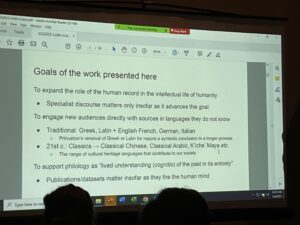
Slide listing Gregory Crane's goals for his talk at the SCS

Gregory Crane, Tufts University
AI, Machine Actionable Publication and Assigning Credit

The abstracts of the talks are posted here, so I won’t try summarize them. My favorite quote came from the ever-polemical Gregory Crane, who referred to the monographs being sold nearby in the SCS book publishers’ display as “a dark archive,” and said “publications/datasets matter insofar as they fire the human mind.” That is a scholarly goal I can get behind, firing the human mind.

Huskey is working on the gathering comprehensive metadata for the Digital Latin Library, sucking in library records from all over the world and trying to disambiguate author names and work titles, many of which have multiple variants, confusing overlaps, and vagueness in the existing records (opera omnia? opera selecta? Bucolica? Eclogae?)

Burns is working on trying to create extensive reading material for Latin learners, as we go from the extreme scarcity of comprehensible texts for beginners to a world where we can have essentially infinite amounts of Latin pitched at any level. Charmingly, he had an LLM create a story about Odysseus and the Cyclops from the perspective of the sheep. From this talk I learned that prompts can be very large. A human will be confused by a question that is 300 pages long; AIs can easily take it in and synthesize. His main message is you can get a basic understanding of how this things work without being a computer scientist, and it is helpful to have such an understanding. 

Ross and Baines are keeping track of AI-generated images that have something to do with the ancient world, and ferreting out distorted history, incorrect information, and modern biases. They showed an amusing image of “Nike the Greek Goddess” flying around wearing a pair of Nike sneakers. Images of Hades draw extensively from Disney’s Hercules. They believe scholars have a duty to keep track of the craziness that is out there, if only to help the image tools get gradually more historically accurate.

Dexter and Chaudhri just finished teaching a seminar on Latin literary history using only fragmentary authors, and are trying to use AI to craft a new narrative about Latin literary history based on this material.

Crane wants to leverage AI to give people without extensive knowledge of historical languages better access to the classics of the world, the whole world, through enhanced translations and reference tools, and to serve audiences in their own languages (e.g. Persian), not just English. I was particularly taken with his effort to us machine translation to translate the examples in Kuhner-Gerth’s Ausführliche Grammatik der griechischen Sprache into English, thus unlocking this fundamental reference work for a broader audience. He’s training AI to figure out which of the 26 uses of ὡς is active in a particular passage of Greek. He also pointed out the the multilingual OCR at Hathi Trust is off-the-chain good at this point.

What struck me was the way that using AI tools requires scholars to be explicit about their goals, what they really want to do, in a way that writing a journal article does not.  These papers used AI tools for different, all legitimate, philological and scholarly goals. Do you want to

  • critique historical bias and inaccuracy on the web? (Ross & Baines)
  • tell a story about literary history? (Dexter and Chaudhuri)
  • help people learn Latin? (Burns)
  • catalogue published texts? (Huskey)
  • attribute passages correctly? (Dexter and Chaudhuri)
  • fire the human mind? (Crane)

AI can help. Notably, none of these goals is rewarded by the academic world as currently constituted. Which is one more reason I respect these scholars for doing interesting work despite the professional incentives to churn out another article or book for the dark archive.

I went into this panel rather repelled by AI, more aware of it as a tool for cheating on college writing assignments, and a potential menace to humanity, than as a potential aid in my beloved philology. I came out intrigued with the possibilities and wanting to try to apply it to the workflows of DCC (see this post on my first attempts to create DCC style vocabulary lists with ChatGPT and Claude).

Yuval Noah Harari’s fascinating 2024 book Nexus convinced me that there is no pre-determined end to the AI story, and that we need to be actively engaged in thinking about it and guiding its trajectory for human goals. Harari, a historian, talks about the ways that every new information technology brought good things and bad things. Printing enabled both the scientific revolution and witch hunts. What matters is how we use it and shape it. These papers all showed scholarly uses of AI that seem to me both interesting and productive.

AI on the Bravery of Women

Fresh off the stimulating Digital Classics Association panel at the 2025 SCS on uses of AI in classical scholarship, I decided to give ChatGPT 4 and Claude 3.5 Sonnet a crack at one of the central tasks of DCC: creating accurate vocabulary lists. 

Consider a work in our pipeline, Plutarch’s On the Bravery of Women, which begins as follows:

περὶ ἀρετῆς, ὦ Κλέα, γυναικῶν οὐ τὴν αὐτὴν τῷ Θουκυδίδῃ γνώμην ἔχομεν. ὁ μὲν γάρ, ἧς ἂν ἐλάχιστος ᾖ παρὰ τοῖς ἐκτὸς ψόγου πέρι ἢ ἐπαίνου λόγος, ἀρίστην ἀποφαίνεται, καθάπερ τὸ σῶμα καὶ τοὔνομα τῆς ἀγαθῆς γυναικὸς οἰόμενος δεῖν κατάκλειστον εἶναι καὶ ἀνέξοδον. ἡμῖν δὲ κομψότερος μὲν ὁ Γοργίας φαίνεται, κελεύων μὴ τὸ εἶδος ἀλλὰ τὴν δόξαν εἶναι πολλοῖς γνώριμον τῆς γυναικός: ἄριστα δ᾽ ὁ Ῥωμαίων δοκεῖ νόμος ἔχειν, ὥσπερ ἀνδράσι καὶ γυναιξὶ δημοσίᾳ μετὰ τὴν τελευτὴν τοὺς προσήκοντας ἀποδιδοὺς ἐπαίνους. διὸ καὶ Λεοντίδος τῆς ἀρίστης ἀποθανούσης, εὐθύς τε μετὰ σοῦ τότε πολὺν λόγον εἴχομεν οὐκ ἀμοιροῦντα παραμυθίας φιλοσόφου, καὶ νῦν, ὡς ἐβουλήθης, τὰ ὑπόλοιπα τῶν λεγομένων εἰς ‘τὸ μίαν εἶναι καὶ τὴν αὐτὴν ἀνδρὸς καὶ γυναικὸς ἀρετὴν προσανέγραψά σοι, τὸ ἱστορικὸν ἀποδεικτικὸν ἔχοντα καὶ πρὸς ἡδονὴν μὲν ἀκοῆς οὐ συντεταγμένα εἰ δὲ τῷ πείθοντι καὶ τὸ τέρπον ἔνεστι φύσει τοῦ παραδείγματος, οὐ φεύγει χάριν ἀποδείξεως συνεργὸν ὁ λόγος οὐδ᾽ αἰσχύνεται
ταῖς Μούσαις
τὰς Χάριτας συγκαταμιγνὺς
καλλίσταν συζυγίαν,
ὡς Εὐριπίδης φησίν, ἐκ τοῦ φιλοκάλου μάλιστα τῆς ψυχῆς ἀναδούμενος τὴν πίστιν.
 
In the Loeb translation of Frank Cole Babbit

Regarding the virtues of women, Clea, I do not hold the same opinion as Thucydides. For he declares that the best woman is she about whom there is the least talk among persons outside regarding either censure or commendation, feeling that the name of the good woman, like her person, ought to be shut up indoors and never go out. But to my mind Gorgias appears to display better taste in advising that not the form but the fame of a woman should be known to many. Best of all seems the Roman custom, which publicly renders to women, as to men, a fitting commemoration after the end of their life. So when Leontis, that most excellent woman, died, I forthwith had then a long conversation with you, which was not without some share of consolation drawn from philosophy, and now, as you desired, I have also written out for you the remainder of what I would have said on the topic that man’s virtues and woman’s virtues are one and the same. This includes a good deal of historical exposition, and it is not composed to give pleasure in its perusal. Yet, if in a convincing argument delectation is to be found also by reason of the very nature of the illustration, then the discussion is not devoid of an agreeableness which helps in the exposition, nor does it hesitate
To join
The Graces with the Muses, A consorting most fair,
as Euripides says, and to pin its faith mostly to the love of beauty inherent to the soul.

I gave both AIs a lengthy prompt, similar to what I would say to a human if I were tasking her with creating a vocabulary list:

I am going to attach a .txt file with some Ancient Greek. I want you to create a vocabulary list for the text. Each entry in the list should contain the standard dictionary form of the token, followed by an English definition appropriate to the context. For example, given the token γυναικῶν, the entry in the list should read “γυνή γυναικός, ἡ: woman.” γυνή γυναικός, ἡ is the dictionary form. This token is a noun, so it includes the nominative singular, γυνή, followed by the genitive singular, γυναικός, followed by a comma, then the feminine form of the definite article (ἡ), indicating it is a feminine noun. After that comes a colon, which separates the dictionary form from the English definition. I used “woman” in this example rather than “wife,” which is another possible definition. In the context from which I took the example, the author is discussing women in general, not just wives. Here is a second example, this time for a verb. The token is ἔχομεν. The dictionary form is “ἔχω, ἕξω or σχήσω, 2 aor. ἔσχον, ἔσχηκα, impf. εἶχον” . I derived this dictionary form from the Dickinson College Commentaries site https://dcc.dickinson.edu/greek-core-list . Use that if you can, but that doesn’t have all words. For words not in that source, use the fuller list in the Grieks Nederlands dictionary available on the site Logeion https://logeion.uchicago.edu/ . If the dictionary form there is very long, try to simplify it based on the format of the Dickinson College Commentaries list and the following list of further examples, which includes some adjectives, adverbs, and verbs.
ὑπόληψις -εως, ἡ: opinion, assumption

ὁρμή -ῆς, ἡ: impulse

ὄρεξις -εως, ἡ: desire

ἔκκλισις -εως, ἡ: aversion, avoidance

κτῆσις -εως, ἡ: possession, property, property

δόξα -ης, ἡ: opinion; reputation

1.2

ἀκώλυτος -ον: unhindered

ἀπαραπόδιστος -ον: unimpeded, unobstructed

ἀσθενής -ές: weak, powerless

δοῦλος -η -ον: slavish, servile

κωλυτός -ή -όν: hindered

ἀλλότριος -α -ον: not one’s own, under the control of others

1.3

ἐμποδίζω -ποδιῶ -επόδισε: to hinder, frustrate

πενθέω -ήσω ἐπένθησα: to mourn, to suffer pain

ταράσσω ταράξω ἐτάραξα: to trouble, disturb

μέμφομαι μέμψομαι ἐμέμφθην: to blame

ἀναγκάζω -άσω: to force, constrain

οὐδέποτε: not ever, never

ἐγκαλέω ἐγκαλῶ ἐνεκάλεσα: to rebuke, reproach + dat.

ἄκων -ουσα -ον: involuntarily, against one’s will

βλάπτω βλάψω ἔβλαψα: to harm, hinder, disable

βλαβερός -ά -όν: harmful

1.4

τηλικοῦτος -αύτη -οῦτον: such great

ἐφίημι ἐφήσω ἐφῆκα: to aim at, to long for, desire + gen.

μετρίως (adv.): moderately

ἅπτω ἅψω ἥψα: to grasp, obtain, engage in, undertake (+ gen)

παντελῶς (adv.): absolutely, completely

ὑπερτίθημι ὑπερθήσω ὑπερέθηκα: to defer, put off

πλουτέω -ήσω ἐπλούτησα: to be rich or wealthy

ἀποτυγχάνω ἀποτεύξομαι ἀπέτυχον: to fail in attaining, miss

ἐλευθερία -ας, ἡ: freedom

εὐδαιμονία -ας, ἡ: prosperity; true, full happiness

περιγίγνομαι περιγενήσομαι περεγενόμην: to be a result or consequence, to arise

You will notice that adverbs sometimes have “(adv.)” at the end of the dictionary form. That is desirable. Note also that when more than one English definition is given, sometimes those English definitions are separated by commas, and sometimes by semi-colons. The commas separate English definitions that are near-synonyms. The near synonyms are grouped together and separated from substantially different possible English definitions with a semi-colon. Notice also that there are milestones separating groups of entries that derive from a single paragraph or sentence, such as “1.1,” “1.2.” If the text I input seems to have section headers, either numerical like that, or a title, please include those on a separate line above the list of words for that section. Section headers often include English words.

That was the prompt. Claude made a nice summary of my prompt:

I understand you want me to create a vocabulary list from Ancient Greek text, following specific formatting rules. Each entry should have:

1. Dictionary form (using Dickinson College Commentaries when possible, otherwise simplified entries from Logeion)
2. English definition(s) appropriate to context
3. Special formatting for different parts of speech (e.g., adding “(adv.)” for adverbs)
4. Grouping similar English definitions with commas, different meanings with semicolons
5. Including section headers when present
6. For nouns: nominative + genitive + article
7. For adjectives: all gender endings
8. For verbs: principal parts in simplified format

I see you’ve provided helpful examples to guide the formatting. However, I don’t see the actual Greek text file you mentioned wanting to attach. Could you please share the text you’d like me to analyze? Once you do, I’ll create a vocabulary list following these specifications.

I will paste the raw results below. I also have the results in a Word file, edited with track changes to show all the improvements I would make. If anybody wants that I can supply it. Here is my summary analysis.

  1. Both AIs did a superb job of crafting dictionary forms to my specifications.
  2. There were occasional errors of lemmatization, e.g. ἐπαινέω for ἔπαινος, σύζυγος for συζυγία, φιλοκαλέω for φιλόκαλος, ἄμοιρος for ἀμοιρέω. Claude was somewhat better at lemmatization than GPT, but both were very good. GPT astutely picked up an instance of ὁ μὲν … ὁ δέ: “on the one hand … on the other hand (used to contrast ideas).”
  3. Both helpfully omitted very common words, though I had given no instructions in that regard.
  4. Both omitted a number of uncommon words, 9 in the case if GPT, 15 in the case of Claude. Claude missed all the proper names.
  5. The definitions were generally very good. Rare meanings like παράδειγμα = “illustration” and ἀπόδειξις = “exposition” were missed by both AIs
  6. GPT tried to give a case-specific definition for μετά twice, and was wrong both times. On μετὰ τὴν τελευτὴν it offered μετά + gen.: “with, among”; on μετὰ σοῦ it offered  μετά + acc.: “after.”

Very impressive, I would say, despite the errors. Just in terms of the formatting of dictionary lemmas, this will be a huge time saver. I don’t think we will abandon our usual workflow with the Bridge, but this is very much a viable option going forward.

The main thing I learned at the DCA panel is that you can put in huge prompts with elaborate instructions, no problem. Boy, do I feel slow now when I edit vocab lists, like a snail trying to keep up with a Lamborghini.

Ok, here are the raw results from GPT:

ἀρετή -ῆς, ἡ: virtue, excellence

γυνή γυναικός, ἡ: woman

Θουκυδίδης -ου, ὁ: Thucydides (name)

γνώμη -ης, ἡ: opinion, judgment, intelligence

ἔχω, ἕξω or σχήσω, 2 aor. ἔσχον, ἔσχηκα, impf. εἶχον: to have, hold, possess; to be able to

ὁ μὲν … ὁ δέ: on the one hand … on the other hand (used to contrast ideas)

ὀλίγος -η -ον: small, little, few

ψόγος -ου, ὁ: blame, criticism

ἔπαινος -ου, ὁ: praise, commendation

καθάπερ: just as, as if

σῶμα σώματος, τό: body

ὄνομα ὀνόματος, τό: name

ἀγαθός -ή -όν: good, noble, brave

οἴομαι, οἰήσομαι, ᾠήθην: to think, suppose, imagine

δεῖ: it is necessary, must

κατάκλειστος -ον: closed, shut in

ἀνέξοδος -ον: inaccessible, closed off

κομψός -ή -όν: refined, elegant, clever

Γοργίας -ου, ὁ: Gorgias (name)

κελεύω, κελεύσω, ἐκέλευσα: to order, command

εἶδος -ους, τό: form, shape, appearance

δόξα -ης, ἡ: opinion, glory, reputation

δημοσίᾳ (adv.): publicly, in public

μετά + gen.: with, among

τελευτή -ῆς, ἡ: end, death

ἀποδίδωμι, ἀποδώσω, ἀπέδωκα: to give back, return, pay

ἐπαινέω, ἐπαινέσω, ἐπῄνεσα: to praise, commend

Λεοντίς -ίδος, ἡ: Leontis (name)

ἀποθνῄσκω, ἀποθανοῦμαι, ἀπέθανον: to die

εὐθύς: immediately, at once

μετά + acc.: after

πολύς, πολλή, πολύ: much, many

λόγος -ου, ὁ: word, speech, discourse

παραμυθία -ας, ἡ: consolation, comfort

φιλόσοφος -ου, ὁ/ἡ: philosopher

βουλεύω, βουλεύσω, ἐβούλευσα: to deliberate, plan

ὑπόλοιπος -ον: remaining, left over

λέγω, λέξω or ἐρῶ, εἶπον: to say, speak, tell

μία -ας, ἡ: one, single

ἀνήρ ἀνδρός, ὁ: man, husband

καταγράφω, καταγράψω, κατέγραψα: to record, write down

ἱστορικός -ή -όν: historical

ἀποδεικτικός -ή -όν: demonstrative, explanatory

ἡδονή -ῆς, ἡ: pleasure, delight

ἀκοή -ῆς, ἡ: hearing, sense of hearing

συντάσσω, συντάξω, συνέταξα: to arrange, compose

φύσις -εως, ἡ: nature, character

παράδειγμα -ατος, τό: example, pattern

λόγος -ου, ὁ: reason, word, account

χαρίς -ίτος, ἡ: grace, favor, kindness

Μοῦσα -ης, ἡ: Muse (goddess of art and inspiration)

Χάρις -ιτος, ἡ: Grace (one of the Graces)

καλλίστος -η -ον: most beautiful

σύζυγος -ον: yoked together, paired

φιλοκαλέω: to love beauty, to be elegant

ἀναδέω, ἀναδήσω, ἀνέδησα: to bind up, to crown


And here are the raw results from Claude:

Let me create a vocabulary list for this text from Plutarch’s “On the Virtues of Women.”

Title: On the Virtues of Women (Introduction)

ἀρετή -ῆς, ἡ: excellence, virtue
γυνή γυναικός, ἡ: woman
γνώμη -ης, ἡ: opinion, judgment
ἔχω, ἕξω or σχήσω, 2 aor. ἔσχον: to have, hold
ἐλάχιστος -η -ον: least, smallest
ψόγος -ου, ὁ: blame, criticism
ἔπαινος -ου, ὁ: praise
λόγος -ου, ὁ: word, speech; account
ἄριστος -η -ον: best, excellent
ἀποφαίνω -φανῶ -έφηνα: to show, declare, present
σῶμα -ατος, τό: body
ὄνομα -ατος, τό: name
ἀγαθός -ή -όν: good, noble
κατάκλειστος -ον: shut up, confined
ἀνέξοδος -ον: not going out, staying at home
κομψός -ή -όν: refined, clever
φαίνω φανῶ ἔφηνα: to show, appear
κελεύω -σω ἐκέλευσα: to order, command
εἶδος -εος, τό: form, appearance
δόξα -ης, ἡ: reputation; opinion
γνώριμος -ον: well-known, familiar
Ῥωμαῖος -α -ον: Roman
νόμος -ου, ὁ: law, custom
δημόσιος -α -ον: public
τελευτή -ῆς, ἡ: end, death
προσήκω -ξω -ῆξα: to be fitting, proper
ἀποδίδωμι -δώσω -έδωκα: to give back, render
ἄμοιρος -ον: without share in (+ gen.)
παραμυθία -ας, ἡ: consolation, comfort
φιλόσοφος -ον: philosophical
ὑπόλοιπος -ον: remaining, rest
ἀποδεικτικός -ή -όν: demonstrative, proving
ἡδονή -ῆς, ἡ: pleasure
ἀκοή -ῆς, ἡ: hearing
συντάσσω -τάξω -έταξα: to arrange, compose
πείθω πείσω ἔπεισα: to persuade
τέρπω τέρψω ἔτερψα: to delight, please
παράδειγμα -ατος, τό: example, model
φεύγω φεύξομαι ἔφυγον: to flee, avoid
χάρις -ιτος, ἡ: grace, charm; gratitude
συνεργός -όν: helping, cooperating
αἰσχύνω -νῶ ᾔσχυνα: to shame
Μοῦσα -ης, ἡ: Muse
Χάρις -ιτος, ἡ: Grace (one of the Graces)
συγκαταμίγνυμι -μίξω -έμιξα: to mix together, blend
καλός -ή -όν: beautiful, noble
συζυγία -ας, ἡ: union, pairing
φιλόκαλος -ον: loving beauty
ψυχή -ῆς, ἡ: soul
ἀναδέω -δήσω -έδησα: to bind up, crown
πίστις -εως, ἡ: trust, faith; proof