Two former Dickinsonians, one OSA and a friend of the program – it’s nice we stay in touch! 🙂
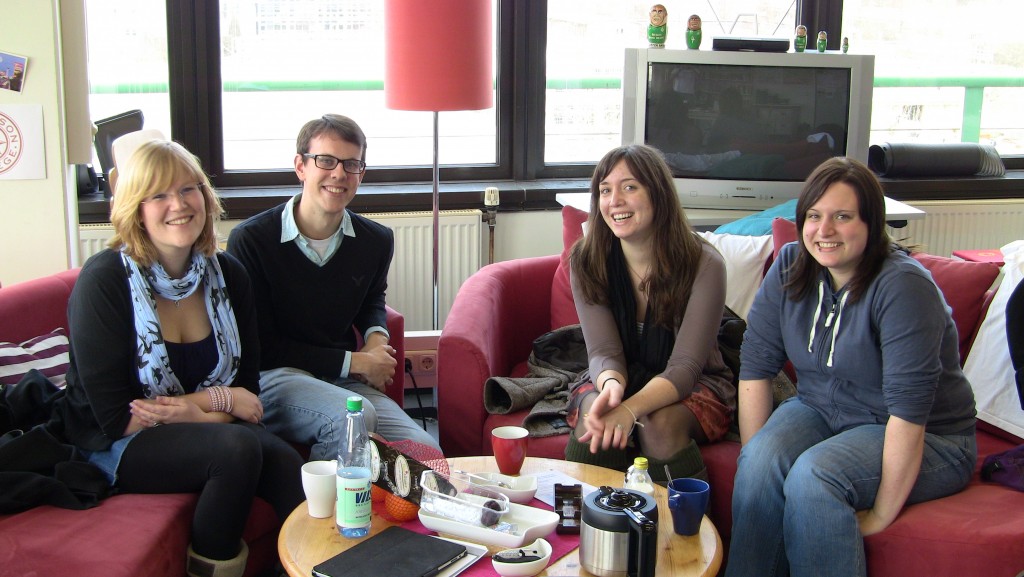
Two former Dickinsonians, one OSA and a friend of the program – it’s nice we stay in touch! 🙂
by Julie King ’12
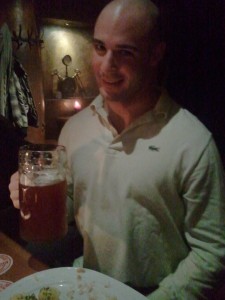
Early Monday morning Bill flew home back to the United States. He left before the end of our winter semester here to make it back in time for the beginning of spring semester at Dickinson, where he has to be due to ROTC obligations. Of course a proper farewell was in order, so Friday night the six of us Dickinsonians, Janine Ludwig, Jens, and some of our Dickinson “family” friends (i.e. Insa, Jan) enjoyed an evening together at Schüttinger, a microbrewery and restaurant in the Altstadt of Bremen.
Bill, Doug, Ethan and I went to Schüttinger around 7:30, just in time to get a beer during happy hour (only 2 Euro for 0,4 L!) and to have a traditional German dinner while we waited for the others to arrive. Bill and Doug both ordered the Leberkäse Pfanne, which they deemed appropriate, as Bill’s quasi “last supper.” I’ve never ordered it myself, but Leberkäse is kind of like a better, German version of spam. “Pfanne” means pan, so it came served over hash brown-like potatoes with a fried egg on top. Ethan and I each ate Flammkuchen, which is a sort of flat bread with toppings. His had baby shrimp and onions on top of a sour cream like spread, and mine was the same except with bacon instead of baby shrimp.
 After dinner we moved to a bigger table and by about 9:30 everyone had arrived. We presented Bill with a partially completed scrapbook with pictures from the past 4 months. With the help of glue sticks, red and yellow paper, and lots of Stabilo pens we all wrote notes to Bill and finished the scrapbook. Hopefully when he is missing Bremen he can look through it and get a sense of his home away from home here in Bremen. Although we didn’t get our dance on underneath the disco ball to “Take Me Home Country Roads” at Schüttinger, we finished our night at Tower, a popular dance club near the train station. Even though we’ll miss him there’s a chance he’ll come back to Bremen for a visit in May, but regardless a perfect way to say goodbye as a group a our small yet lively “Abschiedparty.”
by Samantha Claussen ’12
(WARNING: this post spends a lot of time talking about food. Read on an empty stomach at your own risk.)
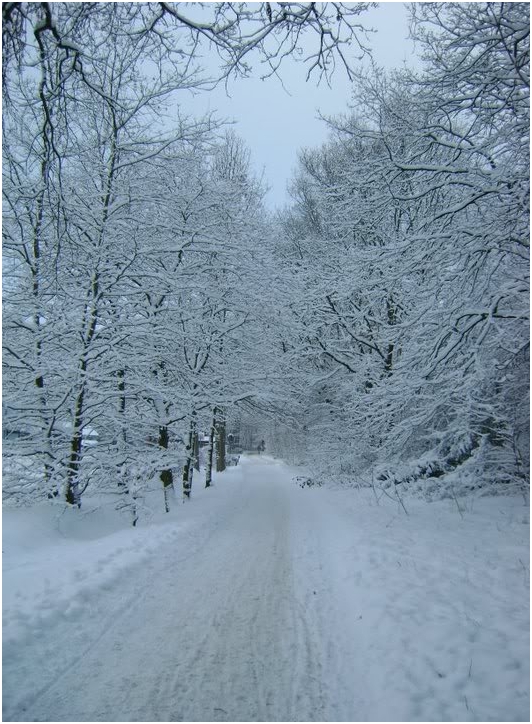
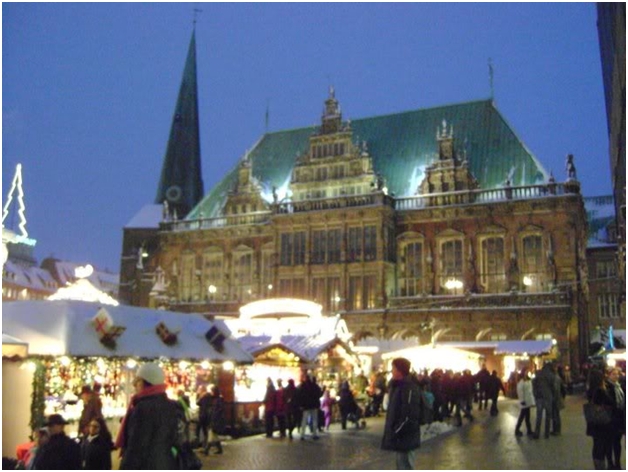 Technically, although Uni Bremen didn’t start break until the end of classes December 21st, I started my break December 18th, as my professors cancelled classes for the rest of my time there. I spent the weekend getting last-minute presents for my host families, cleaning, packing, and wandering around the Weihnachtsmarkt (or Christmas market) in Bremen. I have seen the Weihnachtsmärkte in Berlin, Bremen, Hannover, Freiburg, and a little bit just outside the Hamburg train station, but I think Bremen’s is my favorite. (No, I’m not biased at all. Really.) I took a few pictures of the market, which can be seen at the bottom of the entry, and must apologize for the picture quality. My camera gets cranky at night. There are also pictures of the view from my apartment window and the walk to the tram stop, though there is no longer snow everywhere.
On the 21st, I packed up and got a train to Freiburg, where my host family there picked me up and brought me back to Gundelfingen, a small village just north of Freiburg (side note: this family is one of a number of families I am acquainted with in Germany, as we have acted as host families for a number of German students). It was really, really nice to be in a family environment again. Normally at Dickinson I get a break from college life every couple of months or so, but this had been several months of living in a single apartment. I enjoy my solitude, but being somewhere with parents and children again was really nice.
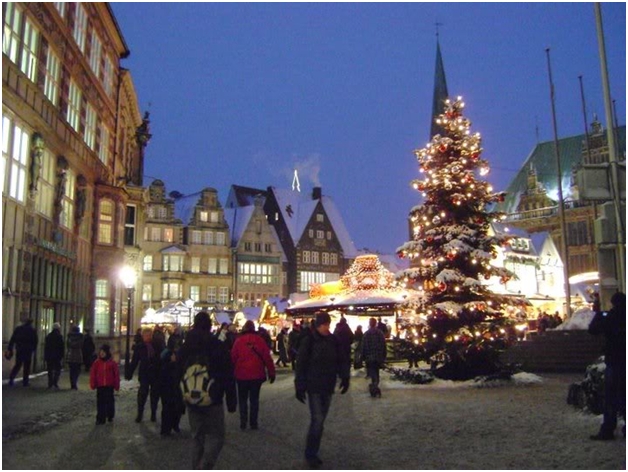 The 23rd I went into the city to visit some of my friends from the language course I took in Freiburg in September. I went to the Weihnachtsmarkt in Freiburg with one of them, and I found it was quite adorable (although my bias for Bremen won) and had Glühwein, Currywurst, and something called a Dampfnudel, which was this massive dumpling that we shared. It was filled with cherries and drizzled with vanilla sauce and more cherries. I spent the rest of the day seeing old familiar faces. Overall, an excellent day.
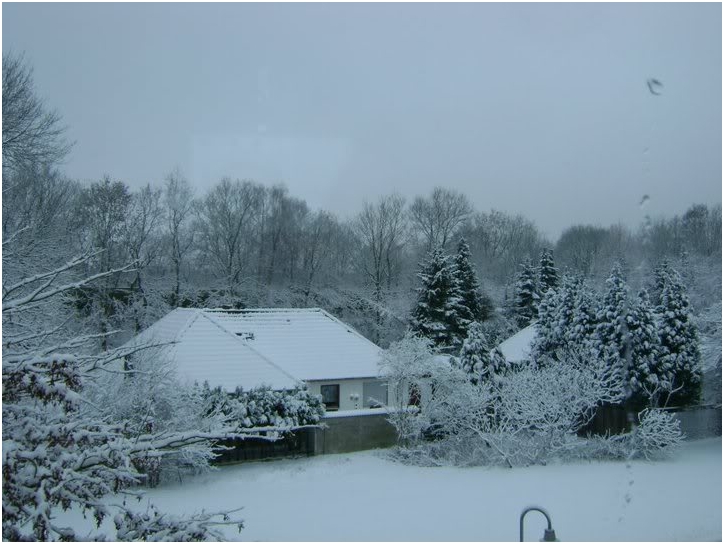 The next day was the 24th, or Heilige Abend. The family I was with has a pretty structured set of traditions for Heilige Abend. First of all, they go up to a mountaintop in the Black Forest and meet with a bunch of old friends and have a bonfire, with homemade Glühwein. Then they eat at a little restaurant up there. The one hitch in the plan this year: it started snowing like crazy that morning. We actually had to go switch cars, since the first one we were driving didn’t have good enough handling in the snow. I remember thinking while in the car on the way up, “I’m driving up a mountain in the Black Forest on Christmas Eve in the middle of a snowstorm to go drink wine at 11 AM. I’m kind of in love with Germany.” <3
After a delicious lunch, we went back home to rest a bit before the church service that evening. This family is Catholic, and I am Lutheran, so it was my first time in Mass for a while. The service was quite beautiful, and I enjoyed singing the Christmas songs in German.
Once Mass was done, we went back home and the children (including me) were not allowed into the living room while the parents set up for Christmas. When we finally were allowed in, the presents were under the tree, and my family was on webcam, along with the son of my host family who is currently living in America with my family (long story). But they watched us open up presents and sing Christmas songs, and it was really nice. The host family really was too generous to me, and it was a beautiful Christmas Eve. It felt strange to know that I had opened all of my presents before it was even Christmas day in America, though. We had a dinner of lots of little delicacies, like salmon and special meats and so on, I went to bed that night feeling surprisingly at home.
Christmas day we drove three hours to Wetzlar to visit the paternal grandparents of the family. Right after we got there in the late afternoon, we had tea and cakes, and then that evening we had fondue, and talked with one another until after midnight. The next morning I got up and met with the son and the mother of one of my mom’s friends– another one of our random connections to Germany. We talked for perhaps an hour, and the son took me on a driving tour of Wetzlar before returning me to my host family. Wetzlar is an adorable little town with interesting history– Goethe lived there when he wrote Werther, for instance– and I’d love to go back.
The host family and I then drove to Usingen, where the maternal grandparents live. We had the traditional Christmas dinner with them: goose, potato dumplings, and red cabbage. After sitting and chatting a bit, the parents and I said goodbye to the kids, who stayed with their grandparents, and we drove all the way back to Gundelfingen, a drive made longer than necessary by the fact that it had been snowing on and off since Christmas Eve.
I left Gundelfingen on the 29th to visit my other host family, who lives in Dörnberg, a small village not far from Kassel. It was nice to be with them, too– the family dynamic is different. The family in Gundelfingen has children who are younger than me, The oldest is 16, the middle 15, and the youngest 10. With the family in Dörnberg, the daughter (who was an exchange student with my family in high school) is about my age and is also in college. We commiserated, because we both had a load of work to do over the break and it was No Fun. Most of the time I spent with this family was spent doing homework, so I don’t have as many exciting adventure stories about Kassel, unfortunately.
New Year’s Eve, however, was spent at the daughter’s boyfriend’s house. We mostly played video games and chatted until midnight, when all of a sudden EVERYONE went out into the streets to set off fireworks. Children were running around with sparklers, church bells everywhere were tolling, and you could see fireworks and smell smoke everyhere. It was one of the most awe-inspiring, beautiful things I’d ever seen, because I felt like everyone was celebrating the new year… But all I could think was, “I really wish my friends and family were here so they could see this.”
I’m looking forward to 2011. I turn 21, though that doesn’t mean much in Germany. It’s the year when three of my friends are coming to study in three different countries in Europe, giving me new visiting opportunities, and when a few more friends might drop by good ol’ Germany to visit me. My mom and my aunt are coming at the end of February, my sister might visit in May or June, and my brother and dad might come together in the summer. I will be going to Vienna, Rome, Paris, Utrecht, Amsterdam, and possibly London, Venice, and Salzburg if all goes well. I go home in 2011, and it is also the year I become a senior, which is mildly terrifying. I’m going to try to make 2011 the best year I’ve ever had so far, and I hope it treats you all well too.
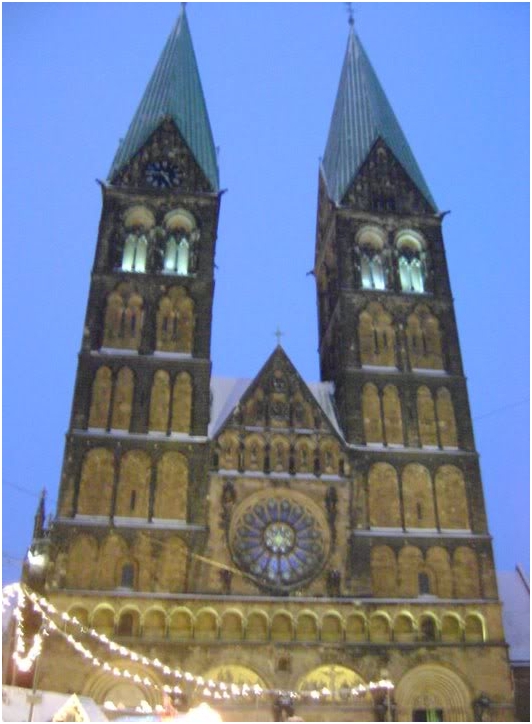
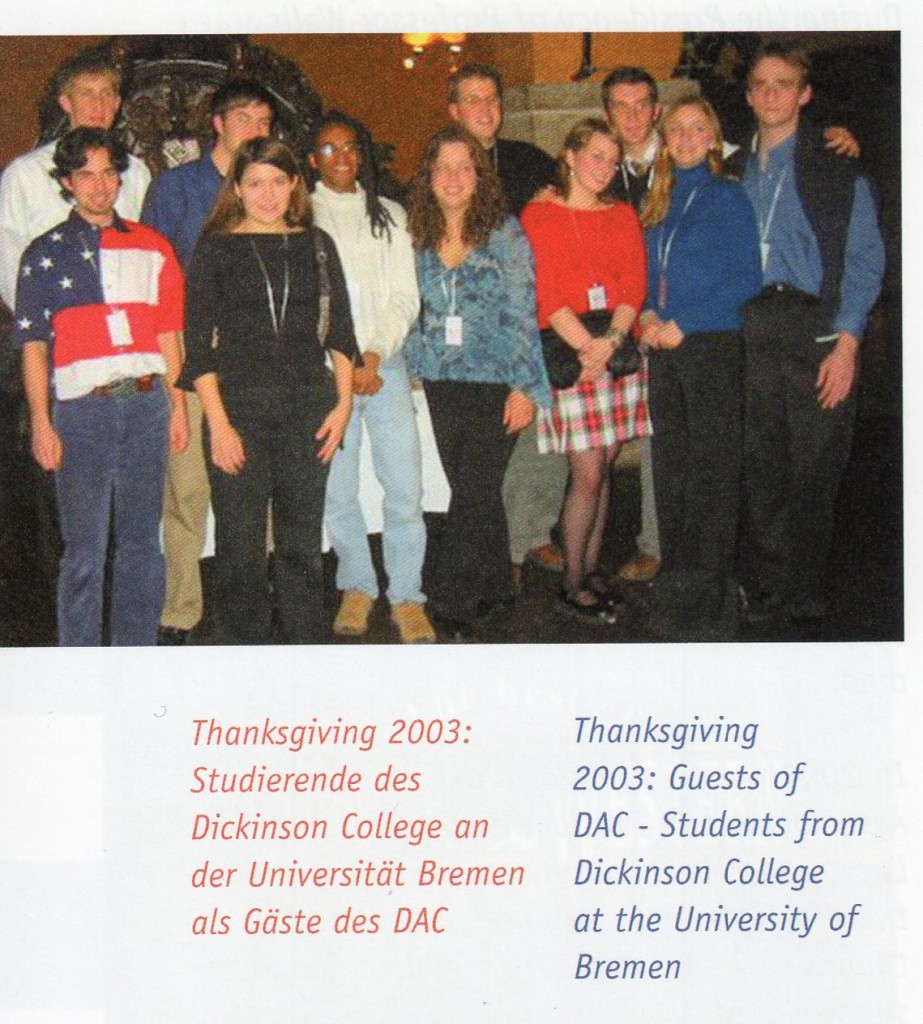
Dickinson students were mentioned in a booklet honoring the Sixtieth Anniversary of the Carl Schurz German-American Club (CSDAC). The picture shows the exchange students of 2003/2004 participating in the traditional Thanksgiving Dinner CSDAC organizes every year. We are thankful and honored to be part of this annual dinner where Germans and Americans come together celebrating America’s long-lasting tradition and we are looking forward to this year’s event!
by Nicole Couturiaux ’12
Two weeks ago our program celebrated our arrival in Bremen with a welcome dinner in the “Ratskeller,” the UNESCO world heritage wine cellar and restaurant below the city hall building. It’s tradition for the new group to gather here in October, after our individual language courses across the country, to enjoy each other’s company and start the year off with a traditional north-German meal. The 6 of us were presented with our long-awaited visas, making us official citizens of Bremen.
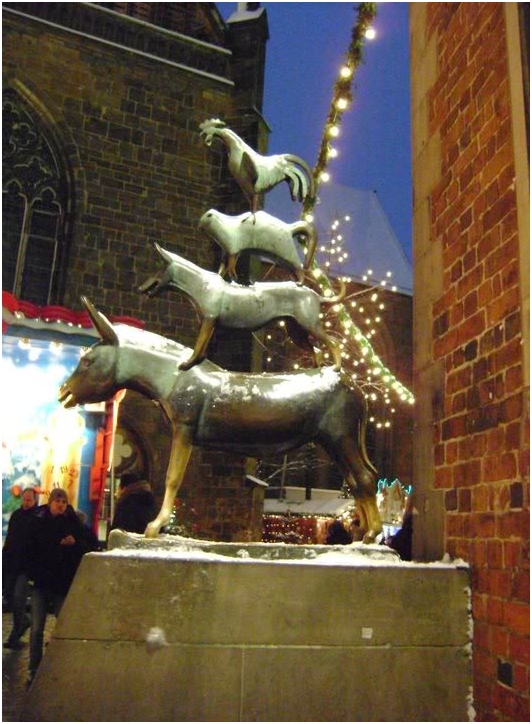
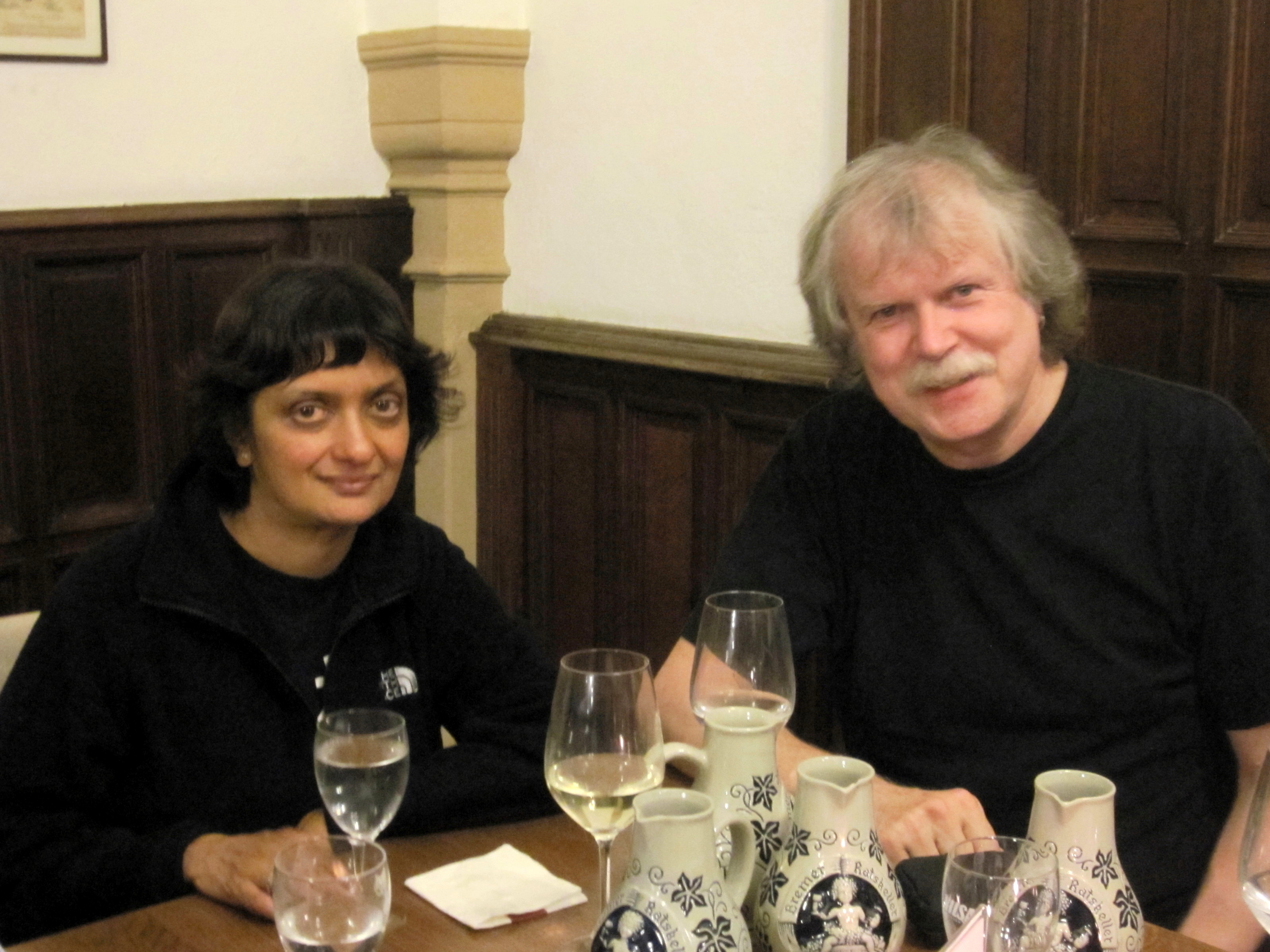 Poets Michael Augustin and Sujata Bhatt also joined us for dinner. The couple has a strong connection to our program – both are former Dickinson Writers-in-Residence and they remain active contributors to Dickinson’s literary programs. As a first-year student, I listened in on their readings at our annual international poetry festival Semana Poética and even journaled about Michael’s poems as an assignment for my German class at the time. Two years later I was surprised and thrilled to reminisce about Dickinson traditions and compare favorite Carlisle restaurants with them. The night concluded with a photo of our well-fed, very talkative, and quite jubilant group in front of the famous Bremer Stadtmusikanten.
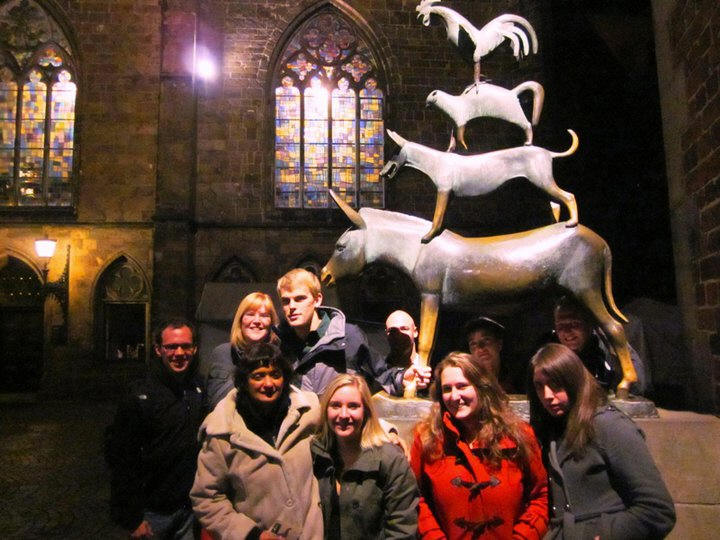
by Andrew Shuman ’11
As with many Americans, indeed, many more than Europeans may expect, I’ve played soccer nearly my entire life – since I was five, to be exact. As such, I’ve been a fan of the game for a very long time, starting with 2002 World Cup in Korea and Japan, when I got up in the wee hours of the morning to watch the final, where the Germans and their immortal keeper, Oliver Kahn, previously next to unbeatable in the tournament, lost to Brazil and Ronaldo. Arguably, those two players, Ronaldo and Kahn, are the best striker and goalkeeper of all time, respectively. That epic matchup, which ended 2-0 for Brazil, one of the goals coming following Kahn’s only error of the tournament, got me hooked on the international game. From the Champions League, in which Europe’s top club teams compete, to the 2006 World Cup and the 2008 European Championships, I don’t think I’ve missed a televised game if I could help it.
Being here in Germany for the 2010 World Cup and having just seen the die Mannschaft (literally, ‘the team’) crush archrivals England at a public viewing yesterday, though, has given me a real appreciation for the meaning of international football here in Europe. The World Cup and the Euro are far more than simple spectacles of sport; the national teams embody the histories and identities of entire nations.
Soccer is an inextricable part of Germany’s past, and, unlike the World Cup history of the United States, Germany’s history of participation in the tournament is riddled with momentous victories and defeats that came at defining moments in the history of the nation itself. Those moments have been indelibly etched upon the national conscience of the German people and that history gives added meaning to classic matchups like Germany vs. England. It’s obvious to everyone, of course, that two world wars fought between the two nations, as much as it is politically correct not to acknowledge it, play a role. However, the fact that England’s only World Cup victory in 1966 came against West Germany in the final at Wembley Stadium in London and the fact that the English have caved under pressure and lost to the Germans in two penalty shootouts on the international stage in the 90’s provide just as much of a backdrop. The looming quarterfinal matchup with Argentina, for instance, is far more than a game between, arguably, the two best teams in the tournament so far; it’s a rematch of the quarterfinal of the 06 World Cup, where Jens Lehmann saved 2 Argentine penalty kicks to put the Germans through, a rematch of the 1990 World Cup Final, where an Andreas Brehme penalty give the Germans their 3rd World Cup victory against the Argentineans, and a rematch of the 1986 final, where the greats of the German game, names like Lothar Matthäus, Karl Heinz Rummenigge, and Rudi Völler lost out to Diego Maradona and Argentina. Almost every matchup has that historical dimension and undertone, and, if I had to pick one thing only, I’d say that’s the biggest missing element from the World Cup experience from an American viewpoint. Hopefully, one day we can develop a storied World Cup history, to the point where a USA v. England matchup isn’t just presented as a ‘second American Revolution’, but as round two, or even three, of a matchup that has already delivered truly classic World Cup games.
Moreover, football has, at times, taken on a far greater role than that of a mere sport in German history. The German’s first World Cup victory in 1954, during the depression and disillusionment of the post WWII years, inspired and helped to heal a downtrodden nation, creating, to some extent, a new, positive national identity free from the ghosts of the Nazis. In German, the 1954 victory is known as “Das Wunder von Bern”- The Miracle of Bern, since the underdog German team beat the Hungarians in the final, a team considered nearly immortal and unbeatable. Germany’s third World Cup victory in 1990 came just as West and East Germany, so long divided, were coming together at long last as a reunified Germany, and die Mannschaft’s win over Argentina crowned that triumphant moment in German history.
This World Cup, regardless of whether the Germans can win the 4th star or not, I think the very makeup and playing style of the German team speaks volumes about German society and it’s development over the last few decades. A cursory glance at the German roster reveals that many of the players don’t exactly have names that seem ‘typically Germany’, and it is indeed true that the team is made up of many players from a diverse immigrant background. Lukas Podolski and Miro Klose, for instance, are of Polish heritage, as their names betray. Sami Khedira is of Tunisian extraction. Mesut Ozil is of Turkish lineage, Cacau is a nationalized Brazilian, and Jerome Boateng is half German, half Ghanaian. Ignorantly, I think, many people jibe that this German team isn’t really German at all. Sure it is. The jingoist assumption that to be ‘German’ means having blonde hair and blue eyes and having a last name like Schweinsteiger or Mertesacker no longer has a place in modern German society, and, for their part, I think the Germans are rightfully proud of the diversity and tolerance the national team reflects in their society. What’s wrong with a new German national identity, one that stresses the nation’s willingness to accept immigrants and people from all sorts of different backgrounds and consider them just as much a part of Germany as any others? Nothing. The new, ethnically diverse identity of the national team has, it seems, coincided with a radical change in the teams of style of play. Gone are the days of the stereotypically dour, efficient, and stout playing style of the German teams of the 70’s, 80’s, and 90’s. The team we’re seeing in the 2010 World Cup is young, vibrant, fast, aggressive, and they combine and move the ball around the field at the speed of light, often times catching opponents flat footed for a counter-attack goal (England, Australia). Thirty years ago, such a free flowing style of play would have been unthinkable from a German side. As the Germans say, these guys have Spielfreude.
The World Cup doesn’t have to, and indeed should not have, the jingoistic undertone of ‘pure’ races of men from different nations having at each other on a grass field to see which race is the best at putting a ball between two posts. The players on the national team represent the people back home- their friends, families, fans, and supporters- as well as the youth football system that made them into the players they are. In that sense, then, if Podolski, Klose, Ozil, Khedira, and Boateng were all born and raised in Germany, how do their ancestries or last names make them any less worthy of representing Germany in the World Cup than Bastian Schweinsteiger or Holger Badstuber? As Americans who live in a society that is defined by its diversity, we should, I think, appreciate how open German society has become.
by Abigail Breckinridge ’11
World Cup fever is in full swing again. After yesterday’s trashing of England in a 4-1 victory for Germany, everyone here is feeling a little more, well, German. Our German friends are convinced that the national team is going to earn it’s fourth title, after winning in ’54, ’74 and ’90. (The reason I know this is that there’s a catchy tune that lists the years of the German team’s victories.) There are lots of public viewings, and during halftimes they usually show the huge crowds gathered in Berlin. I’ve watched games with a collection of Americans and Germans, and everyone who is in the country right now seems to be in high spirits. This World Cup, however, has a different feel than the one four years ago, which was held in Germany. I was lucky enough to be have been here, too, and somehow it seemed more in your face (except that I wasn’t quite old enough to really be caught up in the party culture). But this year, as well as in 2006, there is still a massive amount of spirit: face paint and German flags and those annoying little horns that have become the symbol of South African fan fever. In 2006, I usually watched the games with my host family or with my host brother and his friends or my friends from school. This year, it’s all about being together with the other Dickinson kids and the Bremen kids I’ve met here. Now, as then, we don’t miss a game. Everyone knows Germany’s next opponent (Argentina), and everyone has long since learned to hate Italy (because of Germany’s loss in the semi finals of the ’06 world cup). And of course, England is now a laughingstock thanks to the efforts of the “Nationalelf” (national eleven).
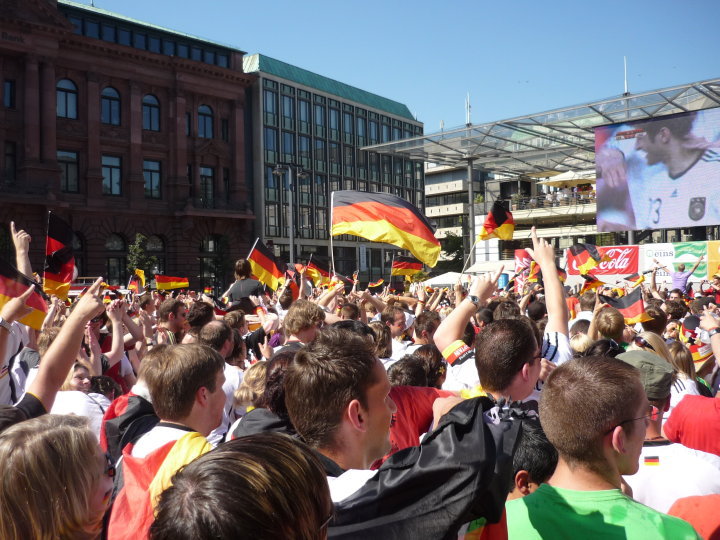
Bremen celebrating the 4:1 win over England at Domshof (Bremen)
In 2006, it was really neat to see Germans being patriotic for the first time since, well, ever. There aren’t as many German flags hanging on front porches as there are American ones in the US, but when it comes to soccer, Germany is a super proud “Fussball-Land”. Even though the games aren’t being played in cities around the country, and rather in the far reaches of South Africa, there is still a definite feeling of soccer mania in the air. It’s great! I even have a German soccer shirt to wear to the games (didn’t really make sense to get a US one… we lost to Ghana… enough said), and sometimes I catch myself saying “we” when referring to the German team. It’s quite an incredible feeling to be caught up in this sports-enthusiastic atmosphere. I think it’s a little more hands on this time around because I’m more on my own and not staying with a family, and I also think that WM 2006 jazzed everyone up and this year is just continuing the celebration. And what a celebration it is. There are loads of songs- some of them general World Cup 2010 South Africa and many, many more German team songs. Everyone dresses up in

Fans at Domshof (Bremen) – Town Hall in the background (by courtesy of Insa Kohler)
full schwarz, rot, gold (black, red, gold) get-up, and the party never stops. Everything here is World Cup-themed, which is certainly no different than four years ago. In fact, I think the only difference is that more Germans were able to go to the games when they were in Germany rather than South Africa, although there is certainly plenty of Team Germany support to be seen when the cameras pan the crowds of this World Cup. So all that’s really left to say is: Schland, oh, Schland, wir sind von dir begeistert – we’re CRAZY ABOUT YOU!!
by Daniel Bussard and Andrew Shuman ’11
Every weekend here in Bremen the same thing happens, everybody goes to their favorite bar or the lucky few that have tickets go to the stadium and watch the almighty Green and White, Werder Bremen. It’s a Bremen tradition, which almost everybody partakes in. If there is one thing every Bremer will talk about it is Werder Bremen and how they are doing right now and how they could do better.
Werder plays in the Weser Stadium, which is perhaps one of the nicest stadiums in the world, only problem is that right now they’re remodeling so right now it’s kinda a mess. It is located in the Östliche Vorstadt section of town east of the Viertel. It is directly next to the Weser and is also the location of many playing fields for different sports. The tickets to go to a game in the stadium are actually dirt cheap with “Stehplatz” (standing place) for a student running around 8 to 10 Euros a game with a season ticket for a student in the same area is 110 Euros. A “Sitzplatz” (seat) is going to run you 30 or more Euros but you always have a good view of the field no matter where you are. The atmosphere in the stadium is electric and awesome to experience. Everybody is dressed in green and white and singing the Werder chants. It’s kinda like American football back in the state but a little bit more extreme as here only soccer has the huge fan base and goes from fall to spring. My personal favorite space at the stadium is the Ostkurve, because this is mainly where all the hardcore fans are and where the atmosphere is explosive. It makes even the worst defeat seem slightly better, thankfully though Werder doesn’t often now defeat, having one of the best offensives in the Bundesliga.
Another great place to watch the game is one of the bars in the Viertel, which is where we normally watch the game when we don’t have tickets, especially at Hegarty’s one of the best bars in Bremen. The bars are always packed with fans due to the fact that you must buy a subscription that is outrageously expensive to watch live soccer games. It is a great substitute atmosphere when you don’t have tickets.
One of the cool distinct features of Werder is their training, it is always public and afterwards you can get autographs and pictures with the players. The players are also extremely friendly and outgoing here and often times we’ll be shopping at REWE and run in to Tim Wiese, Werder’s goalie. It is really awesome to watch the team practice and you come back form it with a new found respect for professional soccer players and the skills they have.
Brian, Braeden, Tom and Dan
The Dickinson Program happily accepted an invitation by the ‘Carl Schurz – Deutsch Amerikanischer Club‘ for a Thanksgiving Dinner at the Swissotel in Bremen. The Dickinson students were joined by members of the club and by several High School exchange students. Placed on different tables the Dickinsonians had the chance to talk to Americans and Germans, young and old members alike – with a positive outcome: three students were invited for coffee / dinner later this week by several members of the club. Dickinson students were also very successful at this year’s ‘Thanksgiving Bingo,’ winning first, second and third place prizes. Needless to say, that the food was good and plenty, all Dickinsonians enjoyed the event and were also among the last guests to leave!