Lithuania

For me, April was an especially awesome month, for even though it meant the beginning of our Sommersemester, it also included my first trek ever into Eastern Europe. However, there was one little catch, and that catch was the Eyjafjallajokull Volcano (pronounced eye-yuff-ohhhhhh-whatever) in Iceland. As I’m sure you all heard, the eruptions from the volcano produced a massive cloud of volcanic ash that slowly crept over Europe and forced the cancelations of thousands of flights each day.

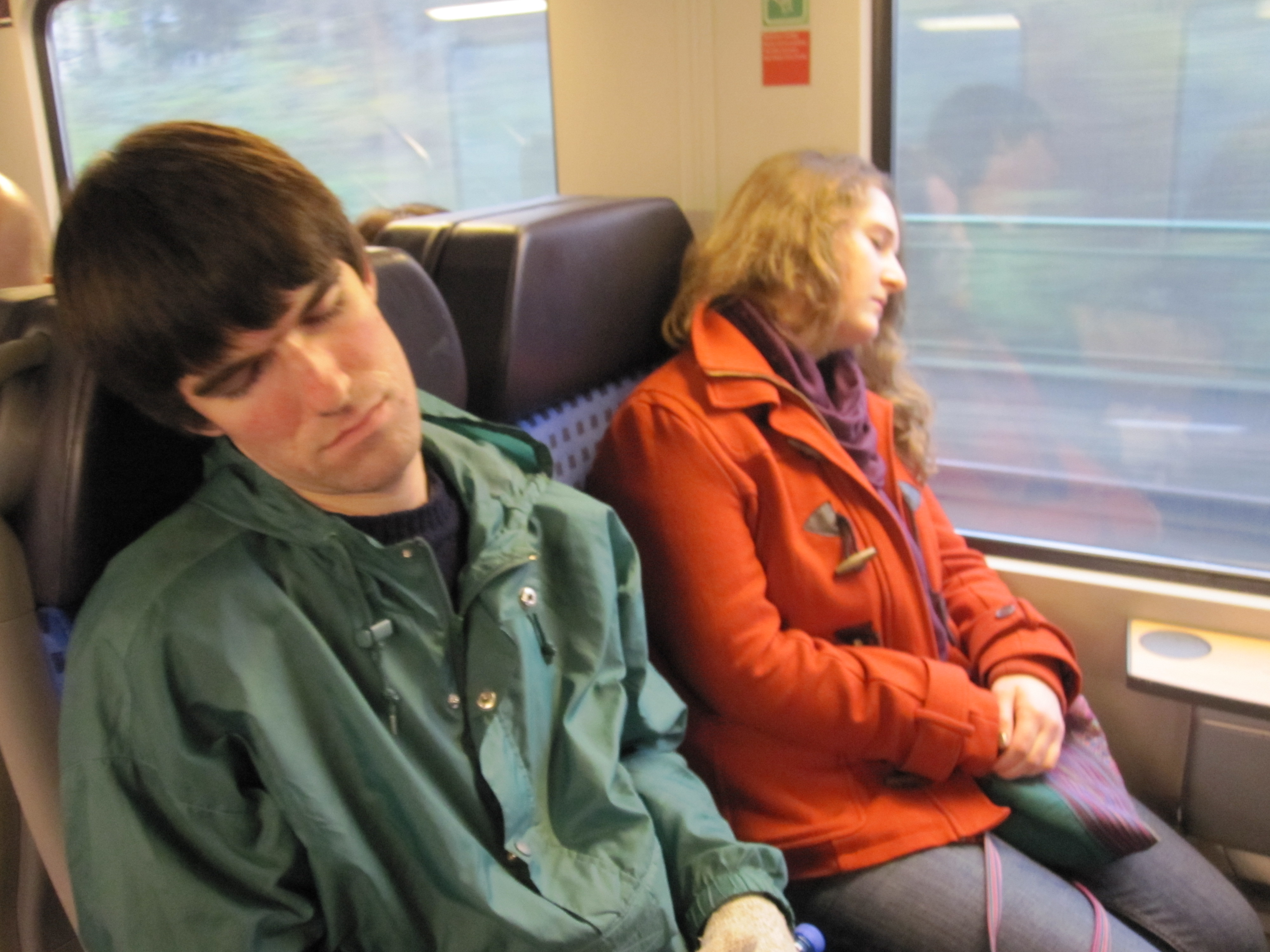
Naturally, the cloud eventually did cause the cancelation of my flight, which I should add was direct from Bremen to Kaunas, Lithuania (a total of maybe 2 hours in the air). Because I had been looking forward to this trip for quite some time, my awesome companion and fellow Dickinsonian Kara Elder (who is studying currently in Moscow) and I quickly agreed that it was necessary to find another means of transportation so that our trip could go through as planned. After some discussion, we eventually decided that we would travel by train, even though this increased the duration of our trips greatly. For Kara, it meant traveling 13 hours by train (around Belarus) from Moscow to Riga, Latvia, and then catching a bus for a 5-hour ride to Kaunas. Loooooong.

Well, not that I want to play the one-up game, but mine was a tad longer and not quite so easy. I boarded the train out of Bremen at 2:17 pm on Tuesday, and after making four connections and riding for 25 hours, I finally reached Kaunas on Wednesday at 4:30 pm. This epic and somewhat scary train ride took me into the heart of Poland and caused me just a bit of grief. Throughout these rides, I was asked by the Polish police to produce my passport, continually worried about missing my connections or whether or not I was traveling in the right direction, and was even gossiped about by two Polish women but in sign language (I glared back at them, but if you ever want to make me feel totally uncomfortable, learn sign language and use it to blatantly communicate with someone about me.). The biggest problem was the communication barrier.

Obviously, the first language there is Polish, and even though I don’t speak a lick of Polish, I didn’t envision this to be a huge problem from the get-go. Before I left, I was taught how to ask politely (in Russian) if one spoke English or German, but whenever I attempted to do this, it was clear that the train conductors did not want to deal with me. Now, I know that my pitiful attempts at “Russian” probably discouraged them from talking to me, and it certainly could have been the fact that very few people with whom I spoke actually knew German or English, but I kind of wondered to myself whether or not this “unwillingness to help” was really a reflection of the public perception in Poland of Russians. I know little on the subject regarding Russian-Polish relations, but I think I know enough to guess that there’s a little reason for some contempt towards Russia amongst the Polish community. Anyways, it wasn’t a huge deal; I was usually able to find one person that could either speak German or English and could help direct me/encourage me that I was headed in the right direction. These trials and tribulations also didn’t detract from the trip as a whole; quite the contrary, for it was lovely traveling across the Polish countryside and being able to see the architecture and general “quality” of the buildings change as I moved further into Eastern Europe.
In Kaunas, I of course met up with my fellow Odysseus and spent a few great days just walking around the city, taking in the crumbling-yet very charming-buildings, the quaint, cobblestone streets, and the general demeanor of the Lithuanian people. While the Lithuanians displayed looks of stiffness and stoicalness when we passed them on the street (which I expected due to reports I had gotten regarding the people of Moscow), they were always very helpful when we needed help or directions or just engaged them in a quick dialogue. They were certainly curious of us. Having spent the past 8-9 months in Moscow, Kara is quite familiar with the look that Eastern Europeans take to be “normal,” if you will, and has little trouble in reproducing it; I, on the other hand, am not and certainly looked foreign to any that passed us on the streets and received a few curious stares (but again, not out of contempt or malice). Needless to say, don’t go wearing a hooded sweatshirt with the words “Biglerville Athletics” across the front; you’re asking to be noticed. Another thing that should be mentioned is the food. Kara and I enjoyed a meal at a typical Lithuanian restaurant, and there we enjoyed dumplings filled with various kinds of meat or fish. While a simple, these meat dumplings were incredible. Covered in creamy mushroom and onion sauces, it wasn’t too much of a task for us to finish each and every last one. Anyways, to make a long story shorter, the trip to Kaunas was simply amazing, and having a little company made it that much better. I’d strongly encourage to visit Eastern Europe, for the area truly has a different feel to it. As for me, I absolutely want to go back one day.
Werder Bremen

by Daniel Bussard and Andrew Shuman ’11

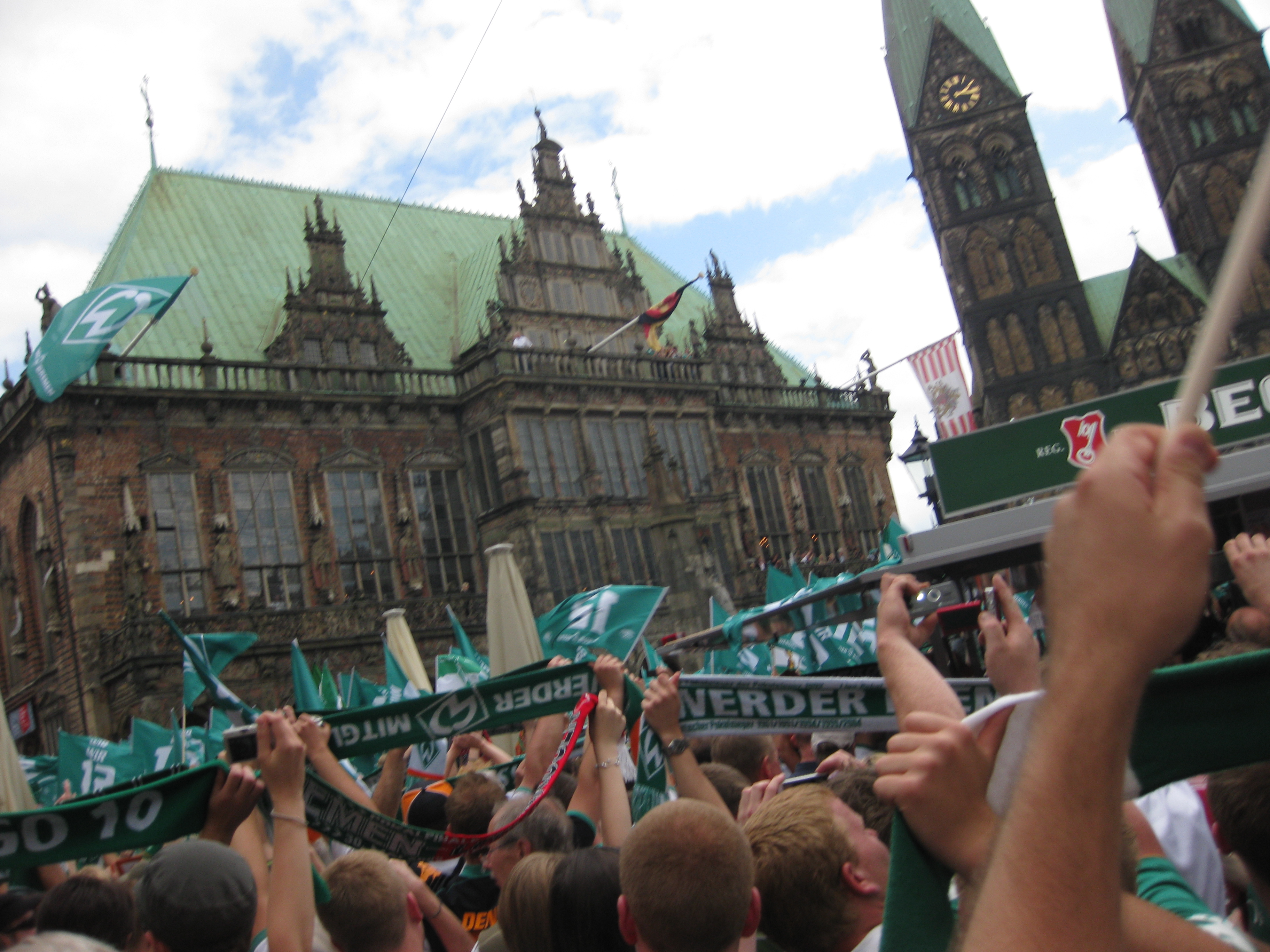
Every weekend here in Bremen the same thing happens, everybody goes to their favorite bar or the lucky few that have tickets go to the stadium and watch the almighty Green and White, Werder Bremen. It’s a Bremen tradition, which almost everybody partakes in. If there is one thing every Bremer will talk about it is Werder Bremen and how they are doing right now and how they could do better.

Werder plays in the Weser Stadium, which is perhaps one of the nicest stadiums in the world, only problem is that right now they’re remodeling so right now it’s kinda a mess. It is located in the Östliche Vorstadt section of town east of the Viertel. It is directly next to the Weser and is also the location of many playing fields for different sports. The tickets to go to a game in the stadium are actually dirt cheap with “Stehplatz” (standing place) for a student running around 8 to 10 Euros a game with a season ticket for a student in the same area is 110 Euros. A “Sitzplatz” (seat) is going to run you 30 or more Euros but you always have a good view of the field no matter where you are. The atmosphere in the stadium is electric and awesome to experience. Everybody is dressed in green and white and singing the Werder chants. It’s kinda like American football back in the state but a little bit more extreme as here only soccer has the huge fan base and goes from fall to spring. My personal favorite space at the stadium is the Ostkurve, because this is mainly where all the hardcore fans are and where the atmosphere is explosive. It makes even the worst defeat seem slightly better, thankfully though Werder doesn’t often now defeat, having one of the best offensives in the Bundesliga.

Another great place to watch the game is one of the bars in the Viertel, which is where we normally watch the game when we don’t have tickets, especially at Hegarty’s one of the best bars in Bremen. The bars are always packed with fans due to the fact that you must buy a subscription that is outrageously expensive to watch live soccer games. It is a great substitute atmosphere when you don’t have tickets.

One of the cool distinct features of Werder is their training, it is always public and afterwards you can get autographs and pictures with the players. The players are also extremely friendly and outgoing here and often times we’ll be shopping at REWE and run in to Tim Wiese, Werder’s goalie. It is really awesome to watch the team practice and you come back form it with a new found respect for professional soccer players and the skills they have.

Internship at Psychotherapeutic Children’s Clinic

by Kelsey Power

For the last few weeks, I have been interning at a child psychology clinic associated with the University of Bremen. It is run by one of the main child psych professors at the University, Frau Prof. Dr. Petermann. Many of her students do internships with her before they graduate; this is Pflicht, or a requirement, of German students.

Anyhow, I had sent out a resume and information about myself thinking “oh, this is a long shot” because I knew there was something else that I wanted to do with Psych outside of taking classes. A month went by, and I heard no reply, so I assumed that my application had been denied; however, three days later, I received a call from Dr. Petermann’s secretary to come in for an interview. Part of me wanted to pretend I never received the call because it meant that I had to actually put myself out there and use my German in a scary, real-life job-like atmosphere. Instead, I faced my fears and went in for the interview. At the interview table sat Dr. Petermann and her three Psychologists in the clinic. THREE NATIVE GERMAN SPEAKERS who were going to interview me…. I almost peed in my pants. Instead, I said to myself “well, Kels. Here goes nothing”. They kept smiles on their faces, even though I knew my German wasn’t perfect. And, everything worked out.

On Mondays and Thursdays, I get to watch therapy sessions and diagnostic sessions for children throughout the city; they are from 3-10 normally and have social issues or cognitive impairments. The other students/ interns are very welcoming, and they let me shadow them on serious assignments. It has been a great experience to see 1) a real life setting in which Psychology is used and 2) to put my German in a job context. I am really quite glad I didn’t run away from this opportunity, but I think after this year abroad, one gets used to being outside of their comfort zone. And sometimes, it is a great place to be.

Auma Obama

by Aimee Laubach ’11

On March 18th, we were fortunate enough to have attended a talk given by President Obama’s sister, Auma Obama. It was held at Jacobs University, a private, international, but English-speaking university located 20 minutes (by train) outside the city of Bremen. There were fewer than 30 people in attendance, making it a more intimate experience.

Auma Obama and Prof. Dr. Joachim Treusch, President of Jacobs University

Auma Obama first gave her biographical background. She was born and raised in Kenya, but then came to Germany to study at the University of Heidelberg and proceeded to get her PhD at the University of Bayreuth. Auma Obama spent most of her time talking about her efforts as a development worker in Kenya in addition to her views on the value of education. She works as a Sport for Social Change Network Coordinator in Nairobi. Sport for Social Change Initiative is an organization whose goal is to use the convening power of sports as a way to minimize the effects of poverty on marginalized youth and young adult populations. Obama expressed that, in her opinion, education can help young people identify their potentials and give back to the community. According to Auma Obama, students must use their education as a means for finding themselves and what it is that they are meant to do in life, while still taking responsibility for society.

I was sort of surprised that she did not once mention her brother, Barack Obama, but was delighted to hear her speak about her own life and her own work. In my opinion, it meant that she did not have to use her brother’s fame and importance to feel accomplished and successful. And her insight about education made me reevaluate and think about the importance of my education.

Auma Obama in discussion with students from both universities

Dickinson Reise to Wien

On February 9th, the Dickinson group left Bremen for an even colder Vienna, Austria, for a 5-day stay. Despite the bitter cold and snow, the sights in Vienna were really quite exceptional. In fact, even though I complained about it at the time, I think the white stuff enhanced the look of the already-beautiful buildings. No, it definitely did. Aside from amazing, Baroque-style buildings, we certainly were spoon-fed dosage after dosage of culture. From cathedral and museum visits to plays at the theater, we certainly experienced the Viennese culture. Among the highlights were trips to the Schatzkammer, a treasury which houses the priceless collection of ornately-designed jewels and crowns and robes and lances and goblets from the Holy Roman Empire and old Austro-Hungarian Empire, and the Österreichische Nationalbibliothek, which is easily the largest library in Austria as it holds 7.4 million works in its collection and is also lavishly decorated in the Baroque style with frescoes and marble pillars and, well, marble everything.

During our free day, I opted to head out to the Zentralfriedhof (it’s a big cemetery) and pay my respects to the classical-music Gods. Armed with my iPod (which was conveniently playing Beethoven and Mozart), I walked the grounds and saw the graves of Beethoven, Franz Schubert, Johannes Brahms, Johann Strauss, and then a memorial to Mozart (he’s actually buried in a mass grave in a smaller graveyard nearby, which I did visit as well). The stroll around the cemetery was only made better by the constant snowfall, which delicately covered the evergreens and graves and made the place seem not as sullen, but at the same time, I was reminded of my location by the muffled sounds of the city from the snow and the desolate feel that can sometimes accompany winter. It was quite cool. The one surprise from my visit was the discovery of Johann Hans Hölzel’s grave. In life, Mr. Hölzel was an Austrian composer of sorts but was more commonly known as the pop musician Falco. His many hits include most notably “Rock Me Amadeus,” which you can hear below, if you so choose. I felt it odd that this man was bumping elbows with Beethoven in death while the man about whom he sang in life rested a couple miles away. Of course, I’m not really complaining, and actually, I kicked myself at the time for not having at least one of his songs on my iPod.

The last thing about Vienna that I will briefly mention is the food, for it is so good. Specifically, Wiener Schnitzel-Vienna’s speciality-is a thin slice of heaven (a fried cutlet of veal or pork) and should be consumed by each and every one of you before you die (unless you happen to be a vegetarian, of course). I could talk about much more, for the trip to Vienna was certainly a great experience, but really, I can only use beautiful and incredible so many times before I start sounding boring and redundant.

Thanksgiving Dinner

Brian, Braeden, Tom and Dan

Brian, Braeden, Tom and Dan

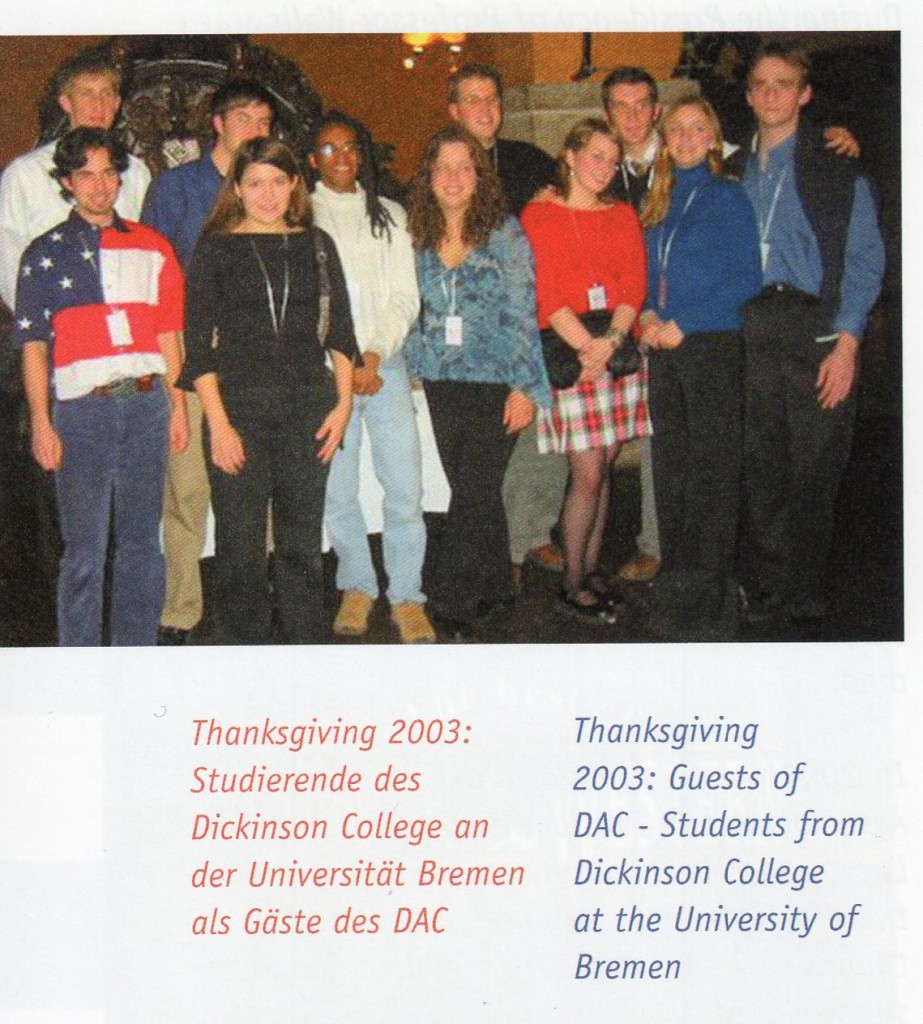
The Dickinson Program happily accepted an invitation by the ‘Carl Schurz – Deutsch Amerikanischer Club‘ for a Thanksgiving Dinner at the Swissotel in Bremen. The Dickinson students were joined by members of the club and by several High School exchange students. Placed on different tables the Dickinsonians had the chance to talk to Americans and Germans, young and old members alike – with a positive outcome: three students were invited for coffee / dinner later this week by several members of the club. Dickinson students were also very successful at this year’s  ‘Thanksgiving Bingo,’ winning first, second and third place prizes. Needless to say, that the food was good and plenty, all Dickinsonians enjoyed the event and were also among the last guests to leave!

Arrival

Hello and welcome to the blog of the Bremen-Program!

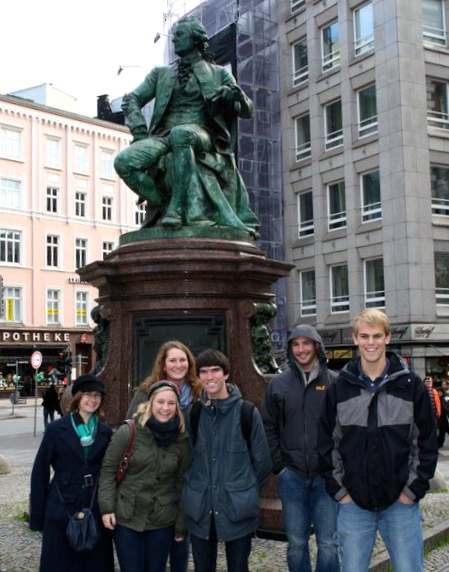
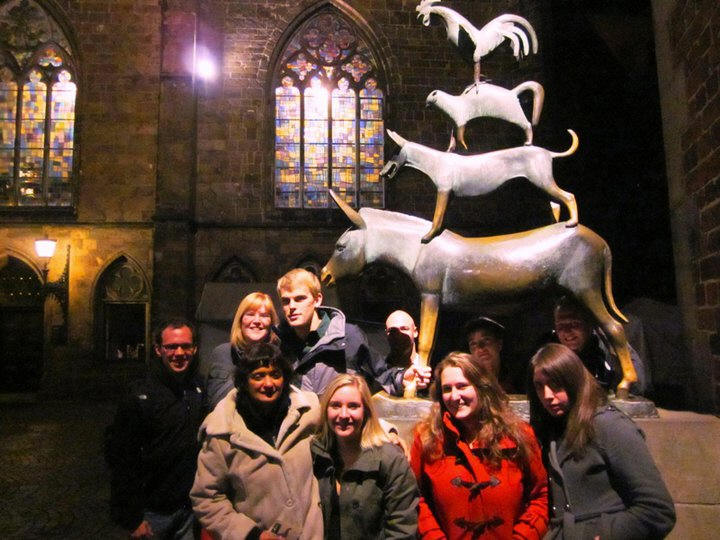
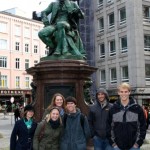
In front of the Lessing statue in Hamburg

In Hamburg


The new class of students has arrived in Bremen. They came from different German cities where they attended a language camp, among these cities were Dresden, Saarbrücken, Stuttgart and Düsseldorf. Some students even took the chance and went to the Oktoberfest in Munich before coming to Bremen.

Exciting German bureaucracy (waiting room of the Cititzen Service Center in Bremen)

Exciting German bureaucracy (waiting room of the Cititzen Service Center in Bremen)

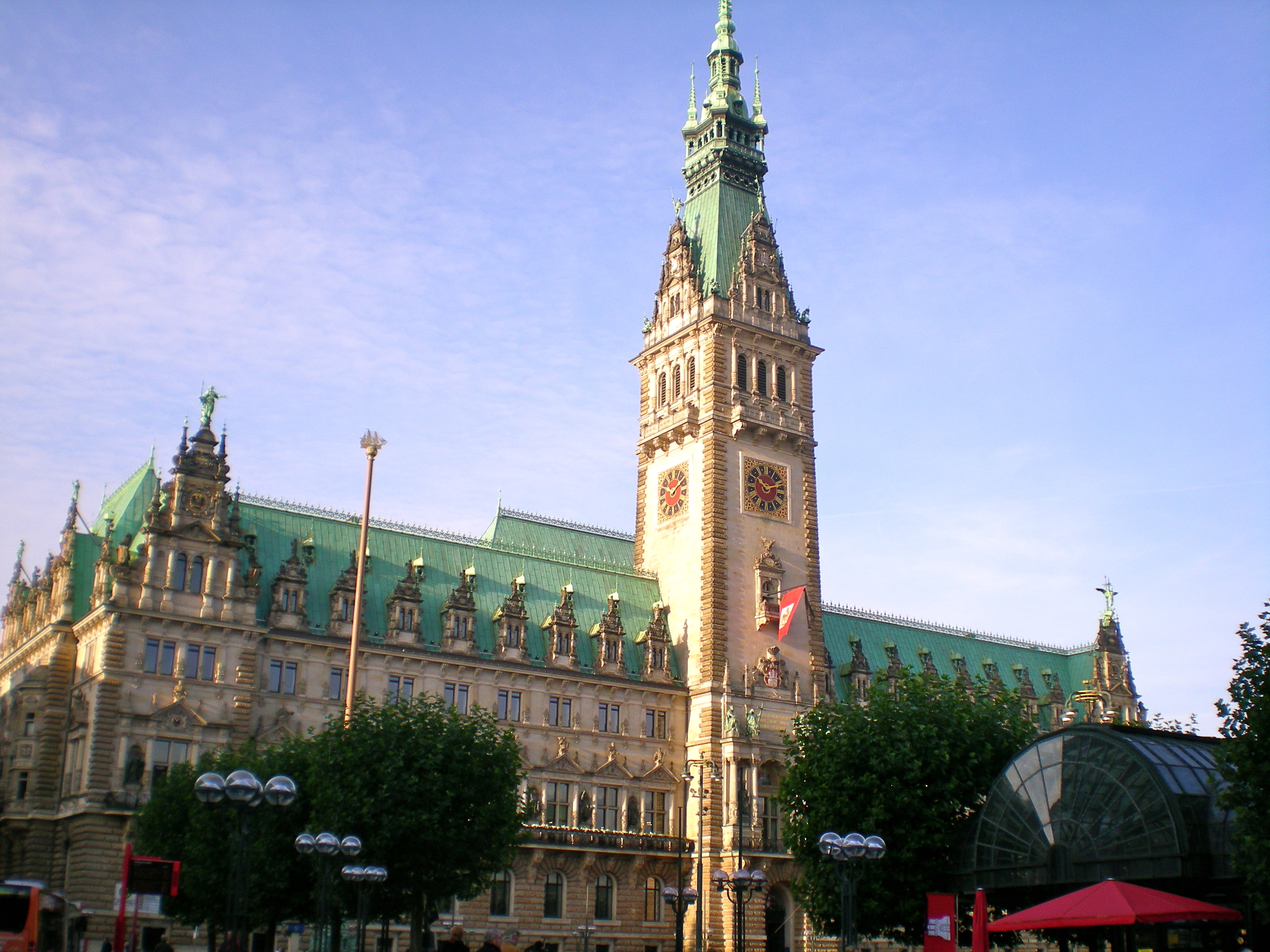
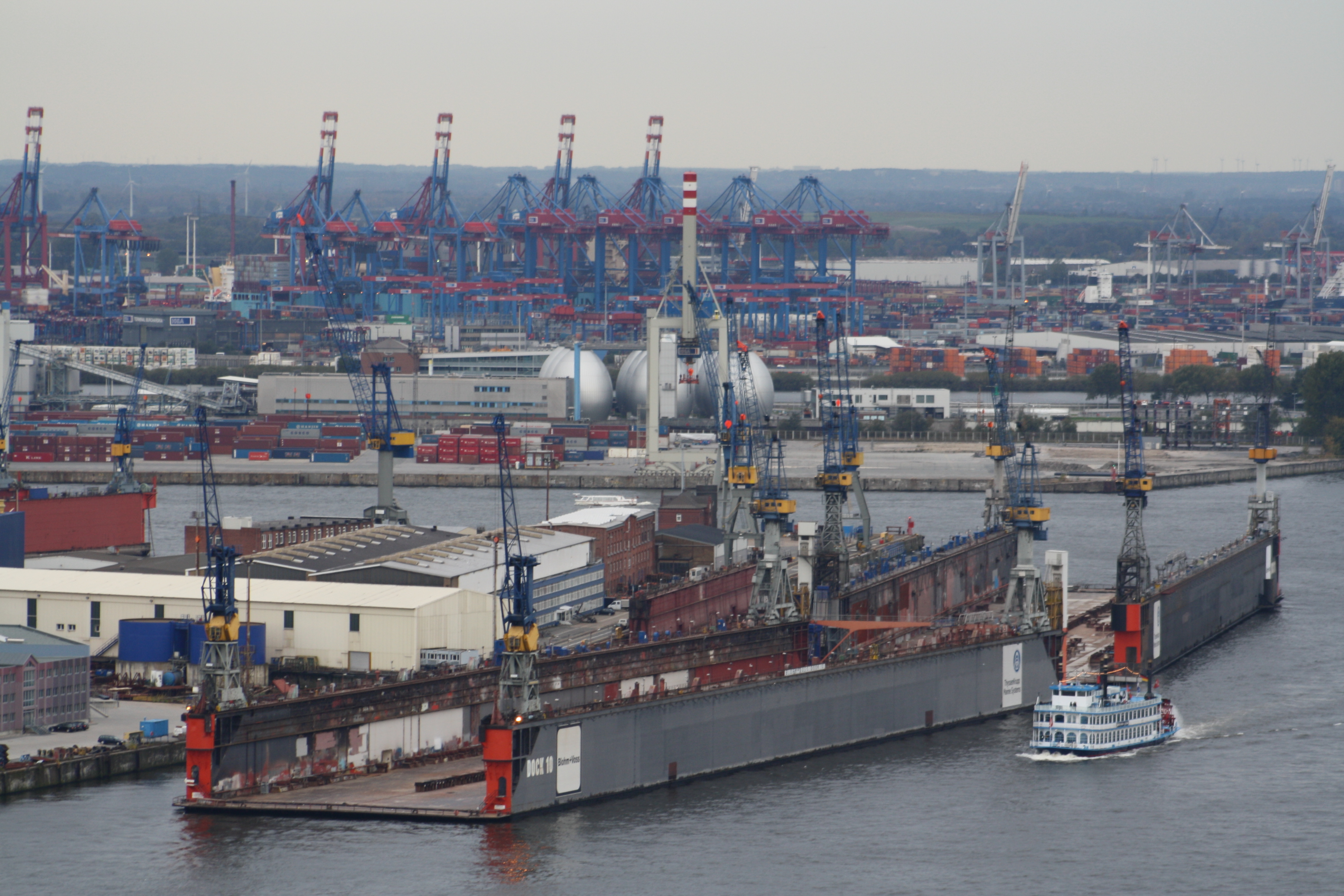
But before classes start, the students had to apply for a residence permit, proof of residence, library cards, wireless network passwords and many more things. But the first encounter with German bureaucracy is done and we even found time for a day trip to Hamburg!