Herzlich Willkommen in Bremen

Last week, we welcomed our new Dickinson-in-Bremen students Alex, Haley and Kate in Bremen.

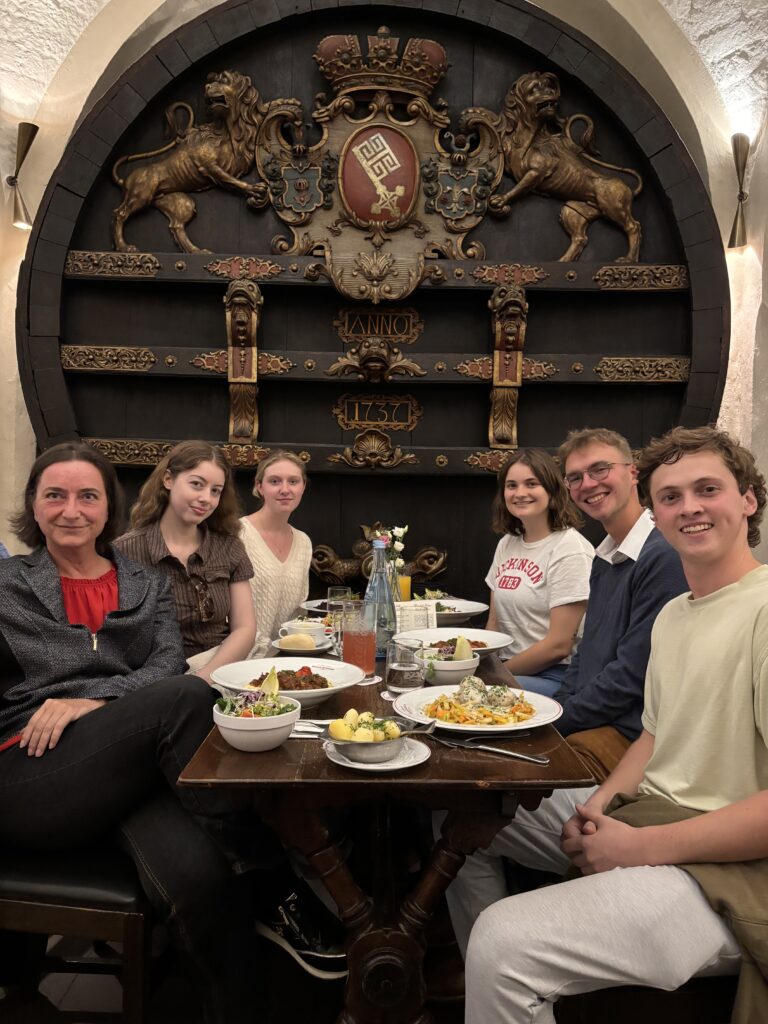
We started off our Orientation Week with a delicious dinner in the “Ratskeller” in the historic center of Bremen as well as a tour through Bremen by former Dickinson-in-Bremen student Grear, who studied abroad in Bremen during the Spring in 2024 and is now doing his master in Germany. He came to visit us in Bremen to help our new students get to know the city and show them his favorite spots. Thank you, Grear!

from left to right: Academic Director Dr. Janine Ludwig, Haley, Kate, Program Coordinator Antonia Gabler, Alex, former DiB Student Grear.

Our new students will attend our Dickinson-in-Bremen Orientationweek this week, before they start their classes at Uni Bremen next week.

We can’t wait to spend the next semester(s) with you in Bremen!

Tübingen Cultural Trip

by Makayla McCloskey ’26 and Crosby Wilkin ’26

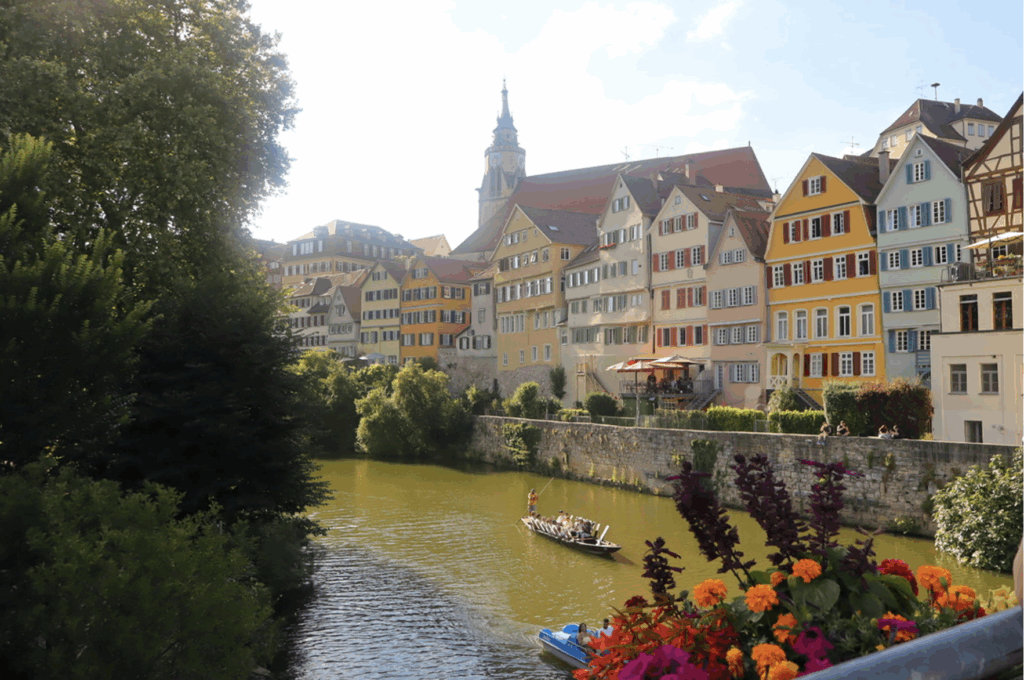
With a very generous donation from a Dickinson Alum, six Dickinson students were able to afford a weekend trip to Tübingen, Germany. While there, we were able explore the city and visit Professor McGaughey, a Dickinson Professor currently on sabbatical.

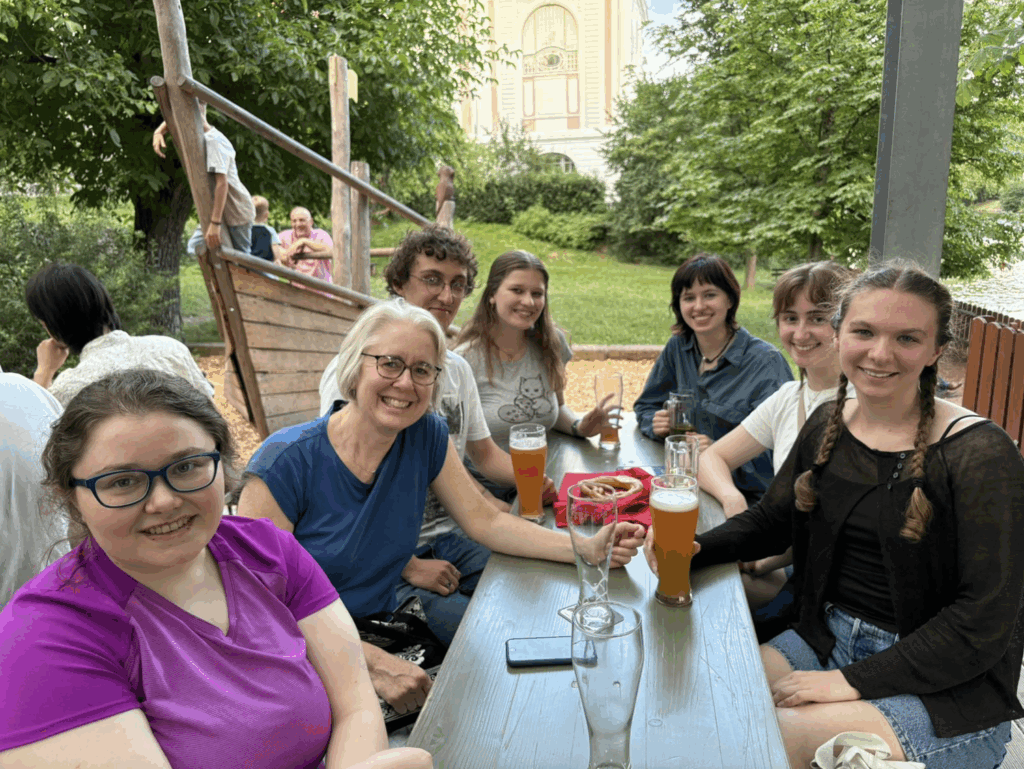
On Friday afternoon after we finally arrived, Professor McGaughey gave us a quick tour of her favorite places to grab a drink and helped get us oriented with the city. We ended our evening with Professor McGaughey at the Neckarmüller Biergarten, which sits right along the bank of the Neckar River.

from left to right: Ellen, Professor McGaughey, Crosby, Olivia, Isabel, Delaney, Makayla

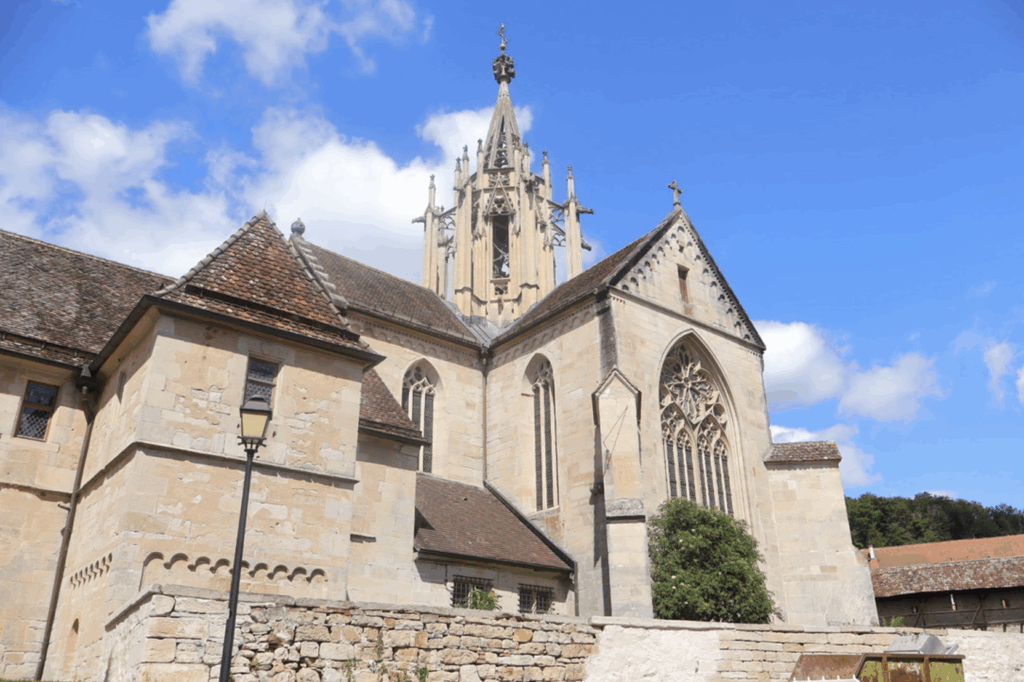
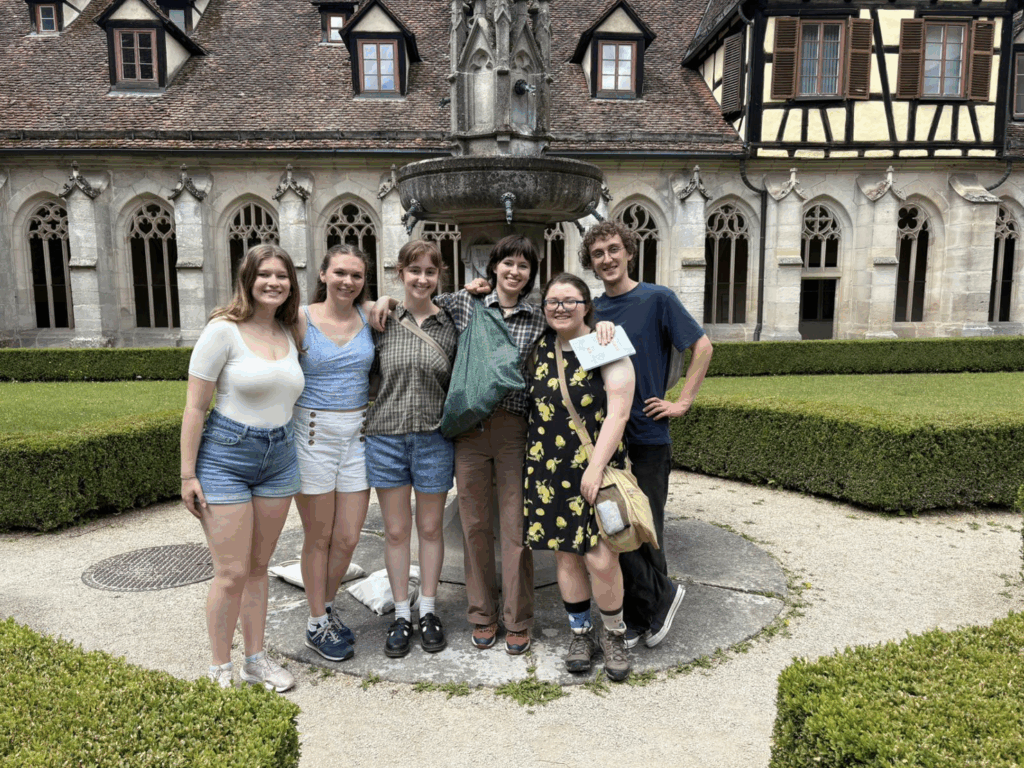
We started our Saturday by taking the Regional Tram to Bebenhausen, a small village just outside of Tübingen, famous for its rich history and beautiful Klöster (monasteries). Naturally, we toured the Klöster and learned lots about the local history.  

from left to right: current Dickinson in Bremen students Olivia, Makayla, Delaney, Isabel, Ellen and Crosby

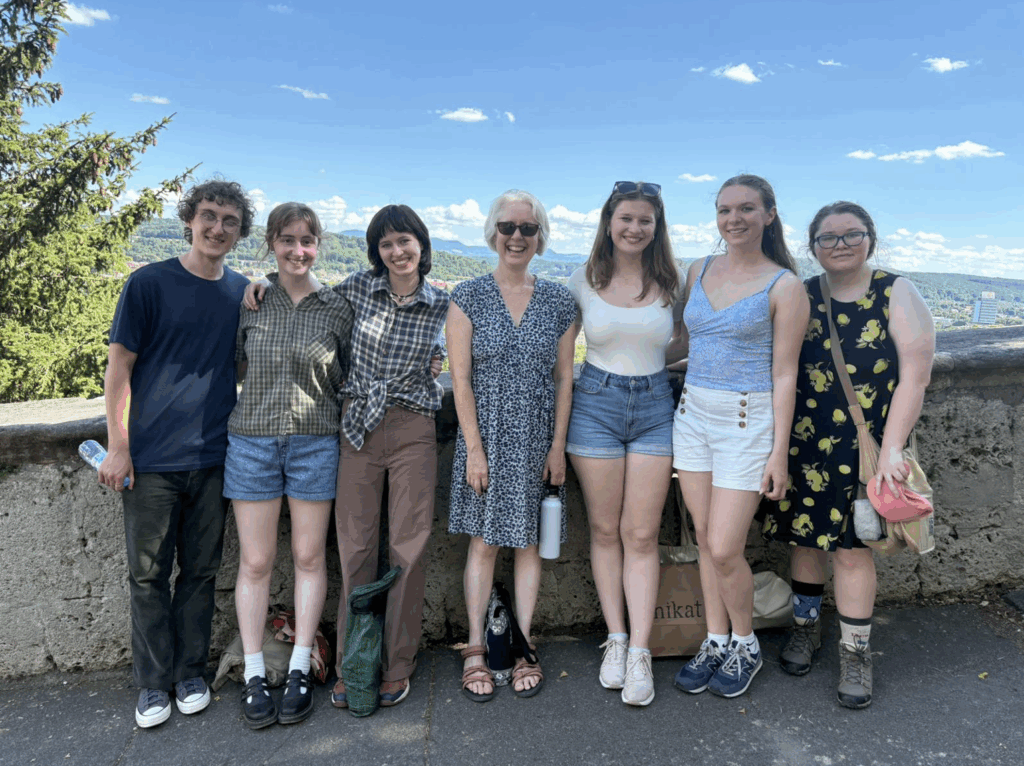
Afterwards, we met with Professor McGaughey and her Stepmother, to learn about the Tafel in Tübingen, a foodbank where young people often volunteer. Next, we moved onto a city tour. We hiked up a large hill to the University of Tübingen, where we got to look over the city and take in the sights of some of its most important and historically significant locations.

from left to right: Crosby, Delaney, Isabel, Professor McGaughey, Olivia, Makayla, Ellen

Sunday morning, we took one more turn about the city and explored the Hölderlin tower, a building famous for being the place of residence of famous poets, most notably Friedrich Hölderlin. Although the trip was short, with the help of Professor McGaughey we received an exclusive look into life in Tübingen and had a ton of fun in the process.

Nina and Crosby Take on Berlin

by Nina Grafton ’26

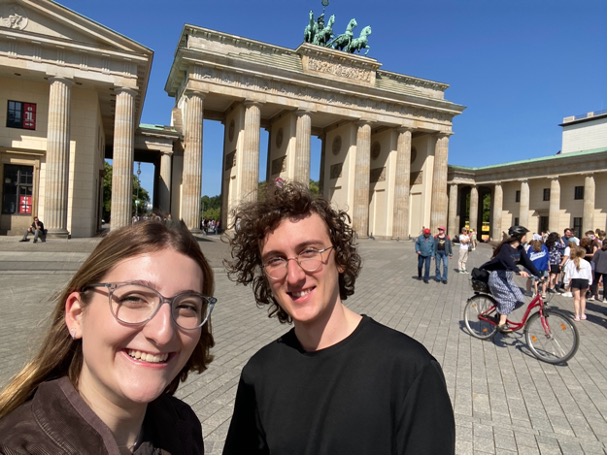
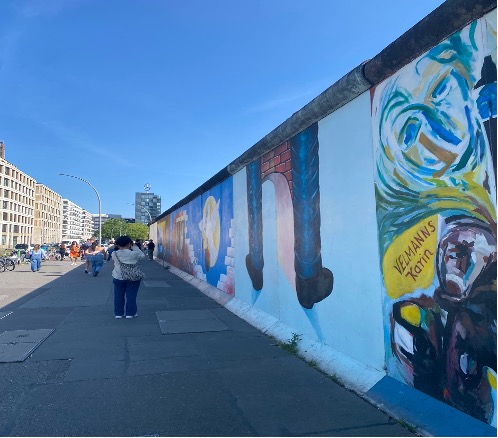
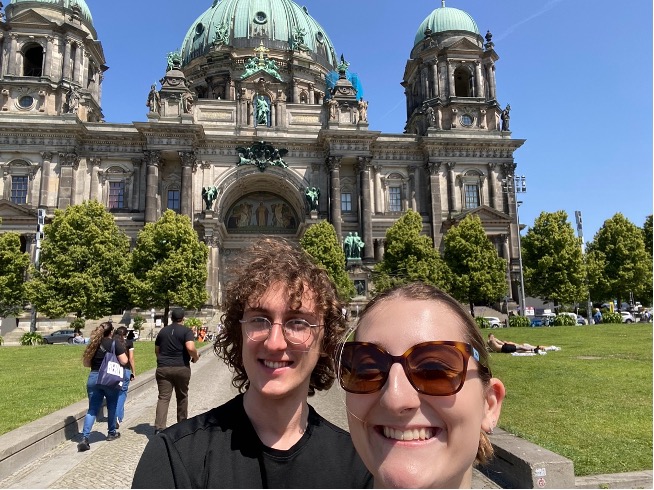
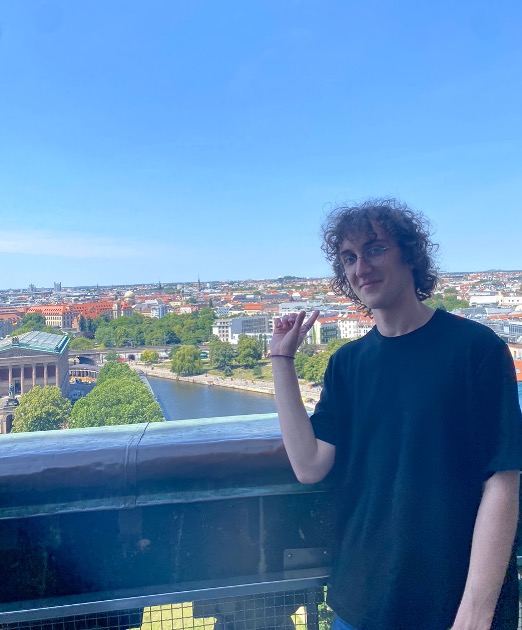
Thanks to a generous donation to our program, Crosby and I had the opportunity to travel to Berlin for a long weekend. Despite the very hot weather, we were able to see many of Berlin’s important buildings and museums. We did many of the “traditional” things to do when in Berlin, like visiting the East Side Gallery or the Brandenburger Tor. But we also visited places like the Schwules Museum and even climbed to the top of the Berliner Dom! Our trip was rich in history and culture, and we hope we can go back to explore Berlin again sometime in the future.

Crosby and I at the Brandenburger Tor, the first monument we visited.
East Side Gallery: It was moving to think about the East Germans who were shot at that Wall when they tried to overcome it to flee to the West.
Berliner Dom
Crosby at the top of the Berliner Dom.
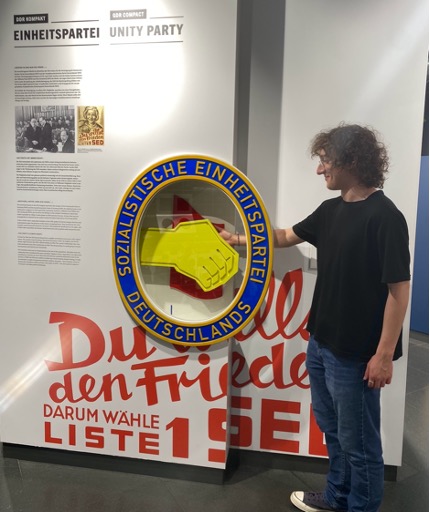
Crosby “shaking hands” with the SED at the DDR Museum.
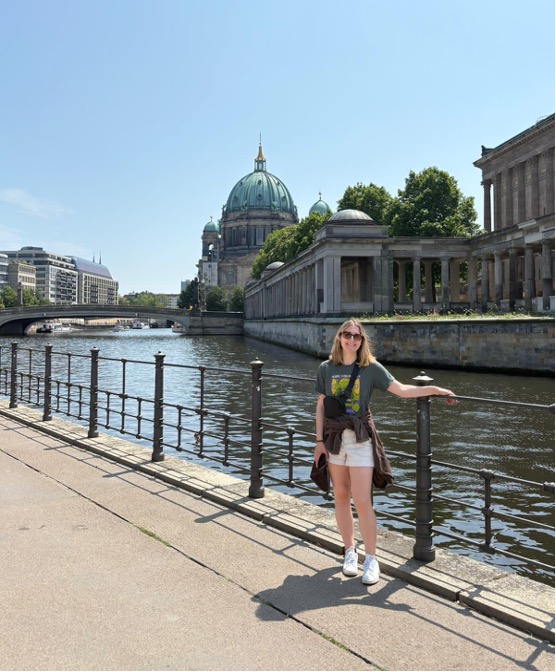
Me in front of the Spree and the Alte Nationalgalerie!

40th Anniversary – Wednesday June 4

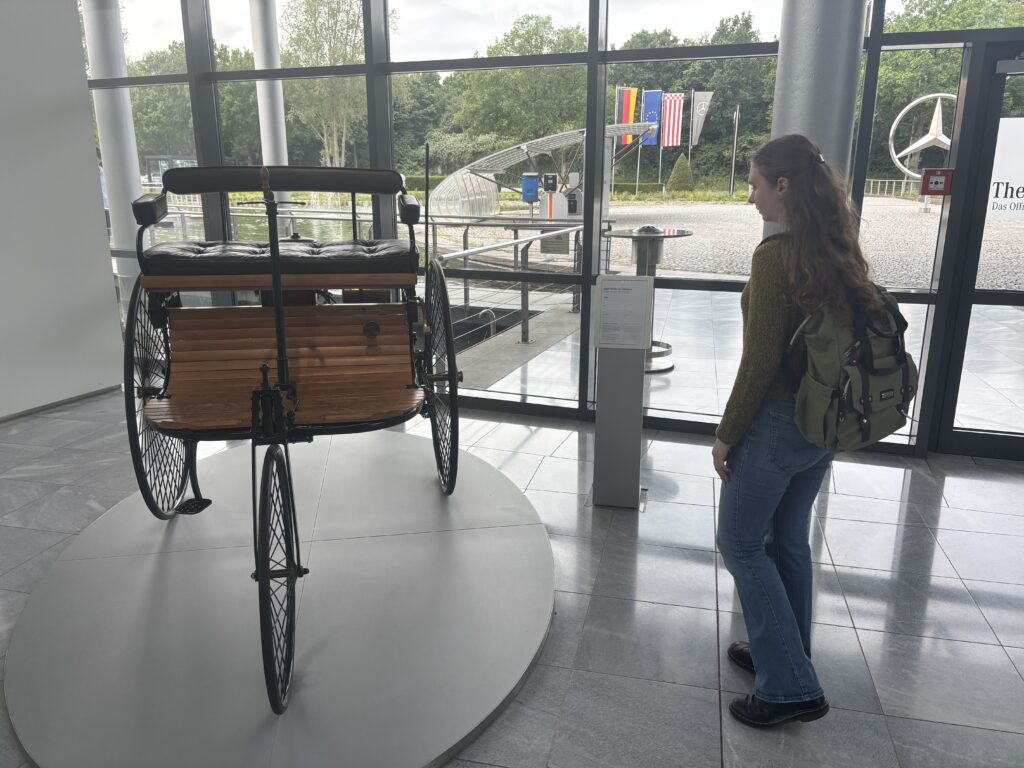
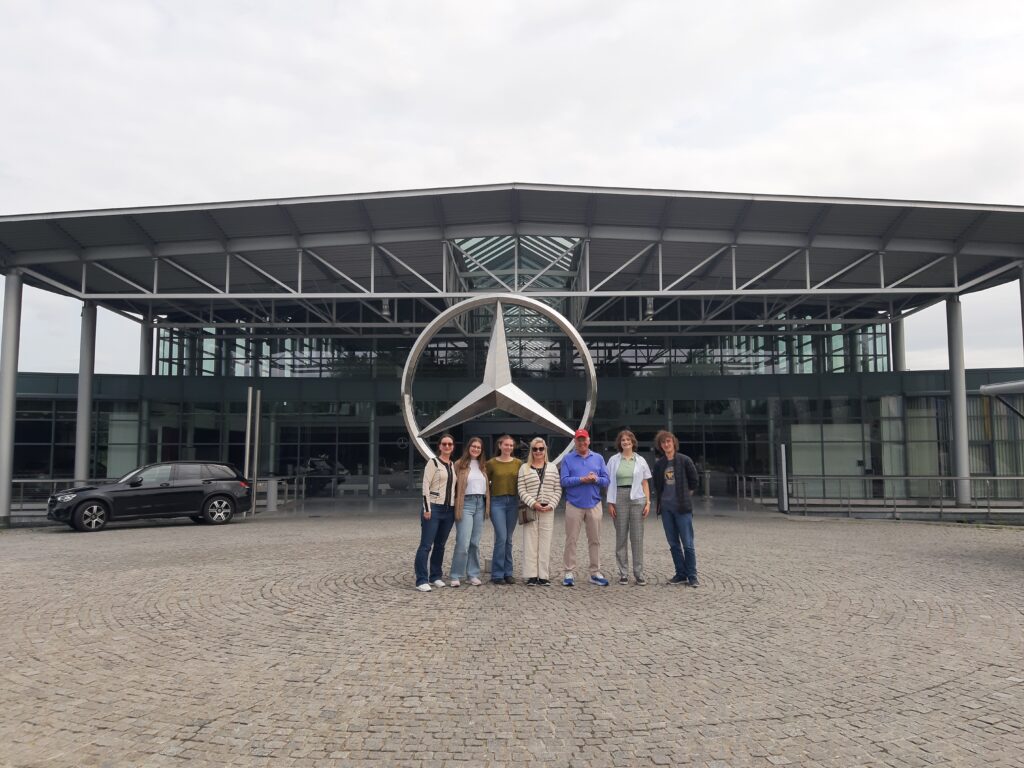
On Wednesday, President Jones and his wife Beth visited the Mercedes Plant in Bremen together with some of the current Dickinson-in-Bremen students.

looking at different Mercedes cars from throughout the time ©Antonia Gabler

Due to security measurements, we unfortunately weren’t able to take our phones inside of the plant to take any pictures or videos, but believe us, it was truly spectacular and mesmerizing.

from left to right: Dr. Janine Ludwig (Academic Director of the Durden Dickinson in Bremen Program), Olivia Ammon (current Dickinson-in-Germany student), Makayla McCloskey (current Dickinson-in-Germany student), Beth Jones, College President John E. Jones III, Antonia Gabler (Program Coordinator of the Durden Dickinson in Bremen Program), Crosby Wilkin (current Dickinson-in-Germany student) ©Janine Ludwig

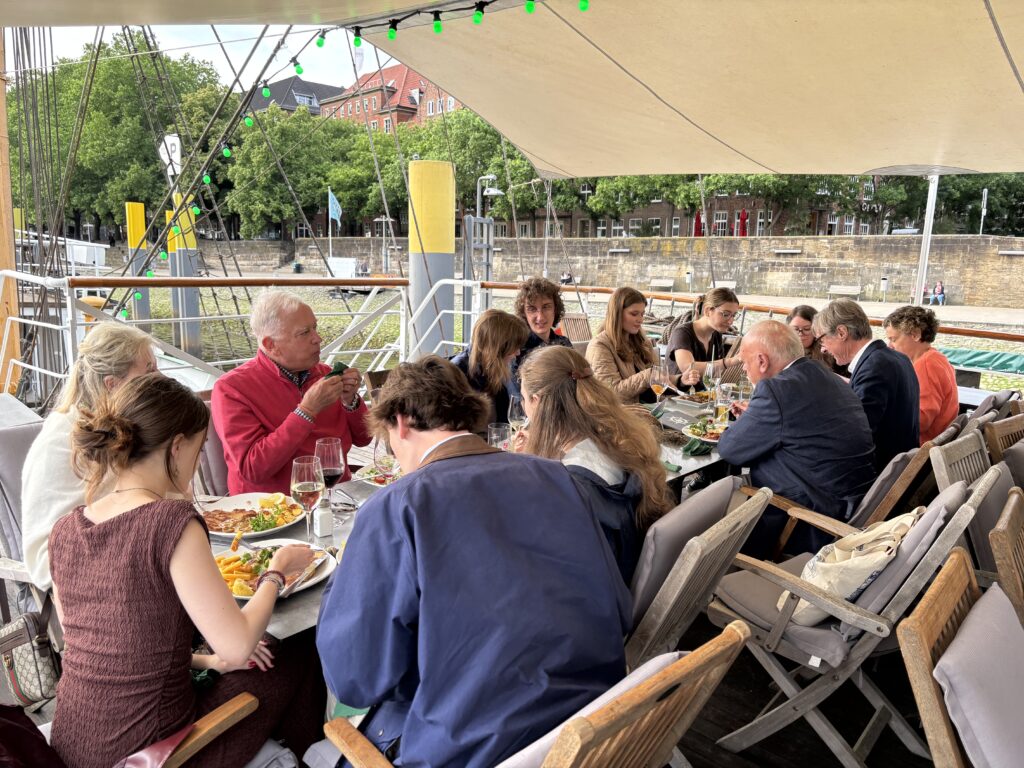
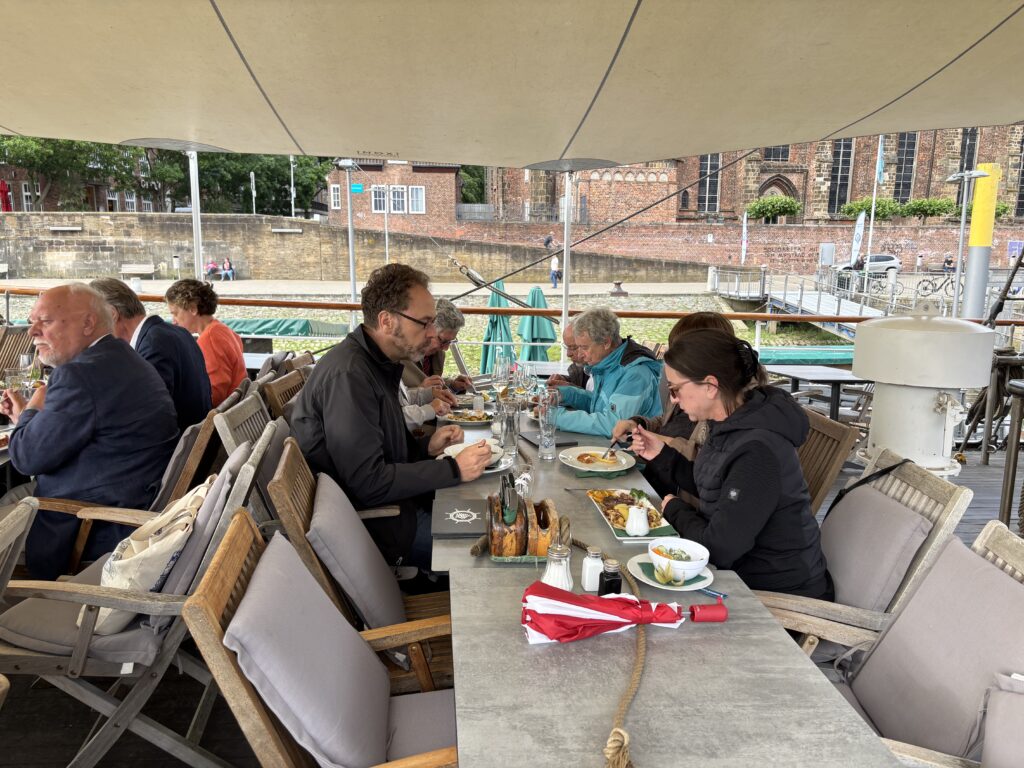
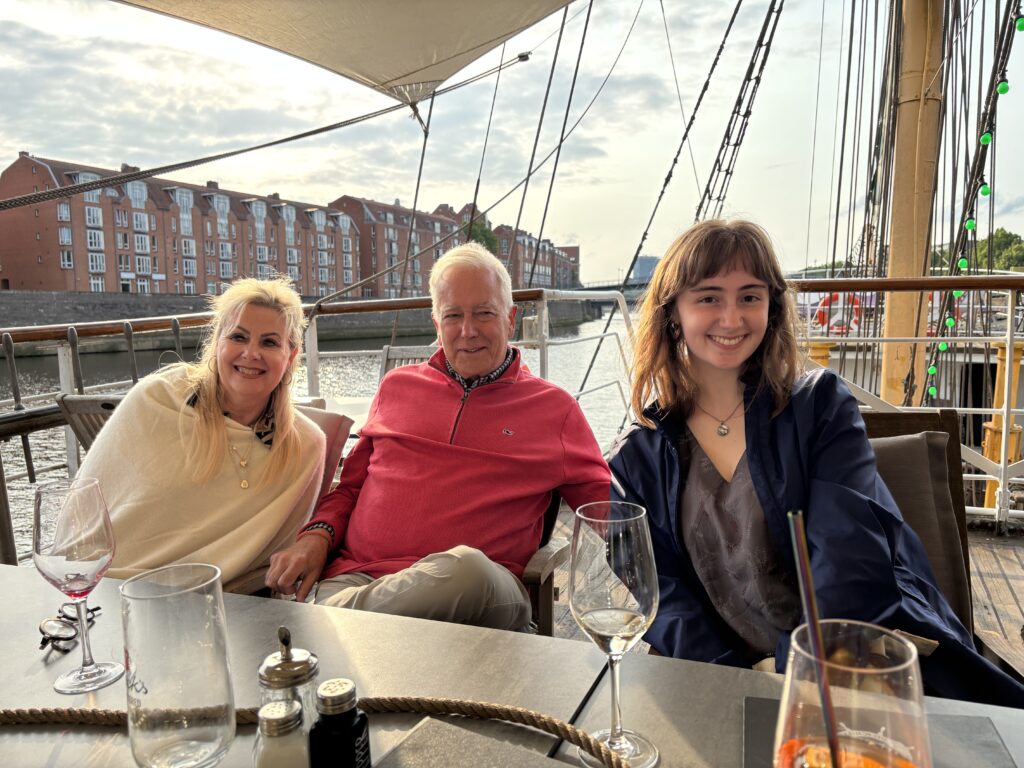
In the evening, we concluded our anniversary celebrations with a wonderful dinner at Restaurant Ship Alexander von Humboldt with the current Dickinson-in-Germany students as well as many of our guests of honor.

we enjoyed a delicious dinner on deck ©Antonia Gabler
©Antonia Gabler

from left to right: Beth Jones, President John E. Jones and current Dickinson-in-Germany student Delaney Bright ©Antonia Gabler

We would like to thank everyone who took part in our 40th Anniversary Program celebrations. We are so grateful for our Dickinson-in-Bremen community, friends and supporters all around the world.

Special Object Presentation at the Austrian National Library – video clip

During our Vienna excursion, we had the chance to experience a special object presentation at the Austrian National Library during which we were allowed to browse through books from various centuries.

Watch our newest Youtube clip to get some impressions:

Music: BackgroundMusicForVideo via pixabay.com

A Visit to the German Emigration Center (Deutsches Auswandererhaus)

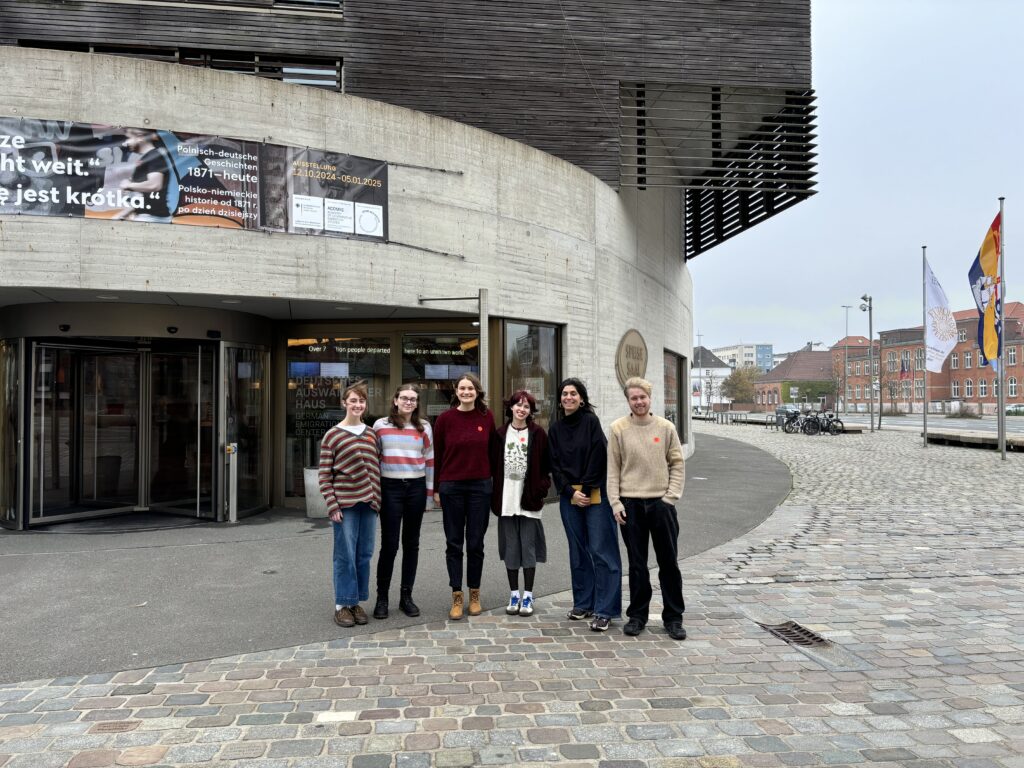
In front of the Emigration Center in Bremerhaven-

In the context of Dr. Ludwig’s course on comparing German and American culture, the students of the seminar had the opportunity to visit the “Deutsches Auswandererhaus” (German Emigration Center) in Bremerhaven. Marie, a student from Dr. Ludwig’s seminar, briefly summarized the visit for us:

A rebuild of the Bremerhaven quay.

“Today we went to the Deutsche Auswanderungshaus (German Emigration Center) in Bremerhaven with a small group of students. In advance, each member of the group received an emigrant’s card so we were able to follow their individual story.”

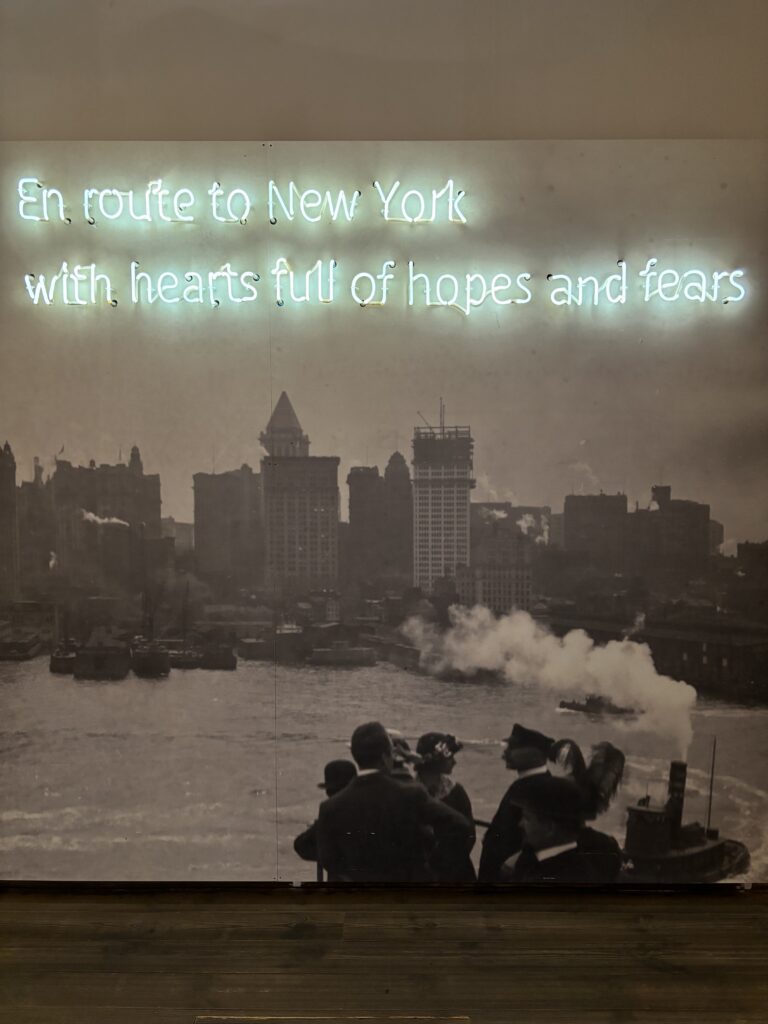
“The stories are the experiences of people who really existed. Our journey into the past began in 1888. That’s when many people in Hamburg, Rotterdam and Bremerhaven began their journey to a new world. In total, seven million people emigrated during the 19th and 20th century. The starting point was the quay in Bremerhaven, which brought many emigrants to New York. It was an exciting journey into the past and certainly created some food for thought.”

Photographs of the journey to New York.

Missing the Osterdeich…

by McKenna Hillman ’25

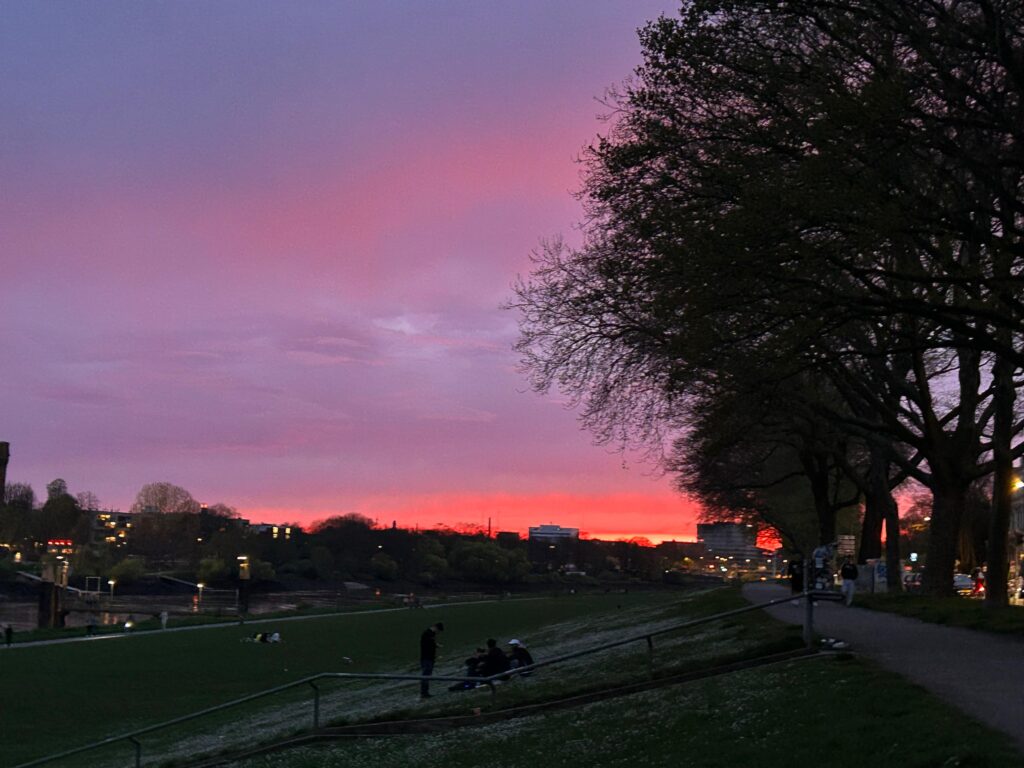
The Osterdeich during sunset (photo taken by Dickinson in Bremen volunteer Ege)!

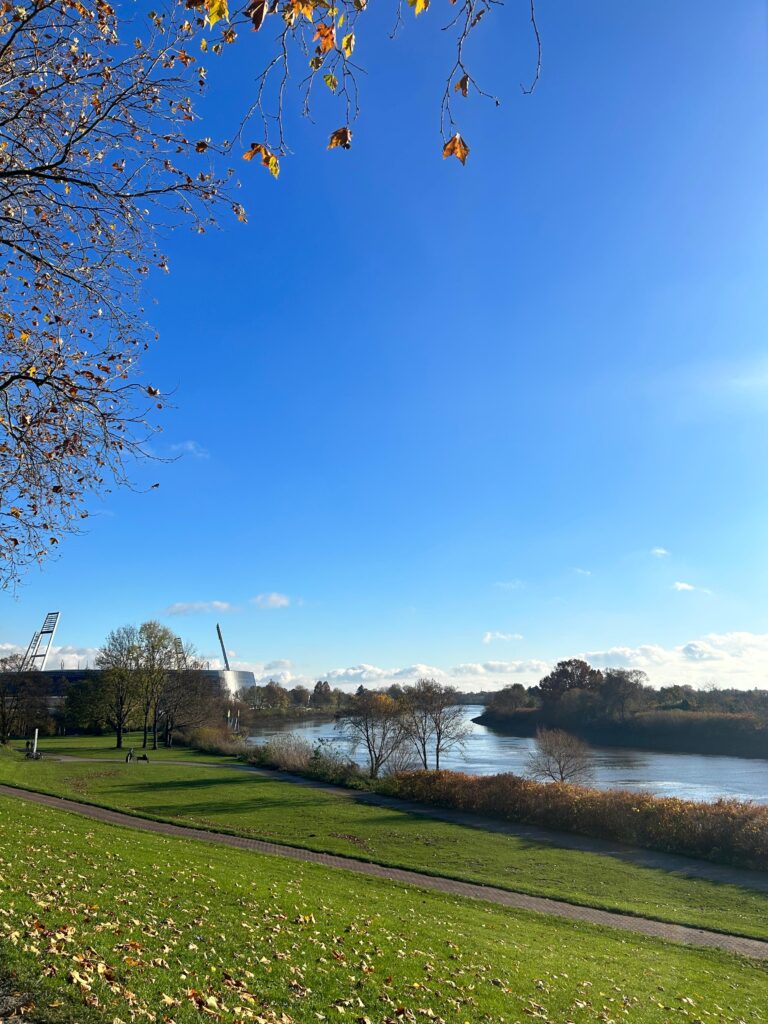
If there is anything I miss about Bremen after returning to the US, it has to be the Osterdeich. Of course, there are other things to miss, but it’s hard to beat an evening stroll along the Weser, dodging cyclists and sharing a quiet moment on a bench with a stranger. I was lucky enough to live on the edge of the Viertel, just a few minutes’ walk away from the Osterdeich—a distance I never hesitated to take advantage of.

My roommate, a public health student who shared my penchant for arts and crafts, first showed me the Osterdeich at night on a freezing February evening. I can no longer remember why we were up so late, but her suggestion of a short walk to see the moon over the Weser was enticing enough to brave the cold. We talked about preferring morning or evening (a topic we disagreed on), and I described the trials and tribulations of my German language intensive courses (anecdotes that she was equal parts bewildered and amused by). The moon was bright enough that the lack of streetlights on the path closest to the river wasn’t a problem. Looking back on it, I wish I had taken a photo or two to share, but I’m happy to say I was too caught up in the moment to think of it. It wasn’t the first time I forgot to photograph a special moment from my life in Bremen, and it certainly would not be the last.

Close to the Weserstadion (photo taken by DiB volunteer Ege)!

Chilly March rains largely kept me away from the Osterdeich, for the most part. April, however, brought warmer weather, and with the warmer weather came crowds. The weather was its own incentive to be outside, but as an avid people watcher, the crowds presented their own form of entertainment for solitary walks in the early afternoon. Picnics, games, family outings, there were so many different people to observe. There’s a large hill behind the Kunsthalle, across the road from the Osterdeich, with a great view of the Weser and a few benches to sit on. I vividly remember an afternoon spent on one of those benches eavesdropping on conversations about politics and watching kids dodge each other on their bikes. I, myself, had my fair share of Osterdeich gatherings, both with Bremen natives and with students from Dickinson and Uni Bremen.

I can’t say leaving Bremen was easy for me, but I will always remember my final evening stroll through the Osterdeich—the city skyline standing out against a brilliantly pink sunset was the best goodbye I could have gotten. I’m counting down the days until I’m able to go back and visit.

Making Bremen a better place!

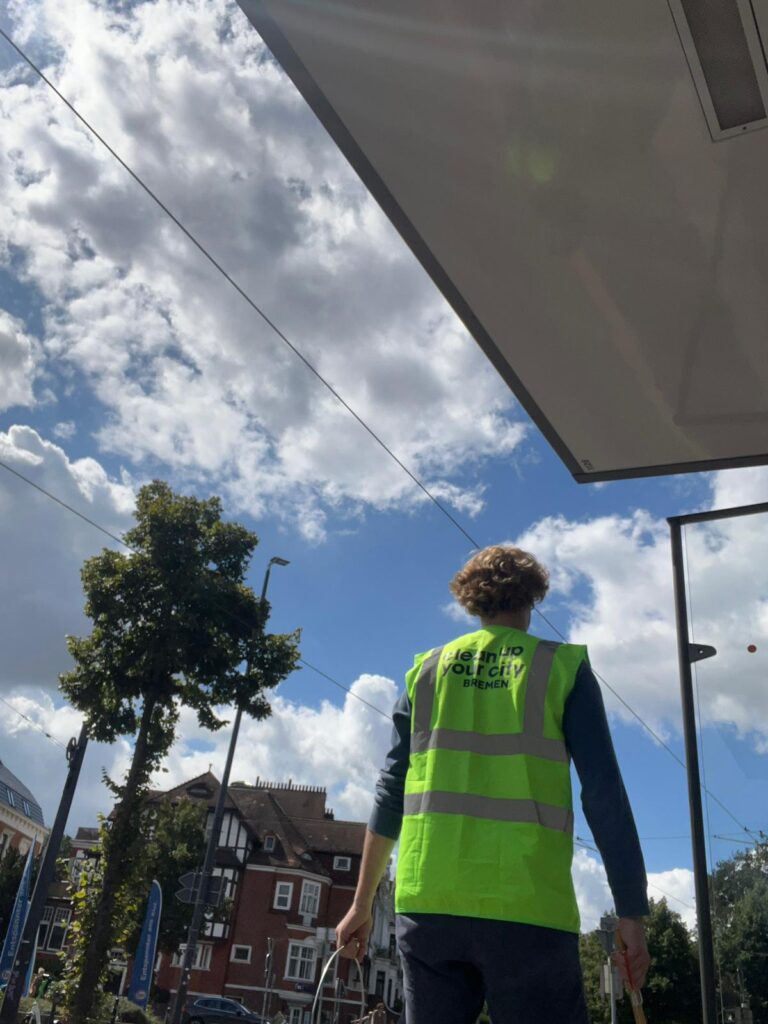
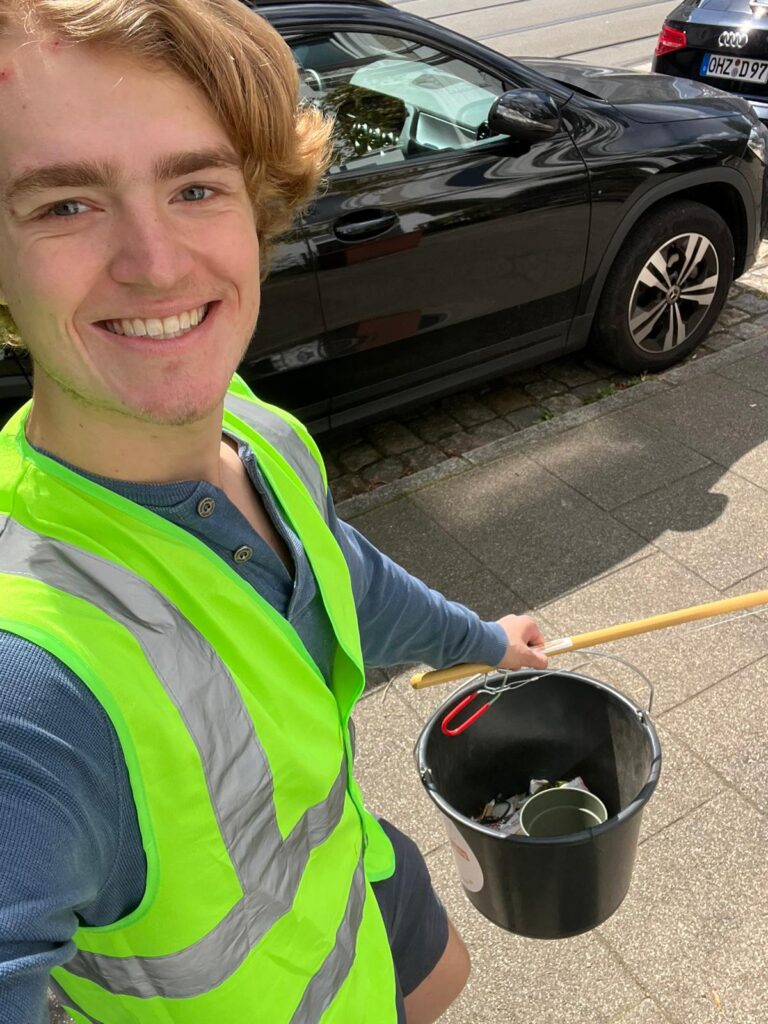
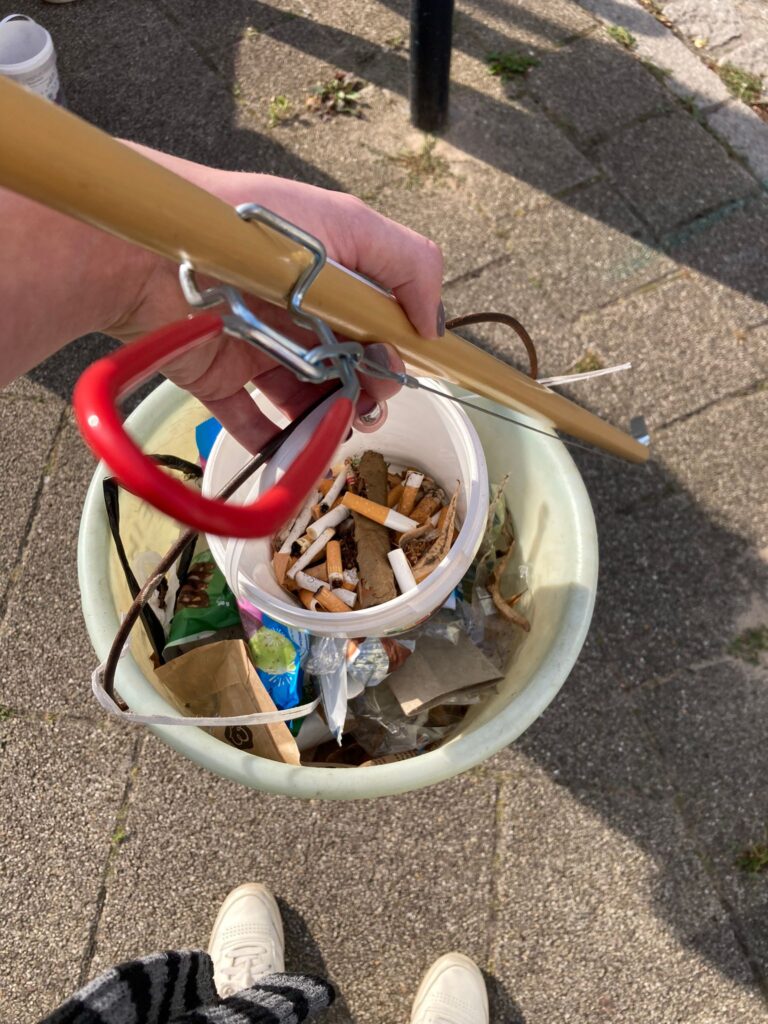
During their studies in Bremen, our exchange students want to be active members of the Bremen community. Volunteer work is a great way to give back to the city that welcomes you during your studies abroad. There is a large number of ways that young people can engage with their community in Bremen. Most of our students participated in city cleanups. For the cleanups, a group of people meets up in a specific part of Bremen to collect garbage from the streets. A few of our Spring students participated in the cleanup.

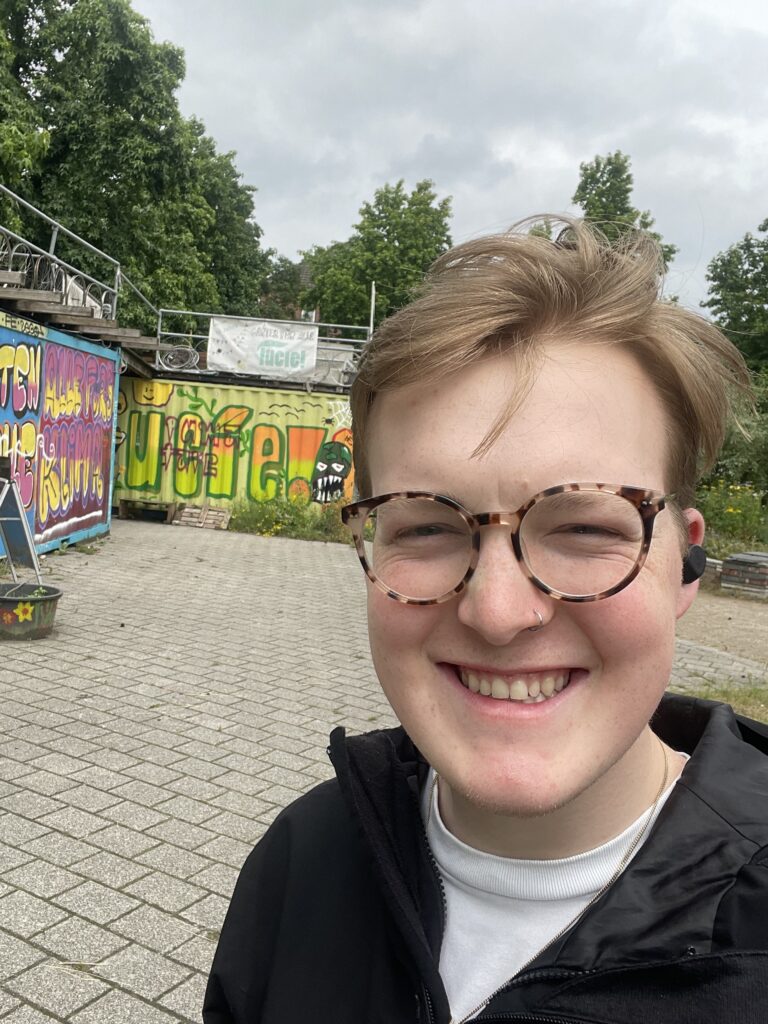
Gabe on duty!

The equipment is provided by the Cleanup organization.


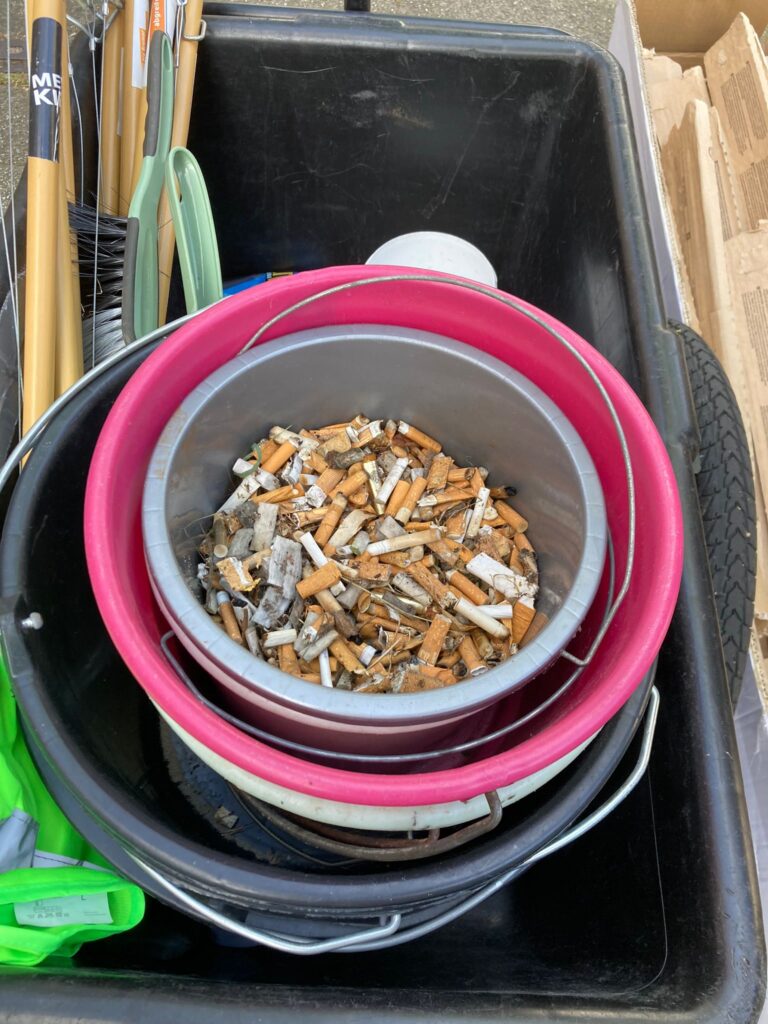
After a few hours of collecting trash, this is how many cigarette butts the group found – quite shocking!

Abby’s findings at a cleanup in Schwachhausen!

The students that participated in the cleanup shared that they were most shocked by the number of cigarette butts that were on the streets. At the end of the cleanup, they looked at how many they collected in total on that day – it was almost a bucket full of cigarettes.


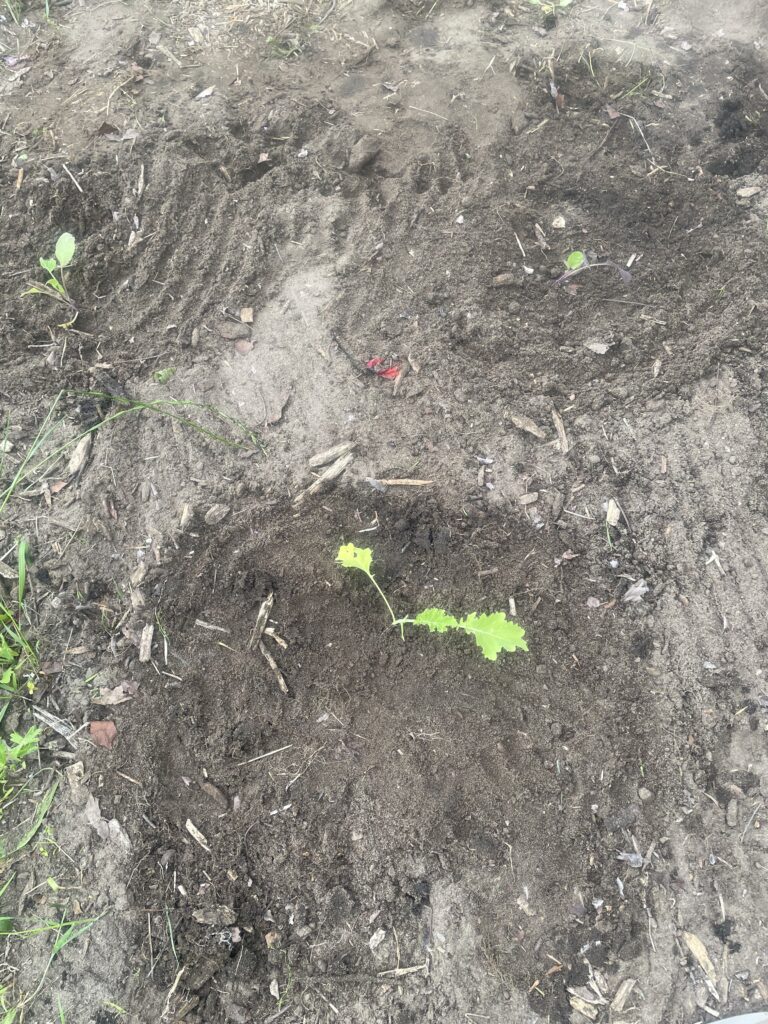
Noah dedicated his time to a different project: He helped a lady plant a vegetable garden. Not only was it fun but also a great way to connect with other volunteers: “I primarily volunteered at a garden in Bremen. I helped to plant, learned a bit about certain plants such as Rotkohl (red cabbage), and weeded the beds, while enjoying getting to know the other folks working there. It was a great time and they were very welcoming! When I return to Bremen, I absolutely intend to find a similar program or return to that one.”

Getting ready to plant a garden!

Growing vegetables!


Die Überseestadt

by Riley Robinson ’25

I first discovered the Überseestadt late in February, during one of the long rainy nights typical to Bremen in that season. Having gotten bored of studying for language class, I decided to take advantage of the tepid and breezy night by going for a local exploration expedition. I decided it was also the perfect time to try one of the Lime E-Scooters I had been enviously watching people zip around on throughout the city. After a few minutes of riding around my neighborhood, I made a quick turn and crossed some railroad tracks, down a path I hadn’t seen before. It didn’t take long before I spilled out onto a main road, which I would later learn to be part of the Überseestadt. I spent the next hour weaving through the undeviating streets of the district, realizing that this was an entire area of the city I had little idea about sitting right in my backyard.

The Überseestadt is a ‘Port-Revitalization’ project by Bremen. Formerly a massive dockyard and railway hub, the area has since been rehauled and turned into a living and working district. Alongside the many modern condominiums are large commercial buildings that make up their own skyline. On the southern end, near Eduard-Schopf-Allee, is the Weser Tower. It is the tallest building in Bremen and is visible from most points on the South-western side of the city.
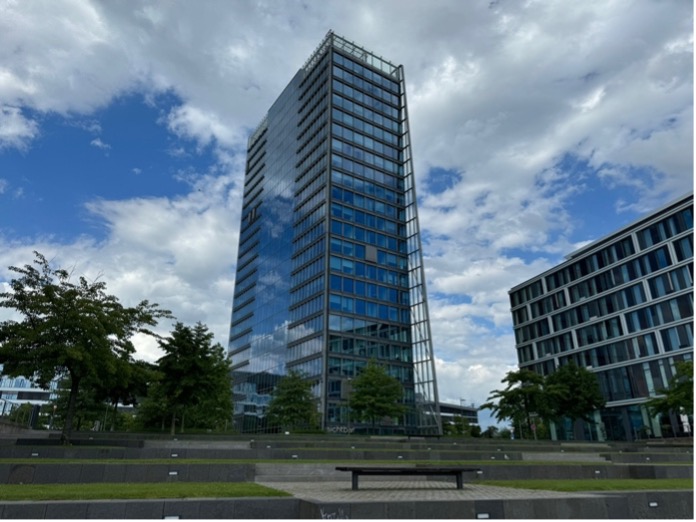
The Weser Tower. Below is a multi-level pavilion, where people take time off their workday to view the river, and local rappers sometimes come to shoot their music videos.
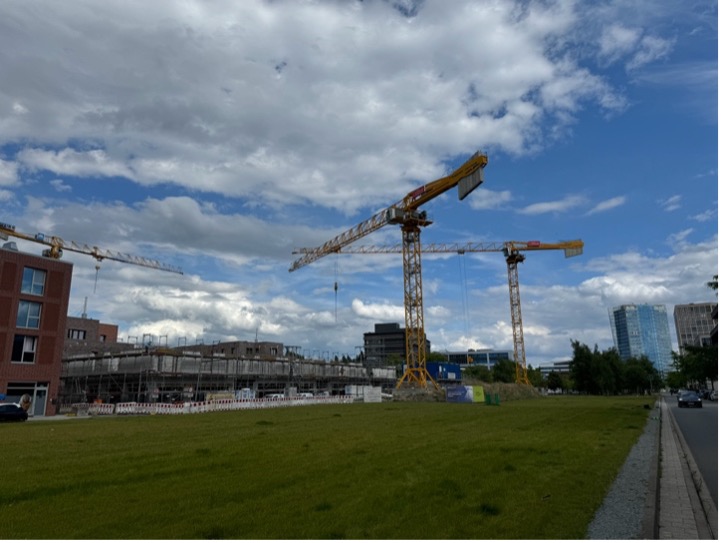
An example of the many development projects in the Überseestadt. This is construction of the Kaffee Quartier, a new residential block.


Europahafen is a central piece to the Überseestadt. It is easily accessible from the tram stops Europahafen and Konsul Smitdt Straße, serviced by the 3 and 5 lines. Once an old dock for commercial shipping, it now houses private boats, and is lined with premium condos and office buildings. On the ground floor of many, you can find restaurants, cafes, and bars to sit at and enjoy the peacefulness of the harbor. My favorite part of this area is the “Überseestadt Shack”. This is a little shipping container that has been outfitted with a bar inside and deck chairs on the top for viewing of the harbor. On Sundays they open, and you can buy beer and other drinks inside. It’s a great place to relax and enjoy a sunny day or warm night.
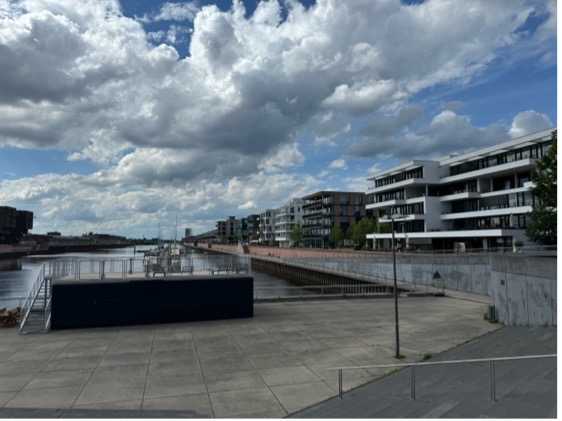
The Überseestadt Shack at Europahafen
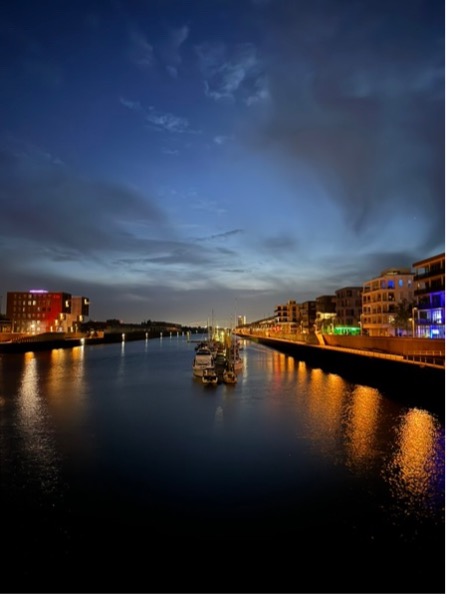
A summer night’s view from the top of the shack.


Further down the promenade, there is a great restaurant for Flammkuchen.
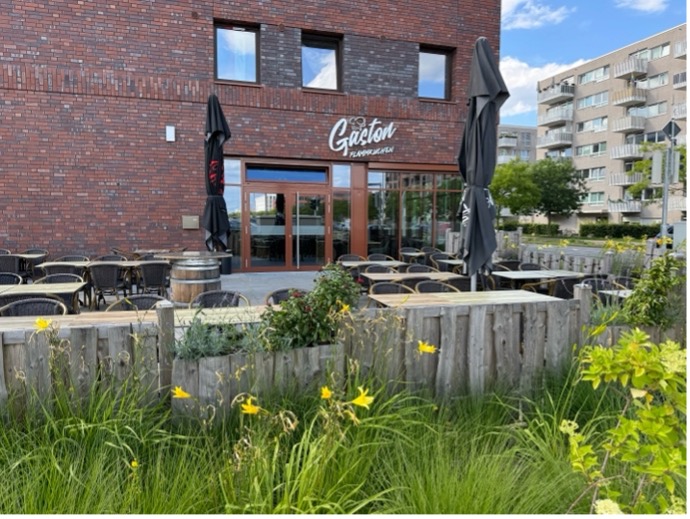
The Flammkuchen Restaurant.
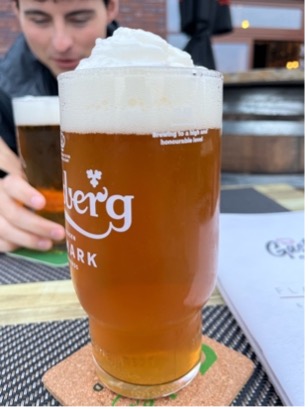
An honorable pour.
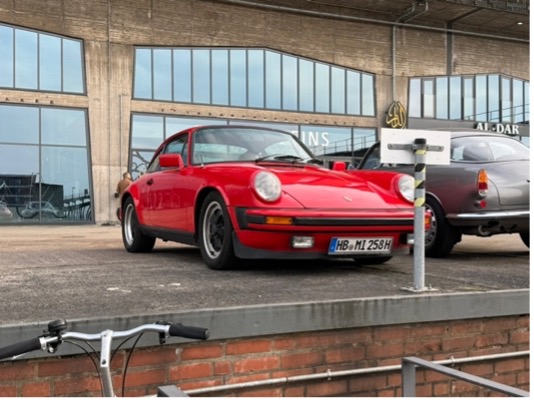
Spotted outside of the Automotive Museum.

They also serve some amazing beer. It has a nice area to sit outside, although very close to a busy road. It’s located right across the lot from the Automotive Museum, which is worth checking out if you are into historical German cars.


The Überseestadt is also home to the University of the Arts, located in a former warehouse on Eduard-Suling-Straße.
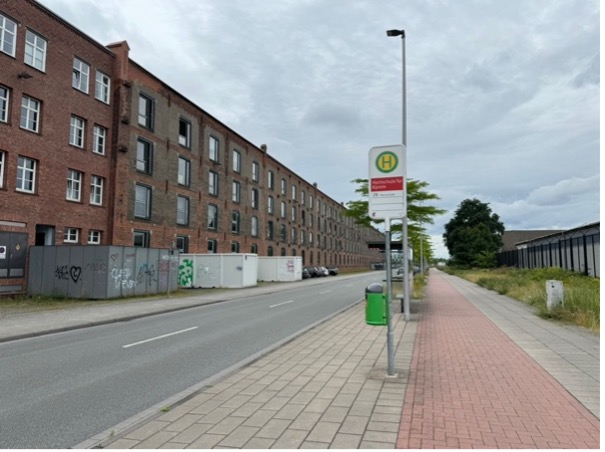
The University of the Arts.
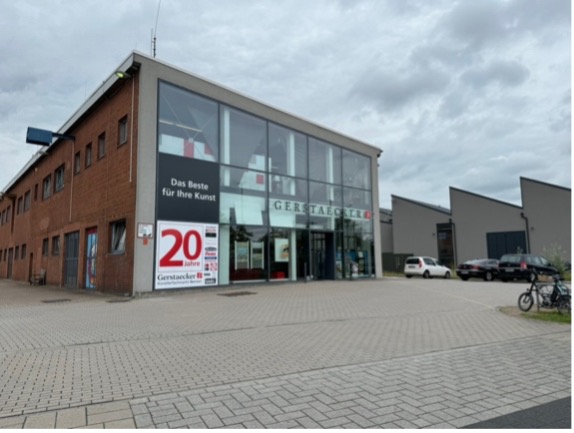
The Art Store.

Appropriately, an art supply store is near the University. If you like to paint, draw, or do anything that may require art supplies, I recommend checking this place out. It blends an industrial, open style layout with a friendly and familiar vibe. Walk around the area, and you may discover some interesting hide-out spots to relax or to get some work done.
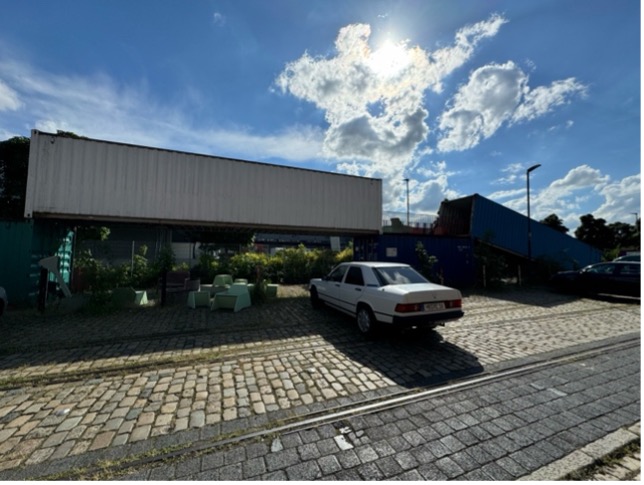
 

One of the many chill nooks in the area. On the bottom, a few couches, and chairs. Walk through the shipping container propped up, and you can also recline on the deck chairs on top.
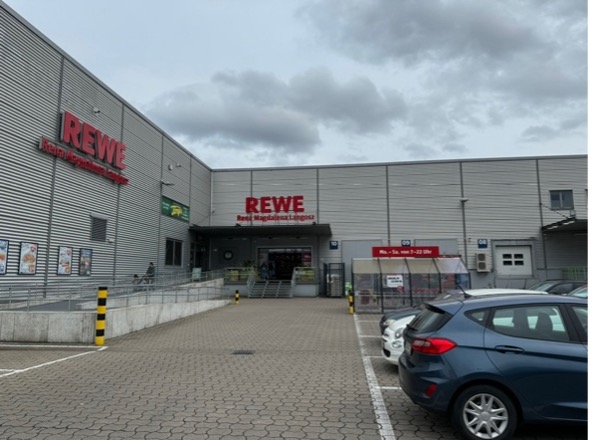
The REWE. Accessible by the bus line 28 at the Winterhafen stop.

Adventure further into the Überseestadt, and you will find a REWE and a large urban park. The district has two main grocery stores, an Aldi at Europahafen and the REWE at Winterhafen. As someone whose grocery shopping experience is affected heavily by aesthetics, the REWE at Winterhafen was a welcome sight when I first discovered it. Large ceilings, nice lighting, and a good selection of food are part of the deal here. It also features a bakery, and a Pfand machine, the closest one to my home. I have many great memories of performing superhuman balancing acts trying to bike home from this REWE with a bag of groceries and/or plastic bottles needing to be redeemed.
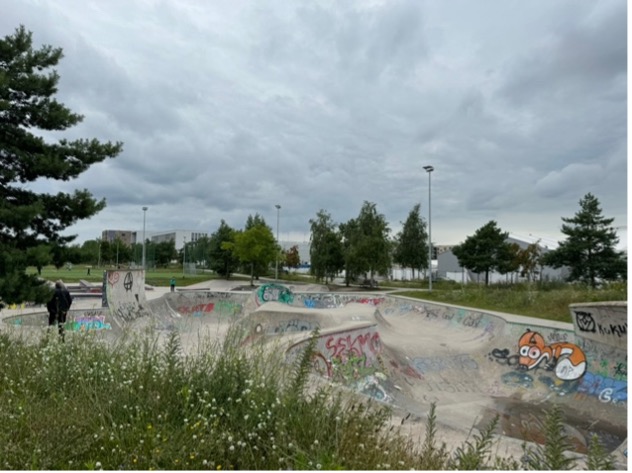
The skatepark at the Überseepark.
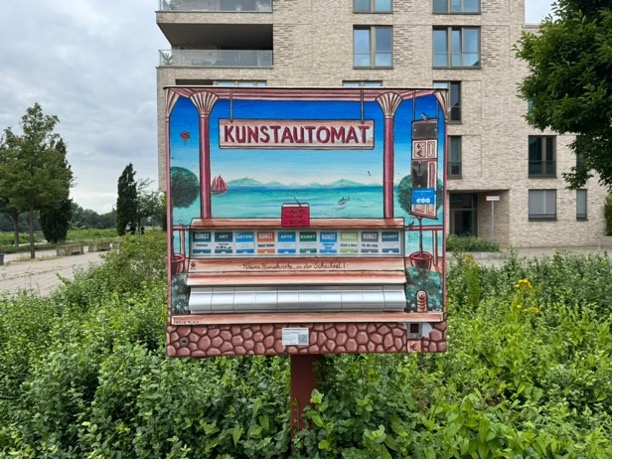


An Art vending machine near the park. Pay four euros, choose a piece. There are many options, including regional art and themed works. Great for a tiny keepsake.


Across from REWE, the Überseepark spans horizontally across multiple blocks. It is constantly teeming with young people, usually running football matches on the turf, playing basketball, using the skatepark or the parkour gym. One fun fact about this place: it was designed by about 400 elementary school aged kids, using an online forum. Their input and ideas were prioritized when considering the layout of the park.
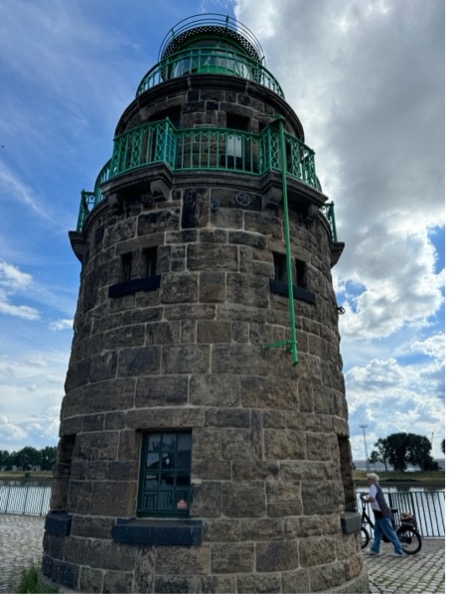


The Lighthouse.

At the northern tip of the Überseestadt, there is the Waller Sand, a signature aspect of the district. The Waller Sand is an artificial beach, signifying the end of the Überseestadt. While you can’t go swimming, it offers a fantastic view of the still functioning Bremen harbor. It requires a bit of a journey; however, it’s worth doing, especially in the evening hours, where you can walk along the promenade and soak in the cool river breeze while listening to some music and taking in the elongated northern German sunset. The area is surrounded by residential buildings, and many people come to chill and enjoy the view, although the crowds are never disruptive.
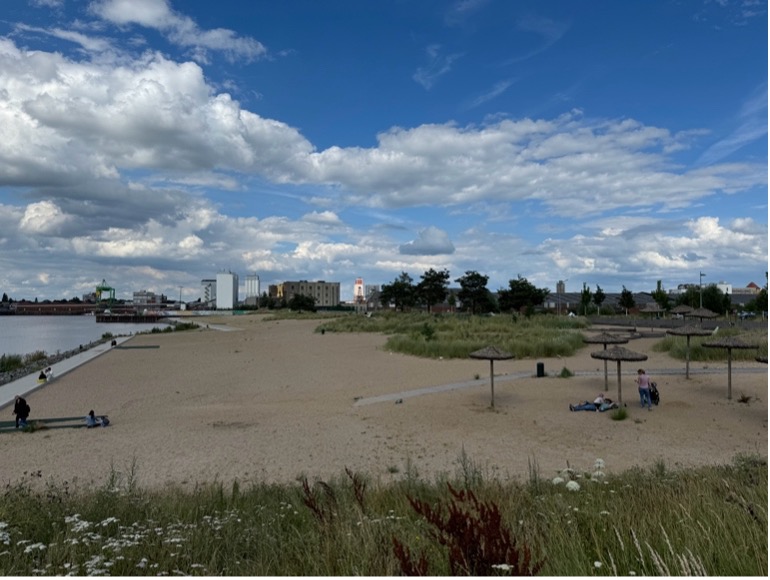
The Waller Sand.

Yesterday, I went up and did this exact thing, and witnessed a marriage proposal on the beach. The guy clearly went all out, with a heart-shaped trellis holding up a neon sign with the words, as well as sprinklers and drones. Congrats! Additionally, there is a lighthouse at the north-most tip, and you can walk down a trail to access it.
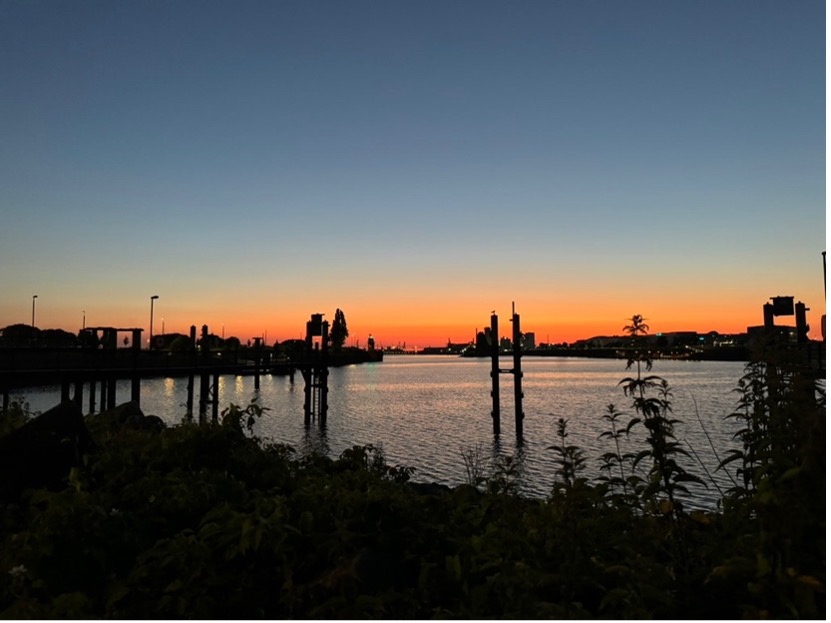


A sunset view over the harbor. Who said Bremen isn’t paradise?
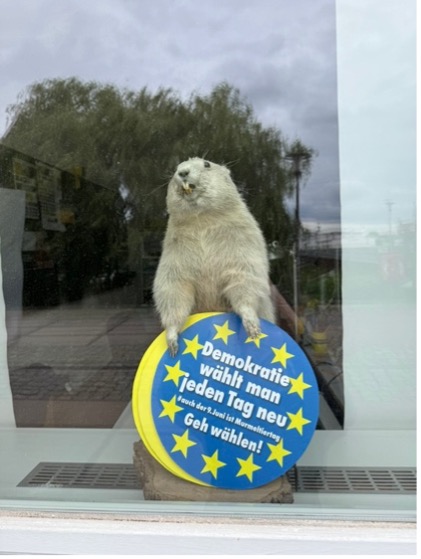


The Groundhog Democracy Advocate.


Due to the atypical housing arrangement of this spring semester, I was able to live in an area of the city not frequented by members of Dickinson in Bremen. The Überseestadt is a very new and relatively obscure part of the city, and I’ve been grateful to experience living in this area for the past six months. Because of how new the Überseestadt is, it can feel artificial, and a lot of the architecture lacks character for this reason. However, the potential for its growth as a vibrant part of Bremen is noticeable, and the rate of development makes me interested in seeing how it will progress after a few more years. Even if you are living close to the University, I recommend going out of your way to check out the Überseestadt and explore for yourself the many quirky and unique locations of this area.
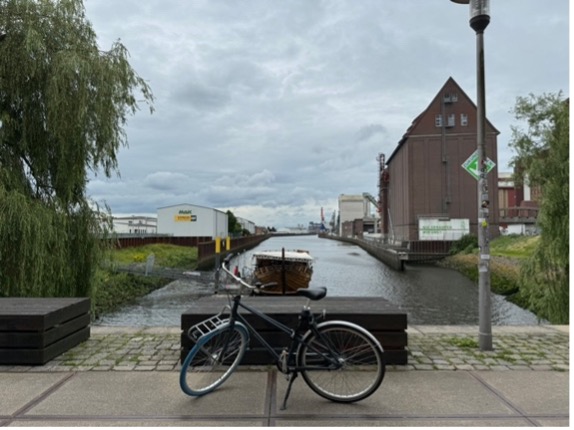
 

My bike* near the Waller Ring entrance to the Überseestadt. To the right, there is a factory still active that is serviced by a train every day. The district is still intertwined with the many port-serviced industries of Bremen.
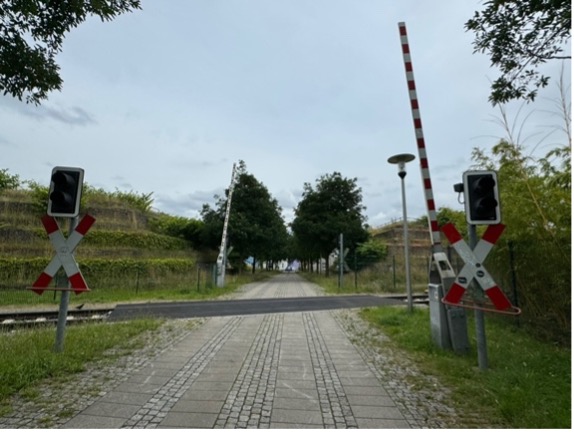
The entrance to my neighborhood. This path connects it with the greater Überseestadt. Shoutout to Eintrachtstraße.


*I began renting this bike from the beginning of May. It’s a fantastic way to get around, and a great option if you ever get bored of taking public transportation, especially in the warmer months. Having your own bike and riding around the city almost feels like it should be part of the integration test. You will feel like a local, and you get to see areas of the city that aren’t visible otherwise. Tons of bike paths, and it shrinks the city when you own one. Also great for getting back from bars and clubs after 1:30, when the tram shuts down. I highly recommend Swapfiets, the bike rental company. For 6 months, you pay 17 euros a month for this bike. I use the flexible rental, so I pay 24 euros each month to be able to cancel at any time. They take care of all services for you.