End of February, we went on our annual spring semester excursion to Vienna. Read some impressions our students shared about their experience in Vienna.
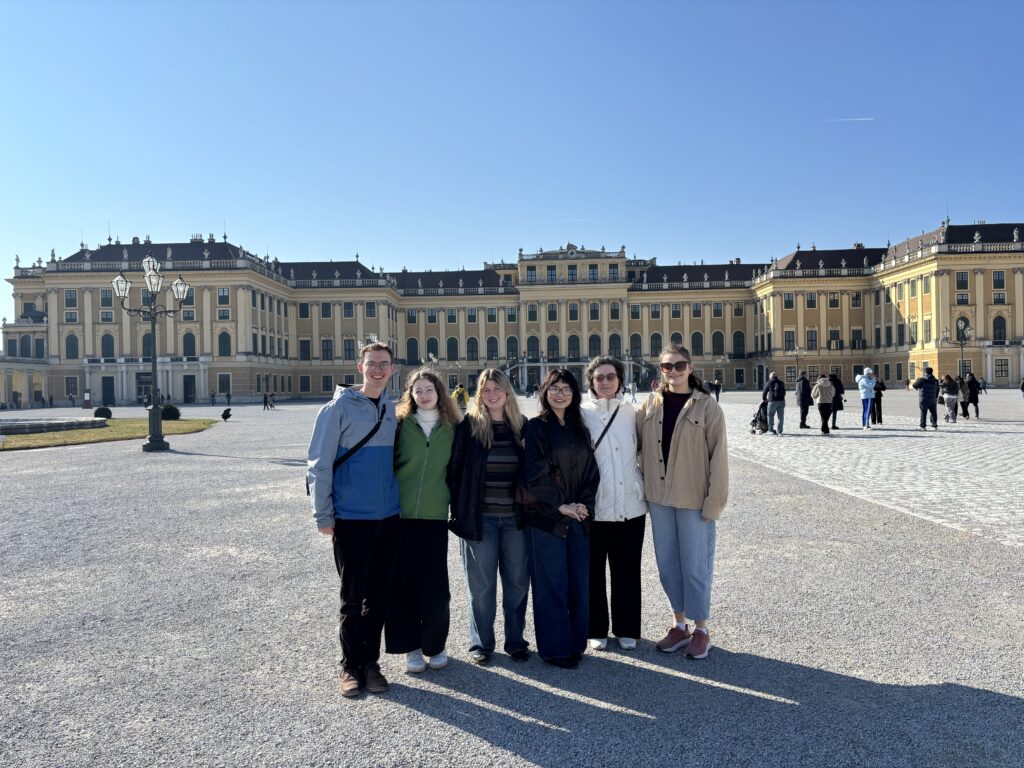
In front of Castle Schönbrunn
Vienna is a wonderful city! I am very grateful that we were able to take the time to explore the city so closely. I had the chance to see my first ever opera here, and Vienna certainly lives up to its name as the city of music! – Kris Nguyen ’27
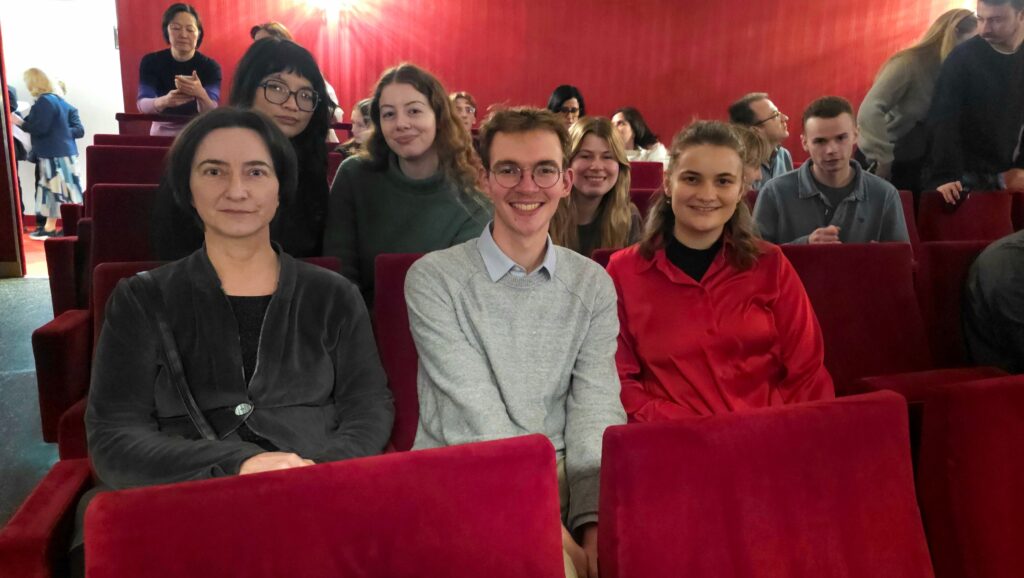
Opera (Volksoper)
There was a lot to love about Vienna, the cafes, the museums, the architecture, the history, etc. I really loved getting to see all of these beautiful aspects of Vienna in different ways. I enjoyed how much free time we had as well. It was so interesting to hear how everyone spent their time in various ways. – Haley Henderson ’27
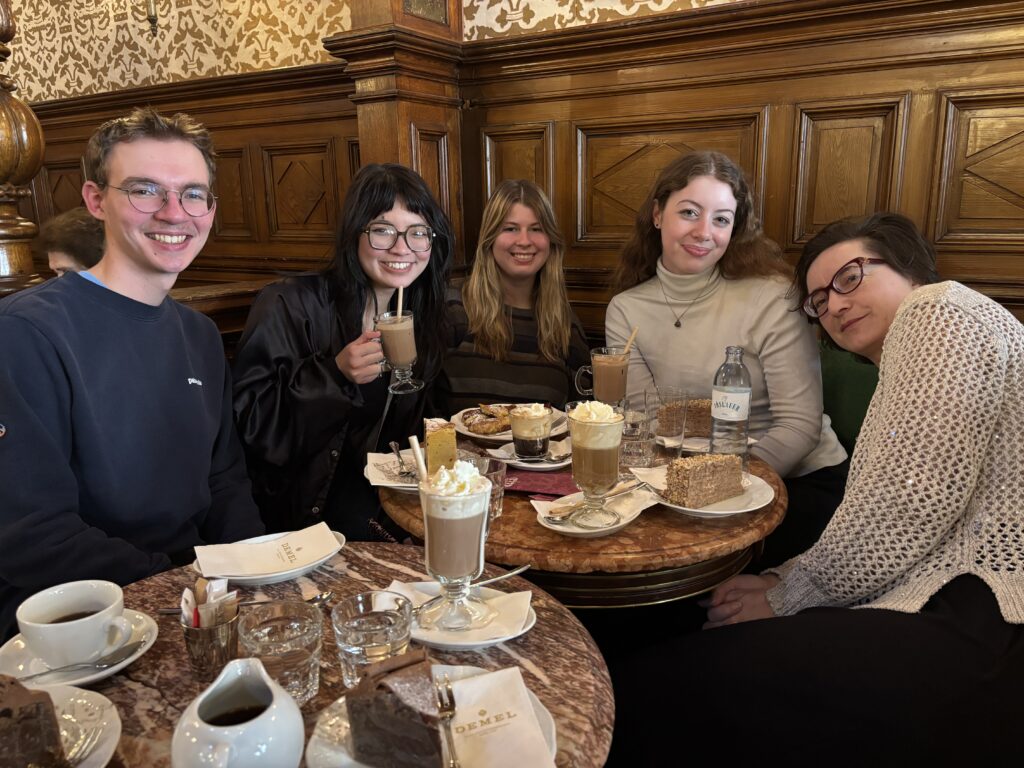
Café Demel
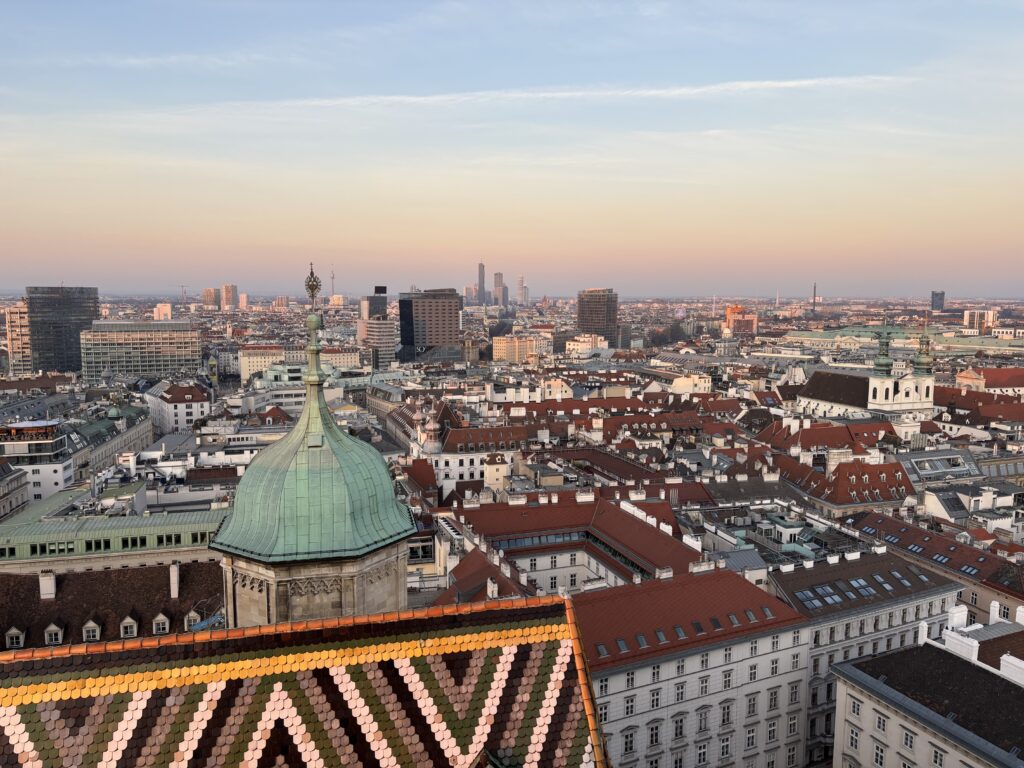
View from the top of the tower at Stephansdom
Since my early days spent learning German, Vienna has been at the top of my list of places to visit. The trip felt, therefore, like a dream come true. While I can’t guarantee that my years-long ambition to visit the Austrian capital had no influence on my impression of the city, I attest Vienna to be truly remarkable. It’s hard to find the right–or even worthy adjectives–to describe Vienna’s opulence. The city was far more beautiful than I could have imagined; even the tucked-away side streets off the beaten baroque-palace-lined path had a special charm. I think a quote from the Vienna-based band, Wiener Blond, sums up the unique, somewhat-stuffy, and, above-all, charming atmosphere best: Wien “du bist keine Stadt, eigentlich bist du ein Museum”, they sing, Vienna, you’re no city, really you’re a museum. – Alex Arnold ’27
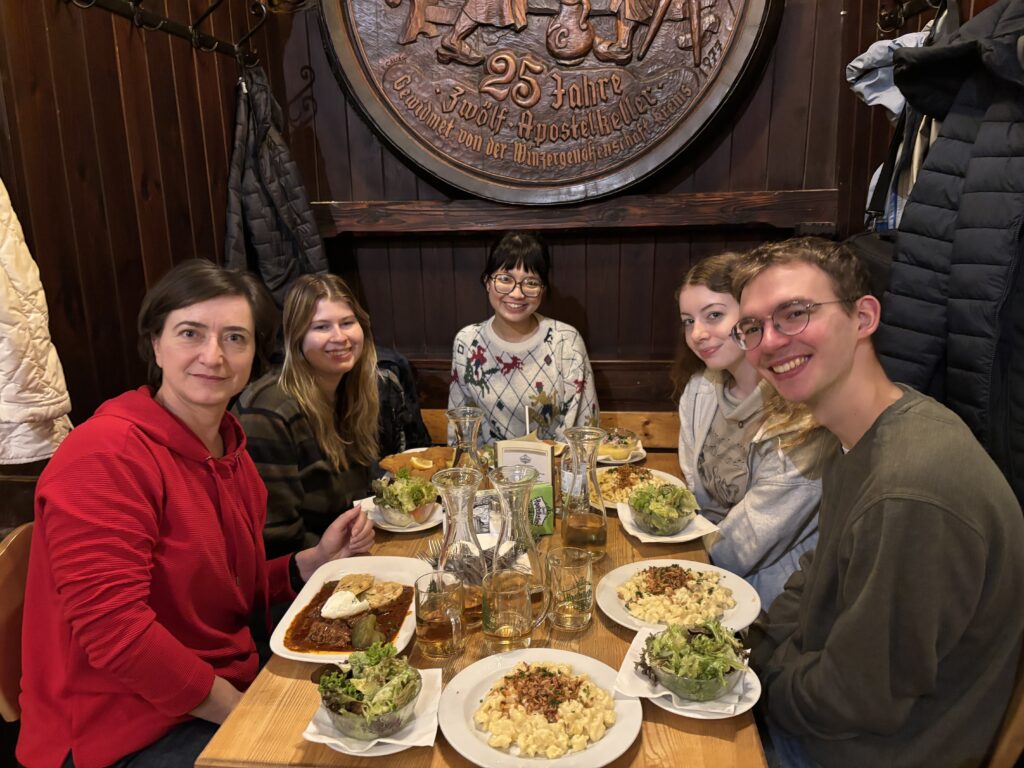
Lunch at the 12 Apostelkeller
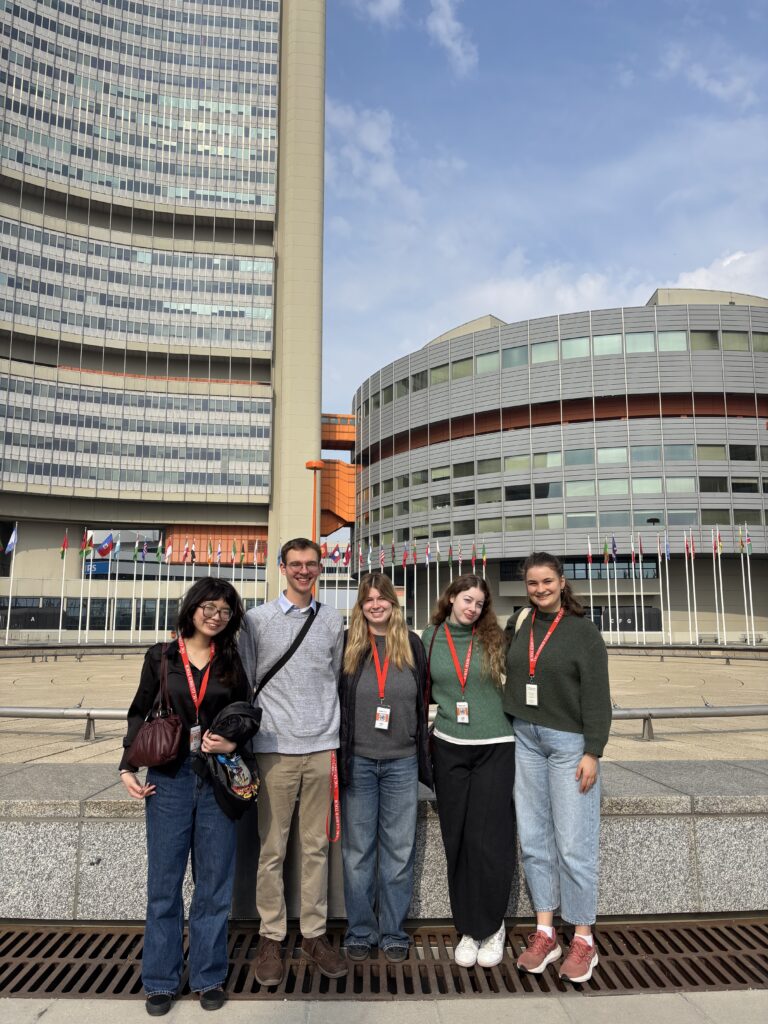
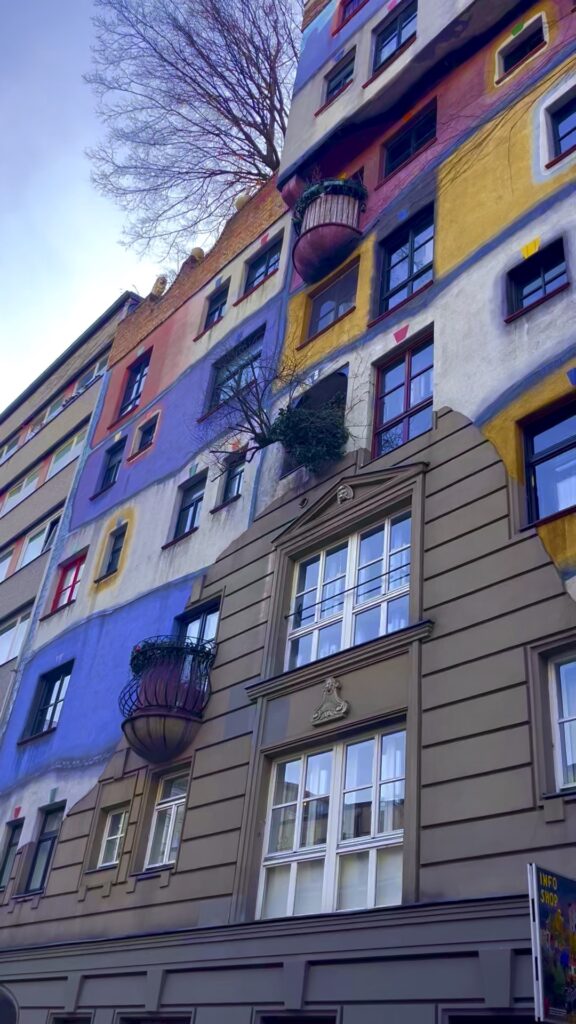
Vienna was such a great city! As a group we went to multiple different museums and historic sites such as the Art History Museum, The Vienna Library, and got to have a tour of the United Nations! My favourite place I got the chance to see was the Hundertwasser Museum! – Emma James ’27
Our trip to Berlin was packed with a mosaic of different experiences. We traveled through different periods of German history in an immersive way: from visits to museums, amazing conversations, to, not least, simply moving through the unique metropolitan atmosphere only to be found in Berlin. And, naturally, to fit all of these experiences into just five days (well, really only four in Berlin, but more to this later), we had to use every moment to our advantage. In other words, we were busy!
To describe all that we did on our trip in detail would, I think, be a challenge to read through. So, I hope to instead share about a select day’s worth of experiences that I found to be particularly special. On our second day, Friday, we delved extensively into the topic of the state surveillance in the former German Democratic Republic (GDR), the former authoritarian-socialist which existed in East Germany from 1949-1991.
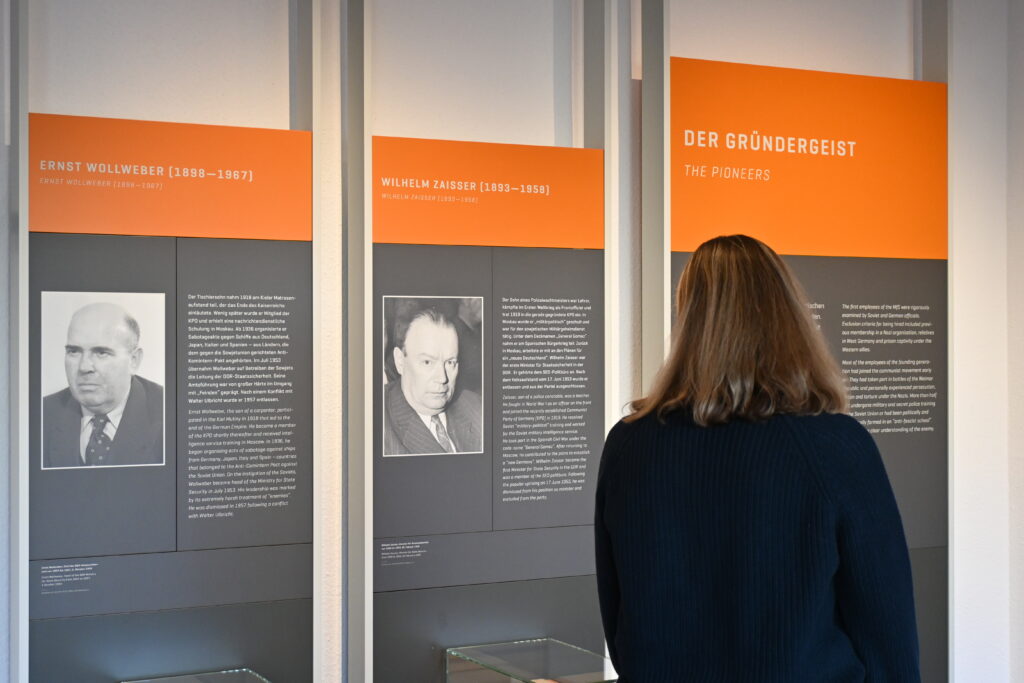
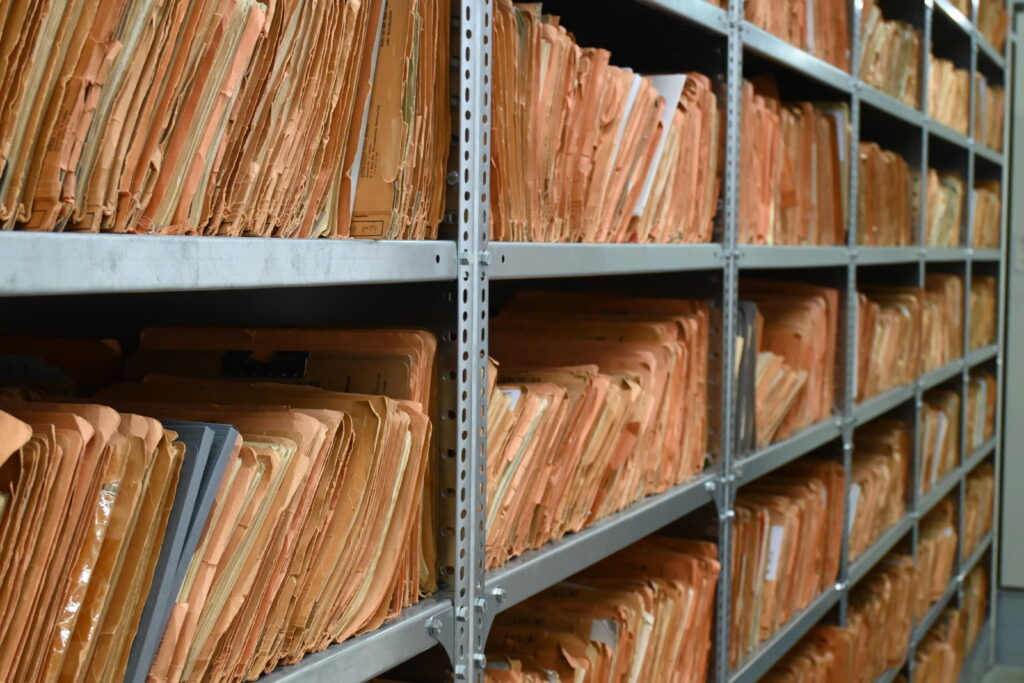
We visited the former Stasi (Staats Sicherheit or “State Security”) headquarters which, today, has been converted into a museum detailing the role this powerful instrument played in monitoring and exerting control over East German citizens. We even had the very special opportunity to enter the archives where detailed files pertaining to East German citizens are kept. Ranging from the most mundane to highly private, enough information was collected by official and unofficial Stasi workers regarding suspected regime critics or dissidents during the GDR to span around 60 kilometers if the files were to be aligned side by side, as if placed on one single continuous shelf. The most interesting part of the day, however, was still to come.
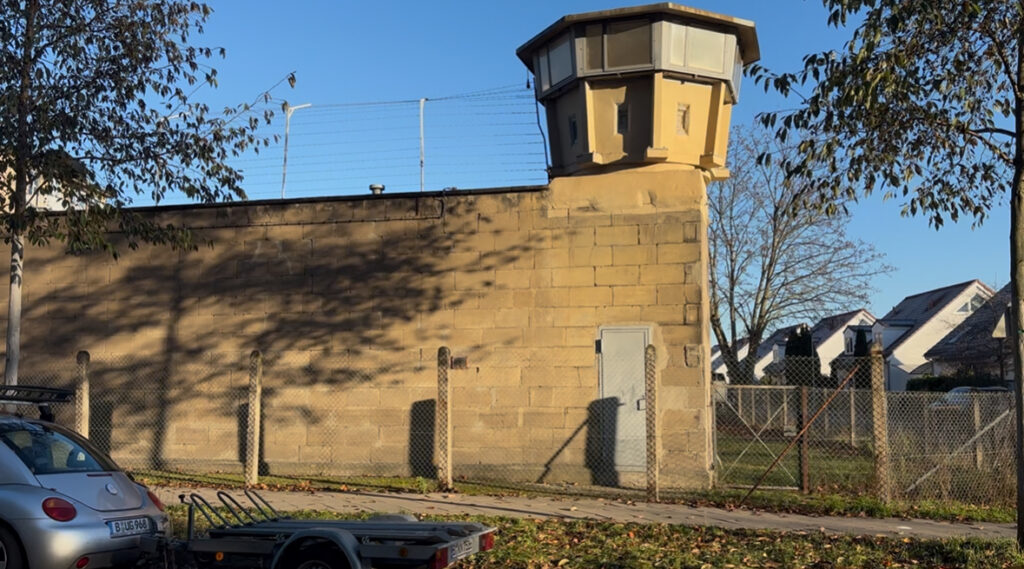
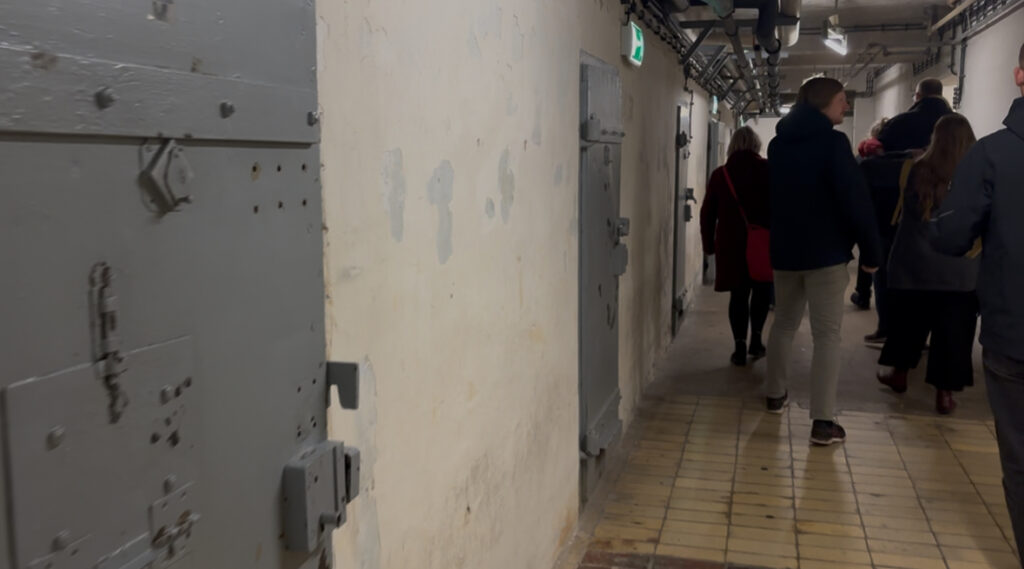
After visiting the Stasi museum, we traveled to a former prison on the outskirts of East Berlin called Hohenschönhausen where detainees were held during the GDR. Likely some of very same people whose files we had just glimpsed in the archives. Today, the prison has similarly been converted into a museum, although that’s not to say that the drab, depressing interior of the cells have seen much improvement.
At Hohenschönhausen, we received a detailed guided tour from an older gentleman by the name of Friedemann Körner who described all elements of detention within the facility. What Herr Körner shared about the prison, however, came from personal experience. For three years during the GDR, he was detained as a prisoner in Hohenschönhausen. The tour was a mix of history lesson and biography. In between showing us different locations in the complex, Herr Körner sat us down from time to time and shared details about his life in East Germany, how he ended up in detention, his experiences in Hohenschönhausen, and his eventual release.
Through the German curriculum at Dickinson, I had already learned much about the GDR and I was, thus, captivated by Herr Körner‘s first-hand account. Nothing had ever emphasized the reality and currency of what, to me, was history quite like listening to him talk about his lived experience. If the readers of this blog are interested in learning more about Friedemann Körner‘s story, a biographical account was written by Irene Köß and published under the Titel “Sänger hinter Gittern” (Singer behind bars), a reference to Herr Körner’s career as a professional vocalist. As we departed Hohenschönhausen for our alumni meet-and-greet, I was deep in thought, considering all that we had learned and seen that day. Although the day wasn’t filled with happy stories, I felt thankful and reassured: I knew I had made the right decision to learn German and study abroad, allowing me to connect with people and places in a way that would have been impossible through translations and textbooks.
The whole trip was so much fun but my favorite part by far was the afternoon chat our group had with B.K. Tragelehn. He was so cool to speak with and such an interesting person. It was also great getting the chance to meet/catch up with alumni of the program! We had tons of events planned for us, but still had free time built into the schedule; I used mine to get some souvenirs of the city and see a few museums. by Kate Elmes ’27
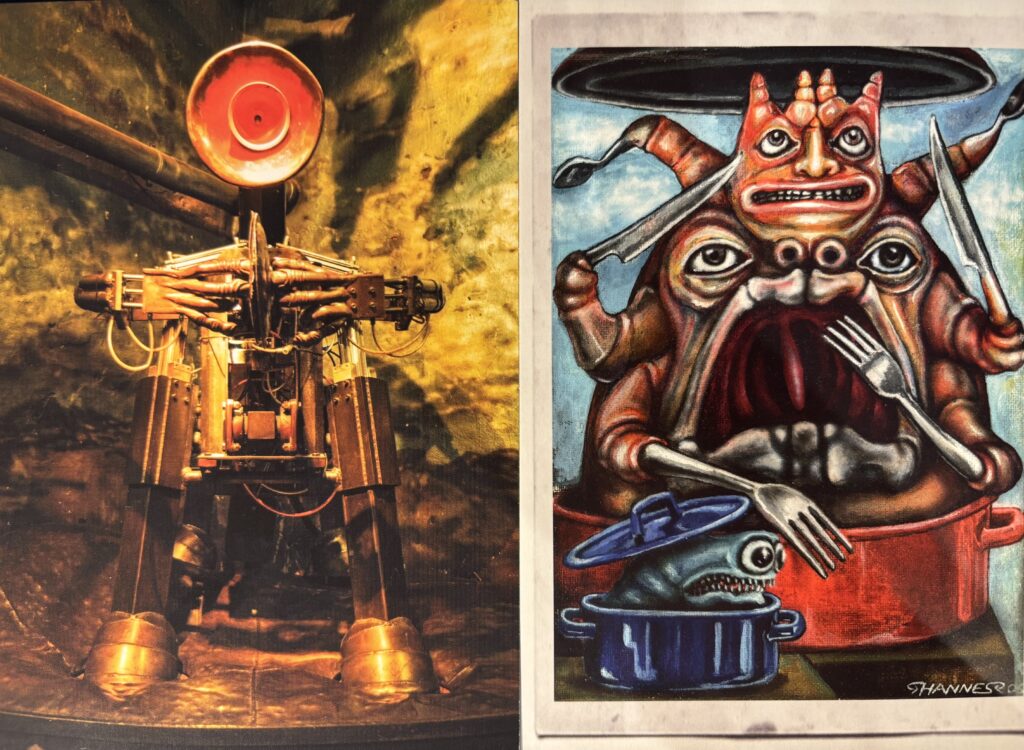
I absolutely loved our group excursion to Berlin. I had a wonderful time getting to immerse myself into the city with everyone. I was delighted to get the chance to see alumni that had previously done the Dickinson in Germany program. My favorite activity was most definitely Monsterkabinett! The music and animatronics were so uniquely Berlin, I was really glad to have gotten to experience it. Learning about the history of Berlin was also really important to me, so getting to visit a new museum every day didn’t disappoint! I’d love to revisit the city, and I’m very excited for future excursions within the program! by Haley Henderson ’27
No pictures were allowed inside the facilities, but here is a picture of some of the postcards we bought afterwards.
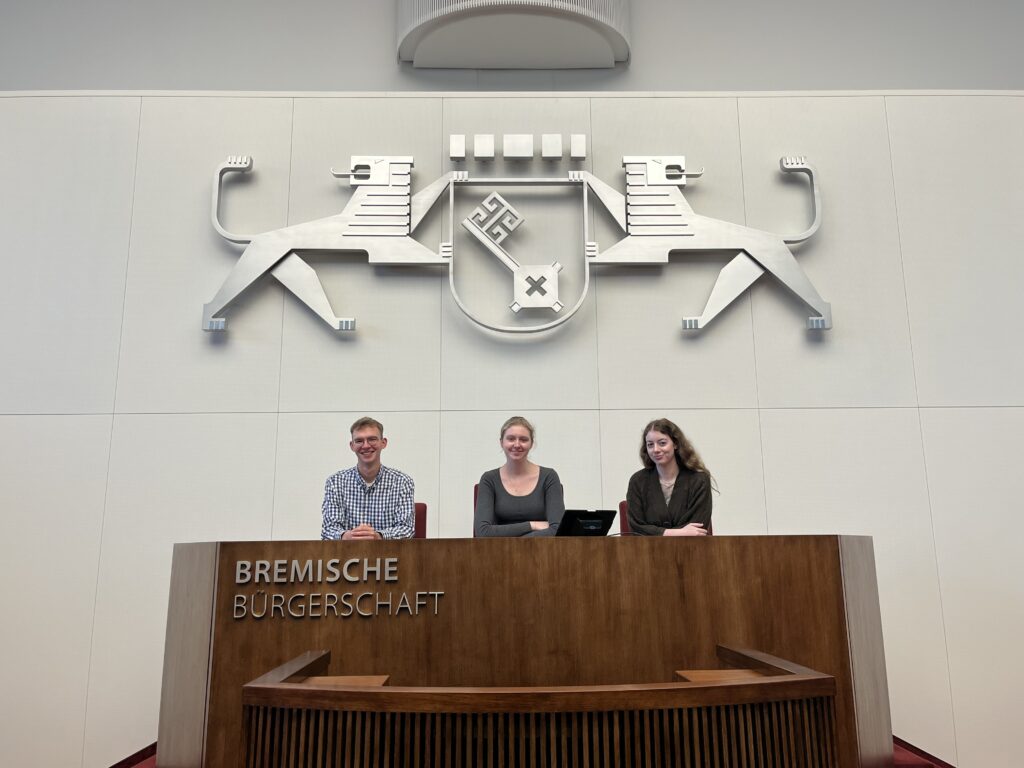
During our Orientationweek, our students also had the change to participate in an exclusive tour through the Haus der Bürgerschaft, organized by the International Office of the University of Bremen.
from left to right: Alex, Kate and Haley
On 9th September 1966, the Haus der Bürgerschaft was inaugurated as the seat of the Bremen Parliament (Bremische Bürgerschaft). The state parliament of the Free Hanseatic City of Bremen still meets here today and passes or amends laws for Bremen and Bremerhaven. (Source)
During the tour, our students learned more about the architecture and history of the building, as well as about Bremen’s state parliament.
If you want to find out more about Bremen’s State Parliament, find more information about it here in English or in German.
We would like to thank the International Office for organizing this tour!
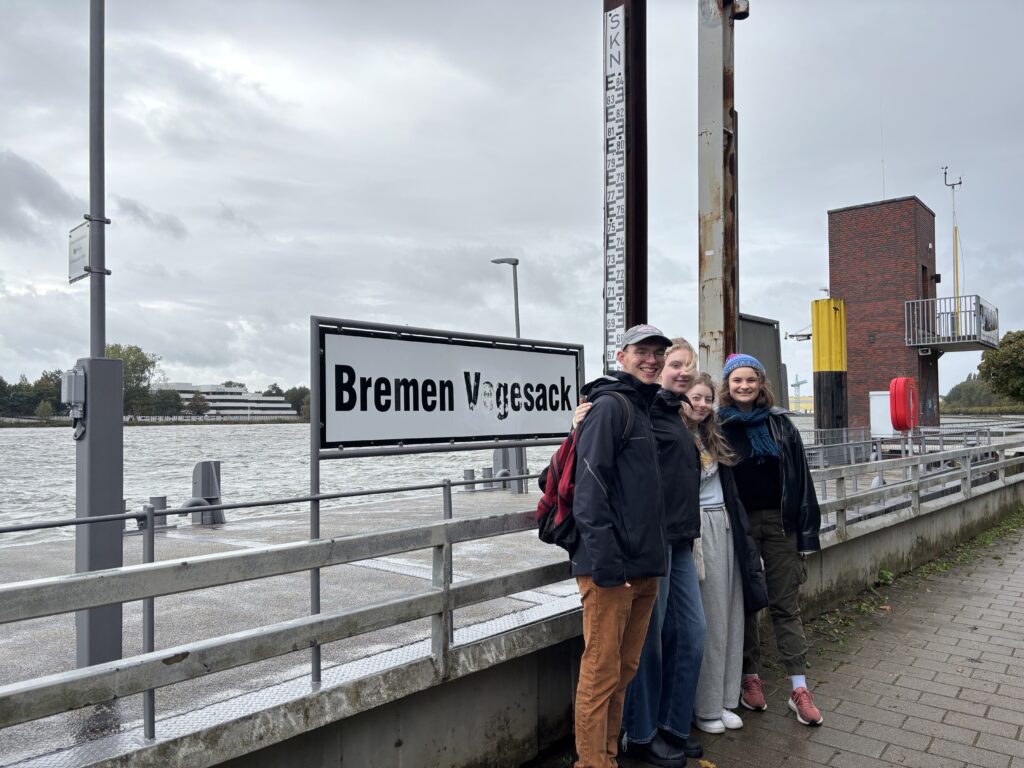
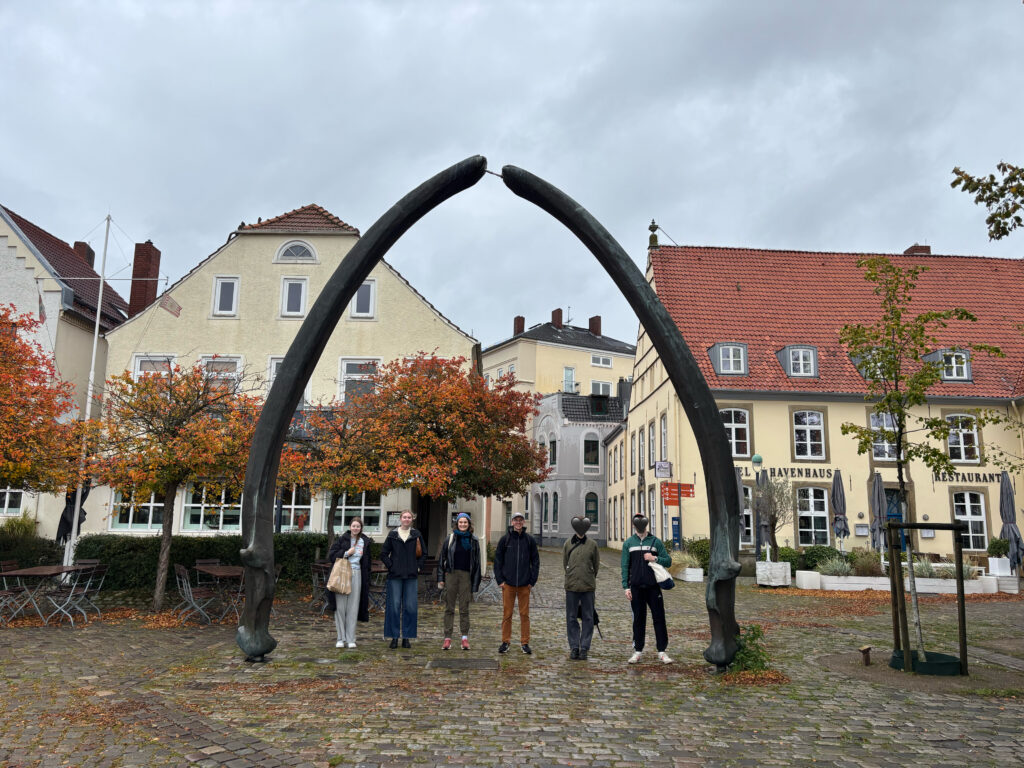
On Sunday, we did a spontaneous little trip to Bremen-Vegesack, which lies in the north of Bremen, where the Lesum River meets the Weser. Around 400 years ago, Germany’s first artificial harbour was constructed here, and today Vegesack is still known for its Harbour. The bronze statue of a whale jaw as well as the “Whale fins in the waves” sculpture that can be found on the Weser promenade of the “Vegesacker Hafen” (Harbour) are a memorial to the historical whaling tradition and the “whaling town” of Vegesack.
Bronze statue of a whale jaw
We explored the promenade of the harbour as well as the “Vegefest”, a neighborhood festival in Vegesack that takes place every year at the beginning of fall. We explored the artistic flea market in the city center, tried some traditional “Schmalzkuchen” and listened to a local band playing American bluegrass, country and blues Music.
The weather was – in a typical Bremen way – a bit rainy, but that did not stop us from having a fun afternoon.
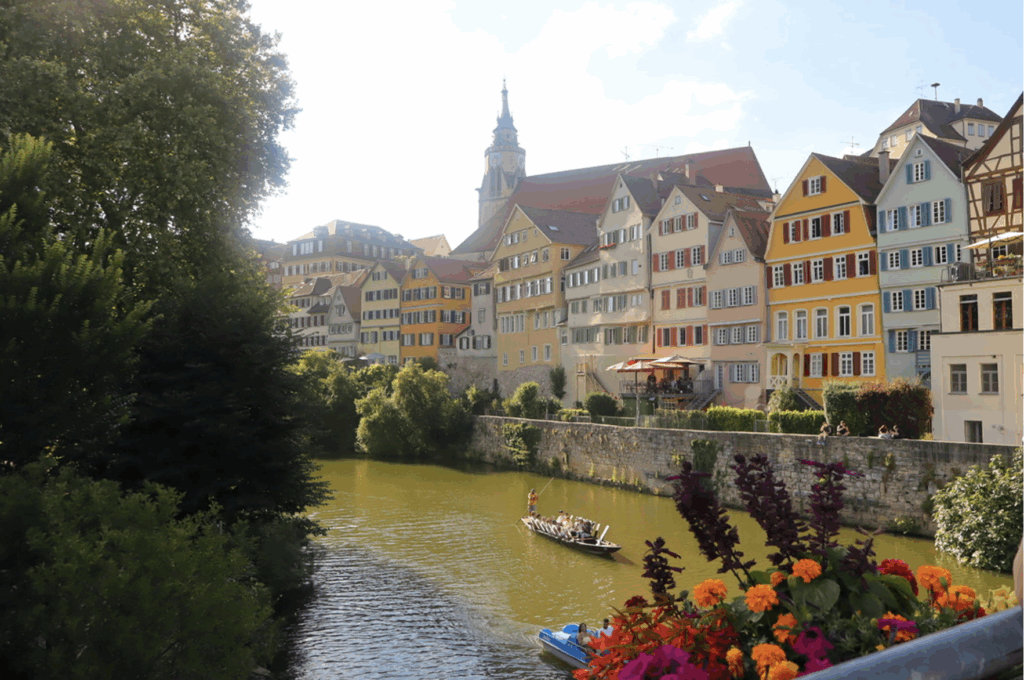
With a very generous donation from a Dickinson Alum, six Dickinson students were able to afford a weekend trip to Tübingen, Germany. While there, we were able explore the city and visit Professor McGaughey, a Dickinson Professor currently on sabbatical.
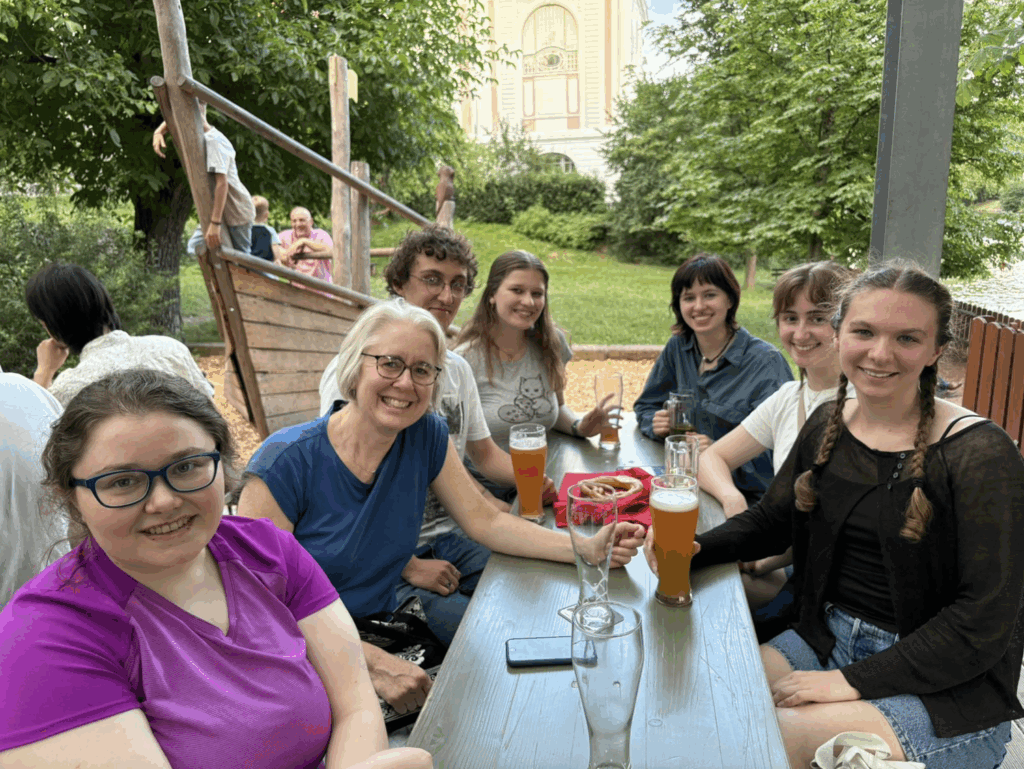
On Friday afternoon after we finally arrived, Professor McGaughey gave us a quick tour of her favorite places to grab a drink and helped get us oriented with the city. We ended our evening with Professor McGaughey at the Neckarmüller Biergarten, which sits right along the bank of the Neckar River.
from left to right: Ellen, Professor McGaughey, Crosby, Olivia, Isabel, Delaney, Makayla
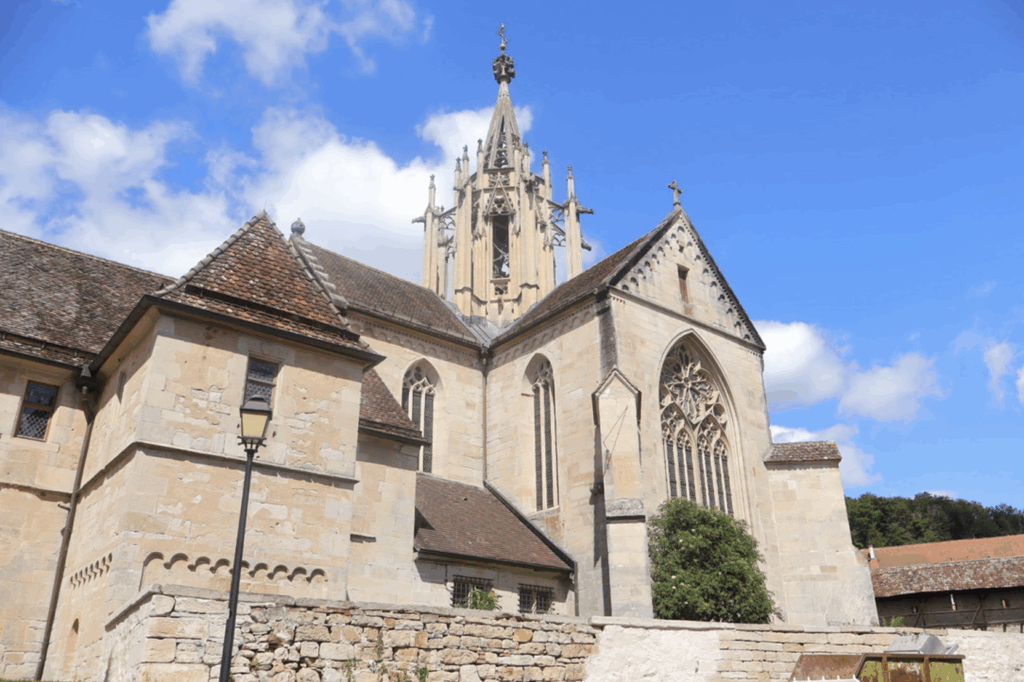
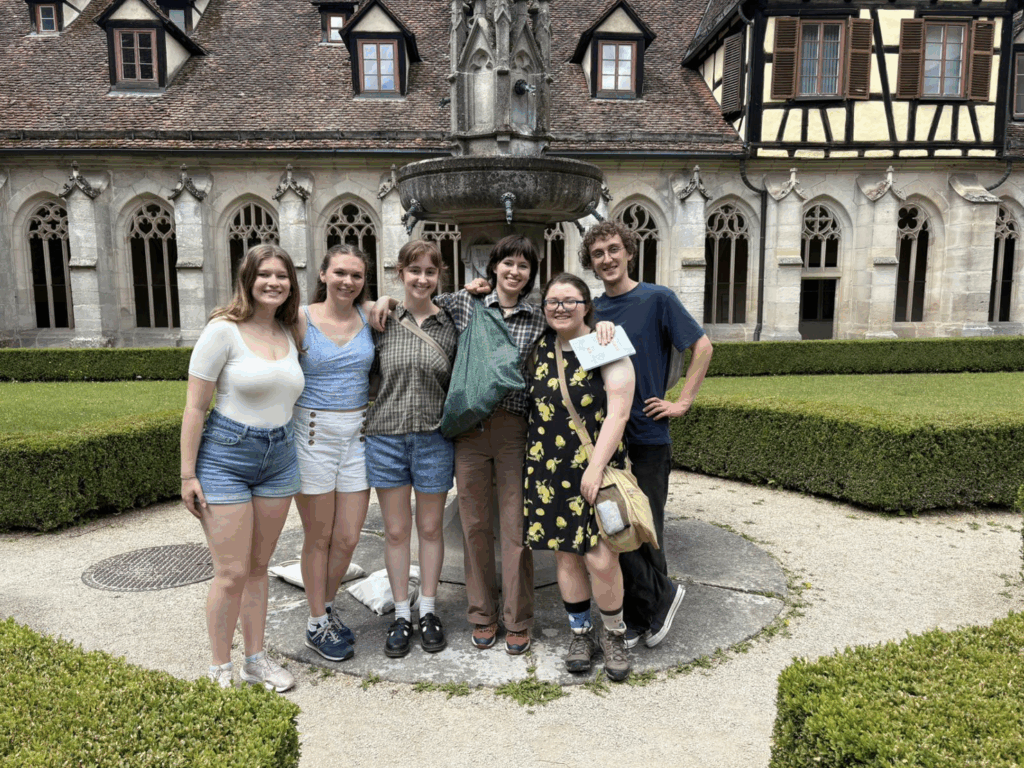
We started our Saturday by taking the Regional Tram to Bebenhausen, a small village just outside of Tübingen, famous for its rich history and beautiful Klöster (monasteries). Naturally, we toured the Klöster and learned lots about the local history.
from left to right: current Dickinson in Bremen students Olivia, Makayla, Delaney, Isabel, Ellen and Crosby
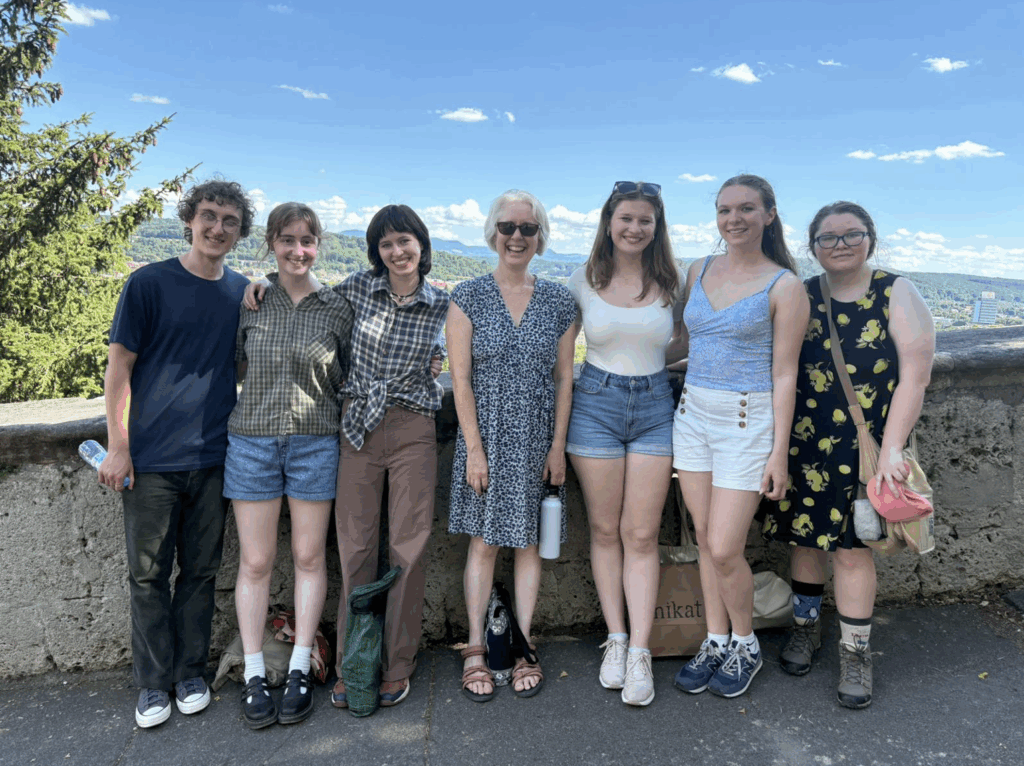
Afterwards, we met with Professor McGaughey and her Stepmother, to learn about the Tafel in Tübingen, a foodbank where young people often volunteer. Next, we moved onto a city tour. We hiked up a large hill to the University of Tübingen, where we got to look over the city and take in the sights of some of its most important and historically significant locations.
from left to right: Crosby, Delaney, Isabel, Professor McGaughey, Olivia, Makayla, Ellen
Sunday morning, we took one more turn about the city and explored the Hölderlin tower, a building famous for being the place of residence of famous poets, most notably Friedrich Hölderlin. Although the trip was short, with the help of Professor McGaughey we received an exclusive look into life in Tübingen and had a ton of fun in the process.
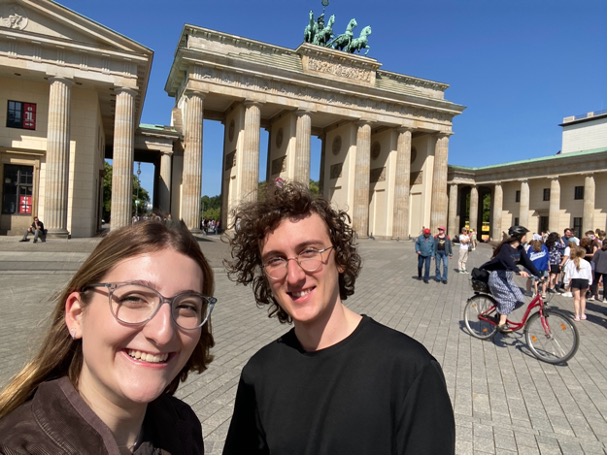
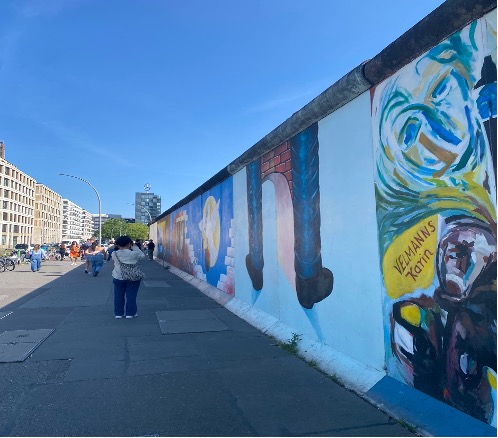
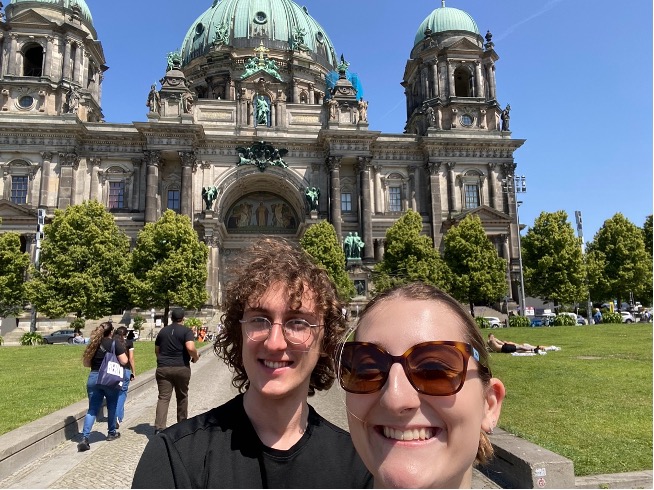
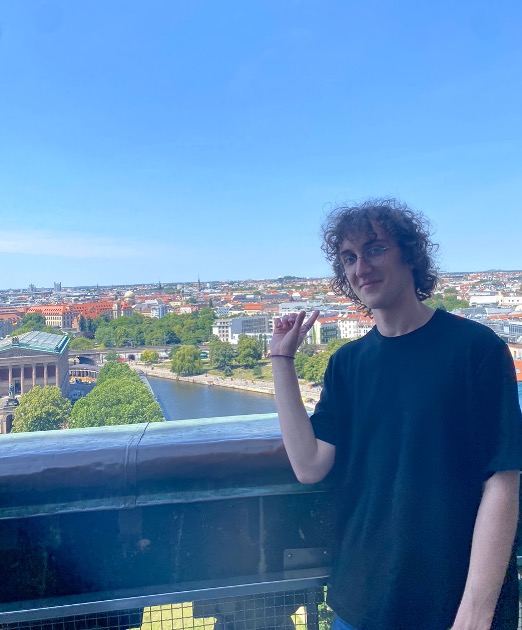
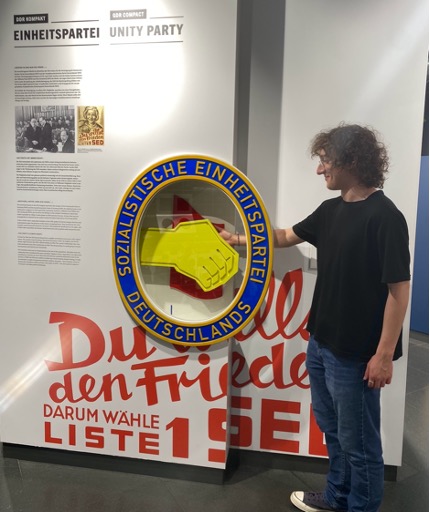
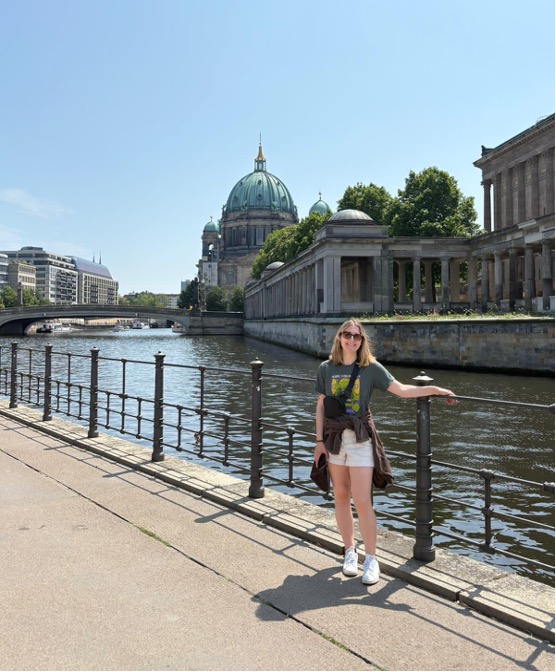
Thanks to a generous donation to our program, Crosby and I had the opportunity to travel to Berlin for a long weekend. Despite the very hot weather, we were able to see many of Berlin’s important buildings and museums. We did many of the “traditional” things to do when in Berlin, like visiting the East Side Gallery or the Brandenburger Tor. But we also visited places like the Schwules Museum and even climbed to the top of the Berliner Dom! Our trip was rich in history and culture, and we hope we can go back to explore Berlin again sometime in the future.
Crosby and I at the Brandenburger Tor, the first monument we visited. East Side Gallery: It was moving to think about the East Germans who were shot at that Wall when they tried to overcome it to flee to the West.Berliner DomCrosby at the top of the Berliner Dom.Crosby “shaking hands” with the SED at the DDR Museum.Me in front of the Spree and the Alte Nationalgalerie!