Food for Thought: Behind the Scenes in the University of Bremen Cafeteria

by Alex Arnold ’27

There’s something mysterious and alluring about the kitchens which hide behind cafeterias and the way they prepare high volumes of food at a lighting pace. This fact doesn’t change whether you’re in Germany or the US. One thing that does change, however, is the word that we use for cafeteria. In Germany, the cafeteria is known as the Mensa. While Dickinson’s slings out food for breakfast, lunch, and dinner seven days a week (minus Sunday mornings, of course), the Mensa at the University of Bremen is open only during weekdays for lunch. And unlike the cafeteria at Dickinson, it is the great equalizer: students, staff, and faculty alike can be seen making the pilgrimage down the Boulevard at 12 o’clock towards the Mensa. A trend partially reinforced by the wonderfully cheap prices for high-quality food achieved through subsidies.   The Mensa is a mystery hiding in plain sight. It is an essential cog within the university, (literally) fueling the work that is done here. Yet, although it is a part of our everyday routine here in Bremen, no one seems to think twice about how the Mensa succeeds at delivering tasty, fresh, and diverse food options for a university of nearly 18,000 students and 3,500 more staff each day.

It’s time we lift the curtain and see what’s going on behind the scenes. How does the Mensa operate here in Bremen? Who calls the shots? Who is cooking the food we eat and where is it coming from? These are the questions that I wanted to answer. On a June weekend, the perfect opportunity presented itself! Each summer, the University of Bremen hosts an “Open Campus Day” on which members of the community are invited to visit the university grounds to see what sort of work is being done – and, importantly, where their tax Euro are being spent; after all the university, like most others in Germany, is a public, entirely state-funded institution, enabling tuition-free study for its students. On this particular Open Campus Day, a guided tour through the University Mensa was being advertised online. Upon hearing of the opportunity from our Dickinson program coordinator, Antonia (Toni) Gabler, I jumped at the chance to learn more about this beloved and mysterious campus feature and quickly signed up for the tour. Below, I will recount my fascinating excursion behind the scenes of the Mensa and share what I learned in the process.

The long-awaited Saturday finally arrived. The start of the tour could perhaps be best described as the exposition in a gruesome and frightening thriller novel. I and the other perhaps 20 people who had signed up for the Mensa tour, including program coordinator, Toni, were guided through the glass doors which serve as the entrance to the Mensa. The group hushed in anticipation, gathered around two employees wearing black chef’s uniforms. We stood in the entryway of the large, familiar space. Normally bustling with the din of lunch-goers laughing and chatting, today oddly still and empty. We were divided into two groups; my group followed the interim operations manager of the Mensa, our expert tour guide for the day, as he led us back outside. Outside? Yes, he muttered, something about a “back entrance”.

It was a confused type of day. One moment rain would pour from the clouds, the next, the sun shone through patches of blue sky. Back on the Boulevard, the wind whipped, spattering rain across our faces. We followed our chef leader down the stairs to the lower level of the university complex. For those who haven’t been there, the University of Bremen’s campus is somewhat labyrinthine, with utility entrances and loading docks located beneath the main level of the academic and administrative buildings. Having reached the gloomy lower, semi-outdoor space beneath the brutalist concrete structures, we were sheltered from the rain. A particularly violent gust of wind blew through the tunnel. Bang! The wind had caught the metal door of a cage surrounding some trash bins which reverberated loudly as it slammed into the solid concrete facade. Still, our leader marched on in front of us, guiding us somewhere. Was the cold drop sliding down my back merely from the rain we had recently walked through or the result of a nervous sweat? Our guide stopped outside a large garage door, we stopped too. Where are we? I had never been to this part of campus before and everything was unfamiliar. The wind whistling, a large menu card appeared in my mind’s eye. Messy red letters spelling “Today’s special: You”. These frightening visions were, however, thankfully extinguished as soon as we entered through the door. The tour proved to be highly informative and very fun. First, we were told how the Mensa receives deliveries every morning beginning at 6:30 from a wide variety of suppliers, depending on the goods being delivered. The group was still rather quiet at this point, no one wanted to pose questions yet. I suspect this had to do with the fact that they, too, were recovering from reveries about the newest kitchen murder mystery. From the loading bay, we moved to dry storage where all of the shelf stable items used by the Mensa are stored. Here, the sheer volume of the ingredients struck me. Pallets laden with 25-pound bags of salt, sugar, and coffee. All, our guide explained, are used by the Mensa in only about a month’s time. Then they must be restocked. Some canned goods and preserves were also to be found in dry storage, but the operations manager emphasized that he didn’t much like using canned goods and tried to use fresh whenever possible.
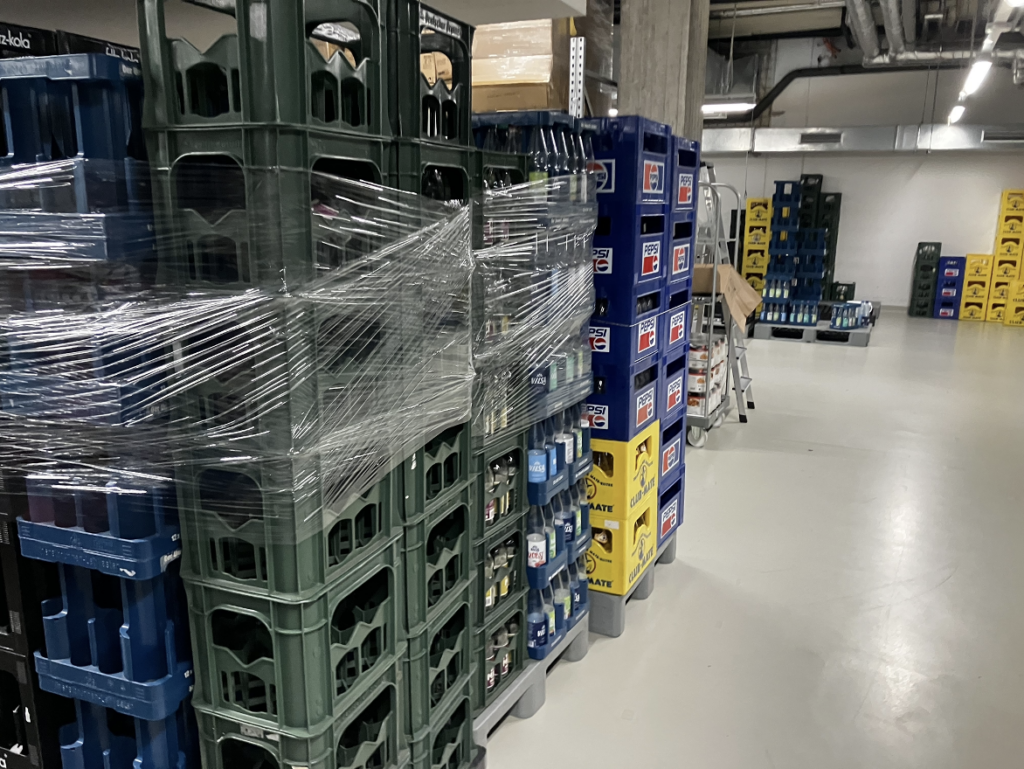
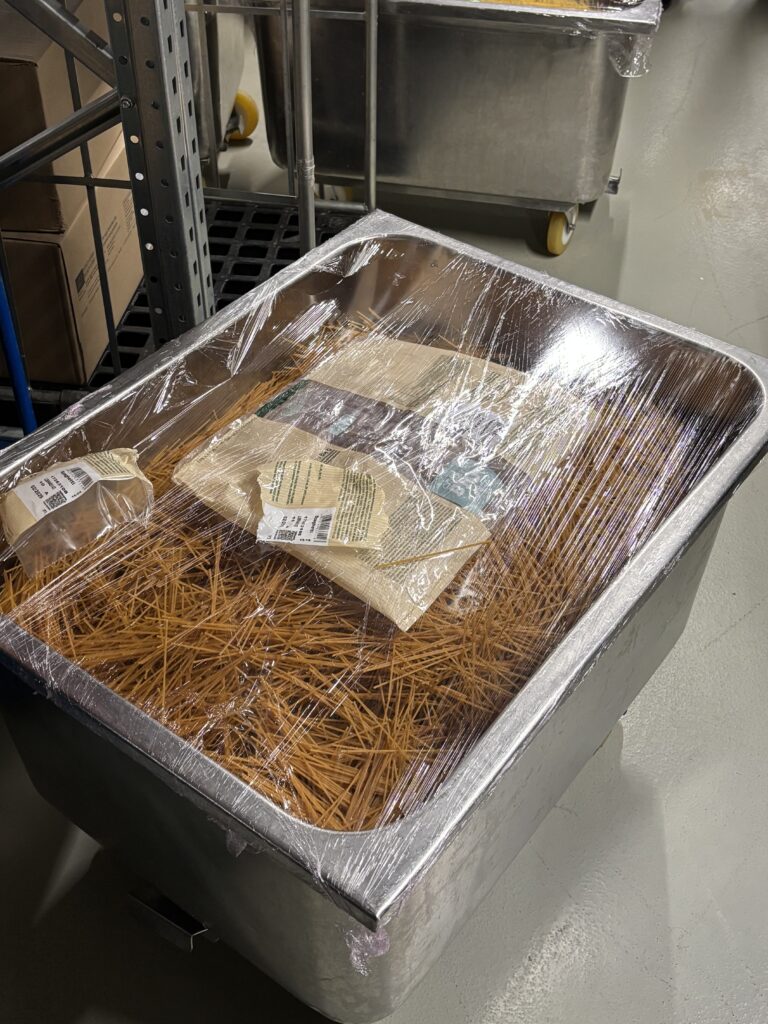
Image 1: Dry storage in the lower level of the university Mensa.
Image 2: Spaghetti ready to be cooked for next week’s lunch

Next, we got to see a few of the Mensa’s many walk-in refrigerators and freezers. Having worked in food service myself, I was impressed with the degree of organization and meticulousness in the storage areas. Everything had its place and all is kept in a neat order.
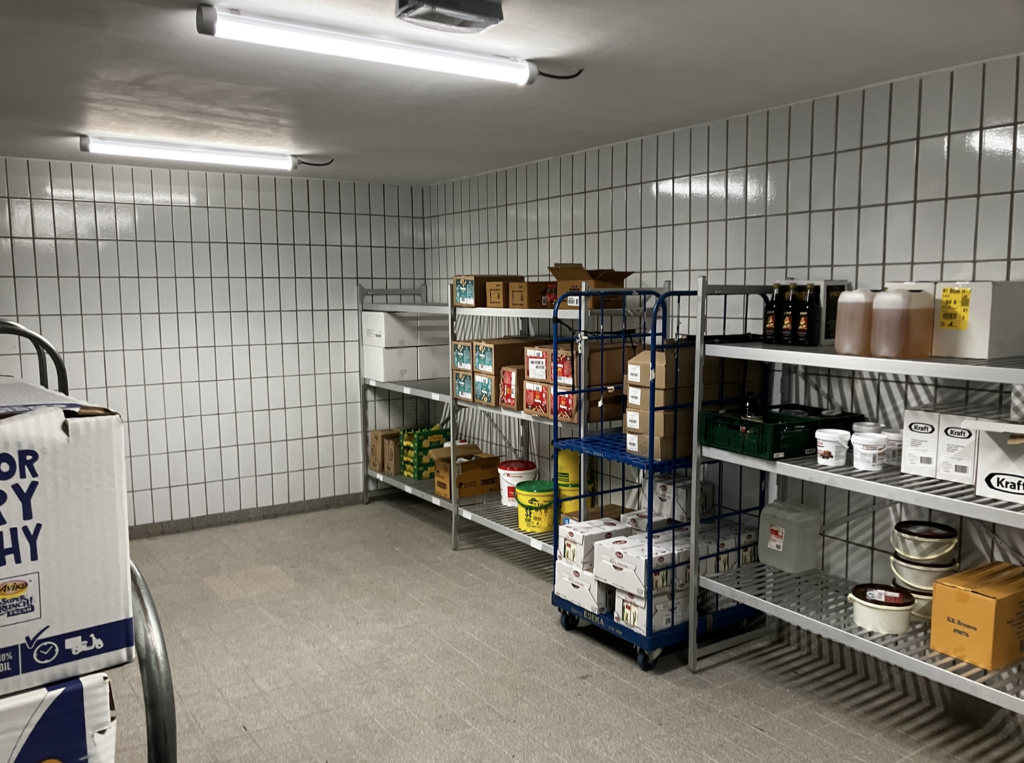
Image 3: View from inside one of the Mensa’s walk-in refrigerators, everything is neatly organized.

From storage, we moved on to the areas where the true magic happens. The prep areas and the kitchen. First, we walked through the salad and pasta prep areas. All of the Mensa’s nearly 100 employees are divided into teams of 3 to 4 people, the manager explained. These teams work together and rotate through the various tasks which need to be accomplished each day for the Mensa to run smoothly. For instance, one week, Team A might be on salad prep station, washing lettuce and cutting up ingredients for the daily salad bar. Team B, meanwhile, might be on sauce duty, whipping up the various sauces and dips required for that week’s menu. The Mensa operates a six-week menu cycle, by the way. All recipes are created in house. After a certain number of days, the teams rotate and get a new assignment. This way, the guide explained, the Mensa is never left in a bind if someone doesn’t show up for work. All the employees are able to accomplish all the tasks and jump in where needed. Additionally, the rotating teams method breaks up the monotony of peeling carrots day after day.

In the prep kitchens, too, the scale was impressive. One could see jumbo-sized versions of familiar kitchen appliances like a 30-liter stand mixer or pasta maker. Even the kitchen tools, like whisks and spatulas, had to be scaled up to handle the high volumes of food they are used to prepare. Two of the most special sights were still to come, however.
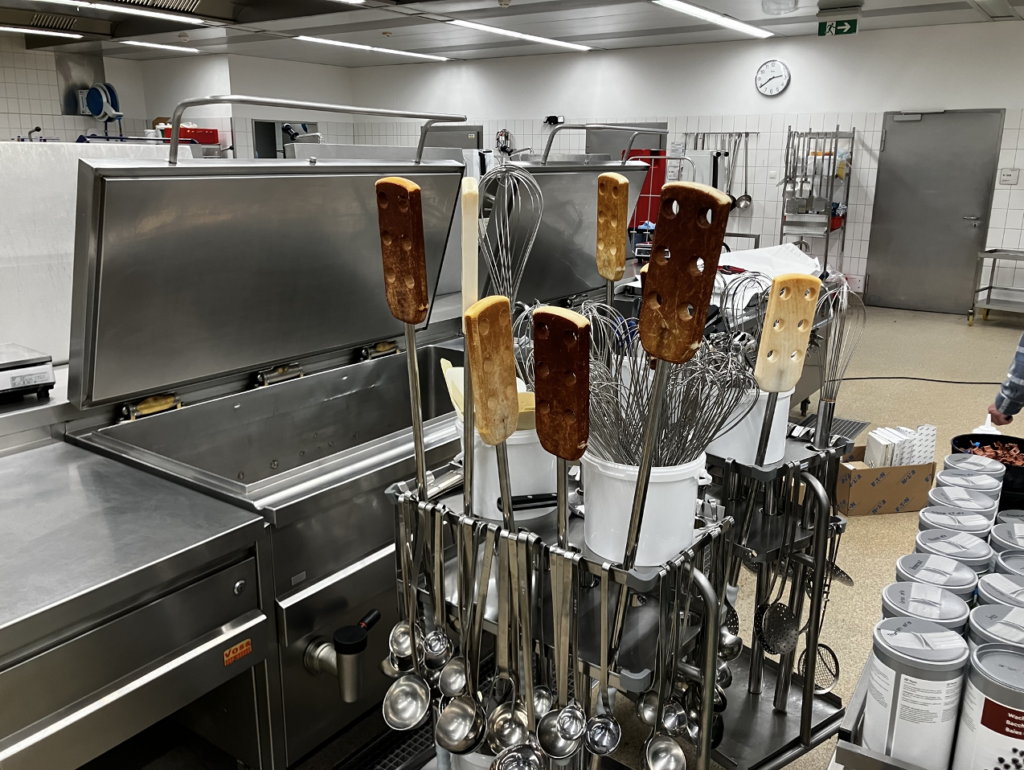
Image 4: Super-sized kitchen equipment, whisks, spatulas, and paddles, located in the main kitchen

One of these highlights was the main kitchen itself. Located back upstairs on the main level, the kitchen is a particularly exciting sight. This is because, as a regular customer of the Mensa, one catches tantalizing glimpses of the action happening in the kitchen when the double doors swing open and piping hot batches of whatever-the-day’s-dish are efficiently bustled out to the service line on shining silver carts. A full and unimpeded view of the main kitchen did not disappoint. Here, it is also divided neatly into stations. You have the friers at one end (oil changed weekly), kettles – which more so resemble bathtubs – for soups in the middle, a large selection of flattops and grills, and a row of 6 large, high-tech ovens in the back.
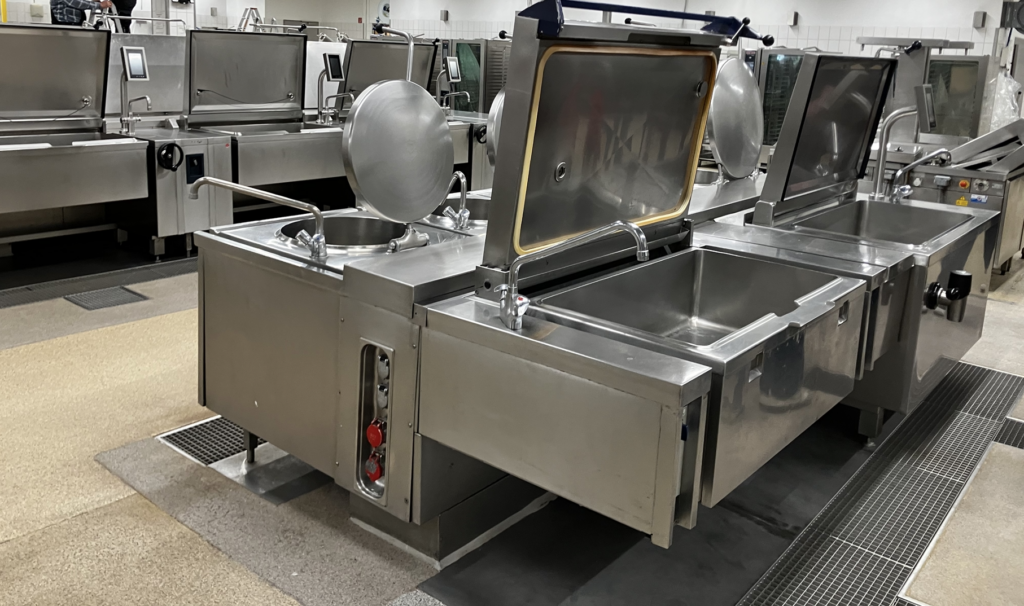
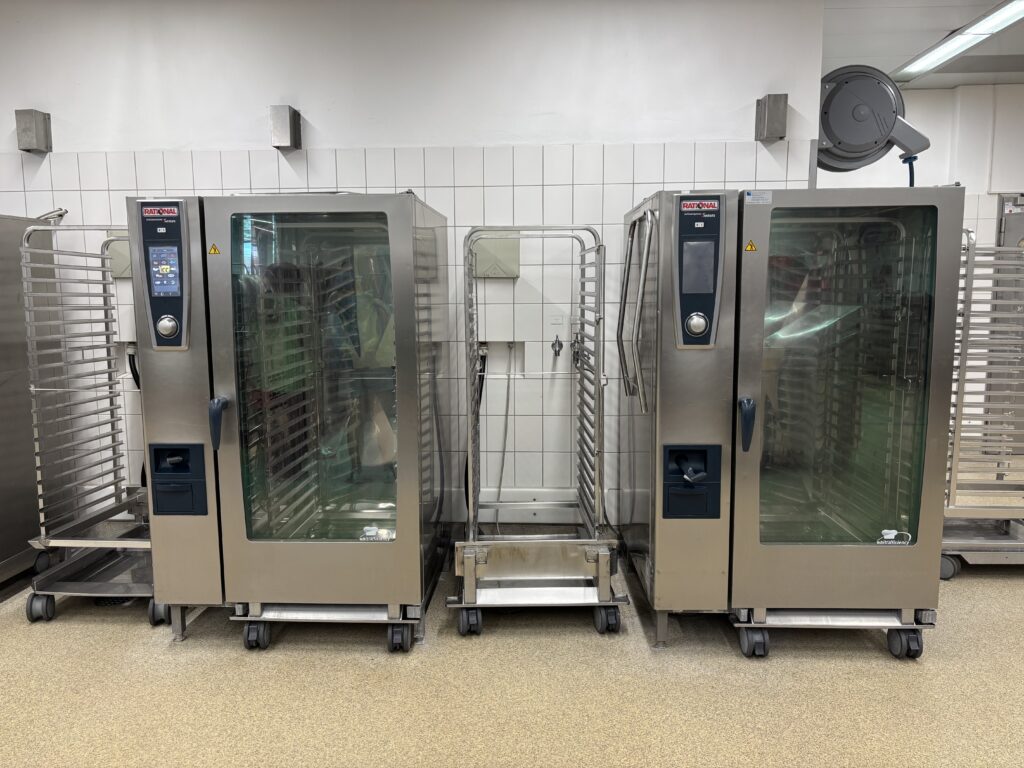
Image 5: Large kettles and grills used to cook each day’s meals in the main kitchen of the Mensa
Image 6: The high-tech ovens of the Mensa

At this point, I was able to ask a question that had been on my mind for some time. Namely, how much food waste is generated by the Mensa and where does it go? It is clear that quite some thought has been put into this matter, and our guide emphasized how little actually gets wasted. For one, initiatives like the “Zero-Waste Plate”, first implemented a few years ago, during which leftovers from that day’s service are sold at closing time for reduced price, have helped cut down on prepared food waste. The unavoidable waste that is generated through scraps and byproducts is sorted thoughtfully into bio-waste bins, which is a staple of the fabled German “Mülltrennung” or trash-separation system. This bio-waste is then presumably mixed with other municipal bio-waste and either composted or turned into biogas.

But I have left one stop unmentioned, and intentionally so. I wanted to save my favorite moment until the end. I invite you, reader, to take a moment and consider which essential part of any dining hall kitchen I haven’t described yet. Imagine you have just finished with an extraordinarily satisfying lunch of risotto-style barley in tomato sauce with succulent vegan meatballs. You scrape the last grain from your bowl and mentally prepare to return to work. Picking up your tray, you walk towards the exit. And what do you do? You set your dirty-dish-laden tray upon the rolling conveyer belt (Fließband) which takes them conveniently out of sight and delivers them… Where? Perhaps the most overlooked and most wonderful part of any dining hall is this conveyer belt. Day in, day out, we simply set our tray down, and it is carried smoothly out of our consciousness.

It was a great joy to see where this magical invention takes our dirty dishes and what happens thereafter. The dish return belt at the Mensa snakes out of sight, around a corner and through a small gap in the wall. Before we entered the main kitchen, our guide took us to a special doorway. Before entering, he turned to face us, expression stony, and said, “before you stands two and a half million Euro”. And he opened the door. Before us, central in the small room, stood a great gleaming beast of stainless steel. At one end of the chamber, the conveyer belt could be seen entering the room through the small gap in the wall. The belt followed the wall right to the other end of the room and then curved into the mouth of the beast.
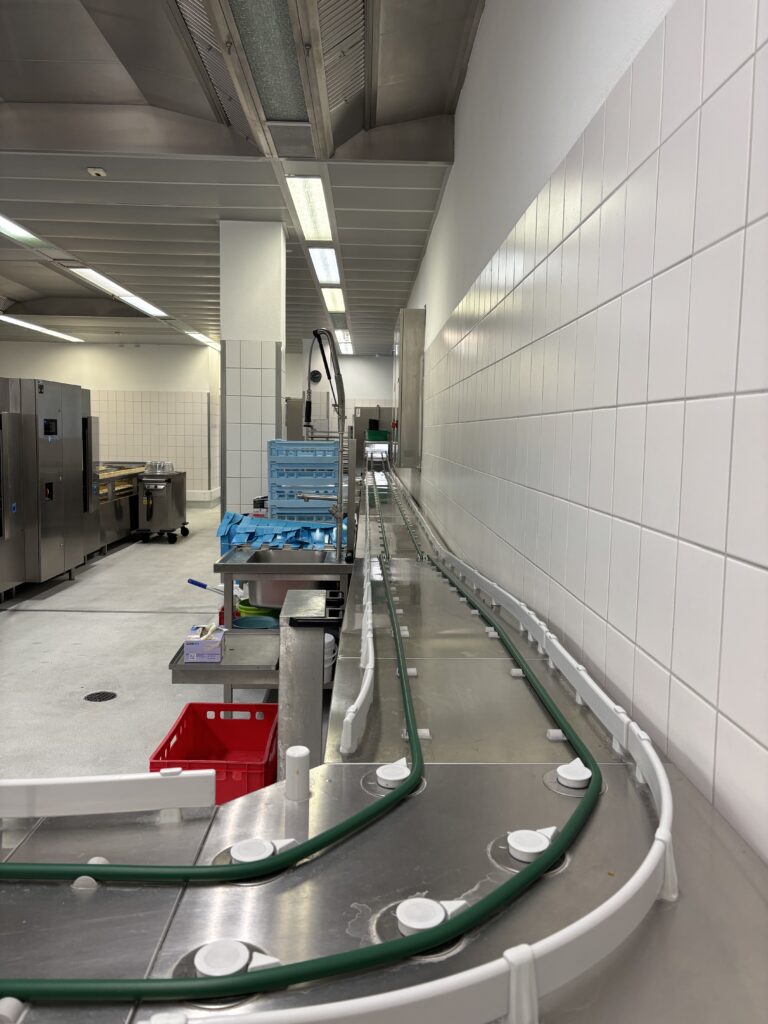
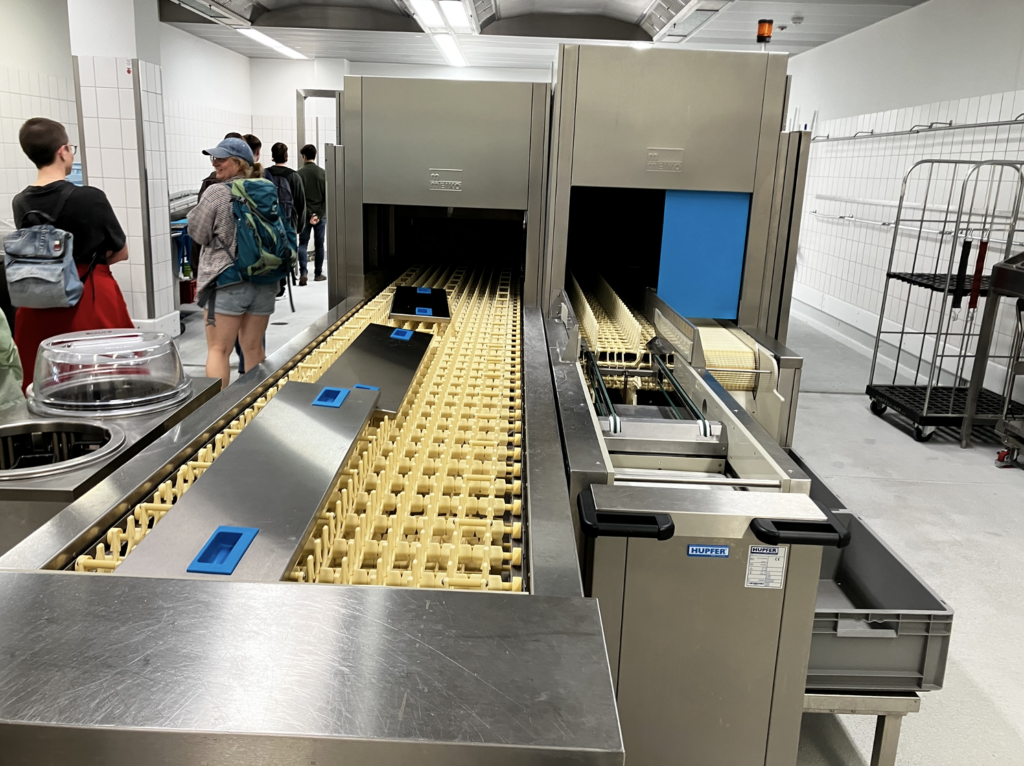
Image 7: The conveyer belt entering the room through the small gap in the wall
Image 8: View of of the Mensa’s million-dollar dishwasher

Here, shared out guide, stand two employees on duty during service, scraping plates clean, removing lingering napkins, rearranging silverware, before they are fed to the great machine. They have to work fast; the belt doesn’t stop. They pick up the plates and bowls, removing them from their gray plastic chariots on which they arrived and arrange them neatly in the likewise constantly moving belt which is designed with bumps and ridges to hold the dishes in place as they move onward. The beast has three bellies: one for dishes, one for silverware, and one for trays. After the trays are free from plates and bowls, they travel through a separate section of the machine. Hidden within this next metal-plated tunnel is a powerful magnet. It snatches the silverware up off of the tray and deposits it all onto a separate silverware-specific belt (the second belly). The trays themselves, now freed of all their cargo, travel through the third belly where they are washed and sanitized like the other items. On the other end, the clean dishes and silverware roll slowly out and are sorted manually by employees. The trays, on the other hand, stack themselves neatly onto carts. Then, the cleaned items are wheeled back into the dining area and the process repeats itself.
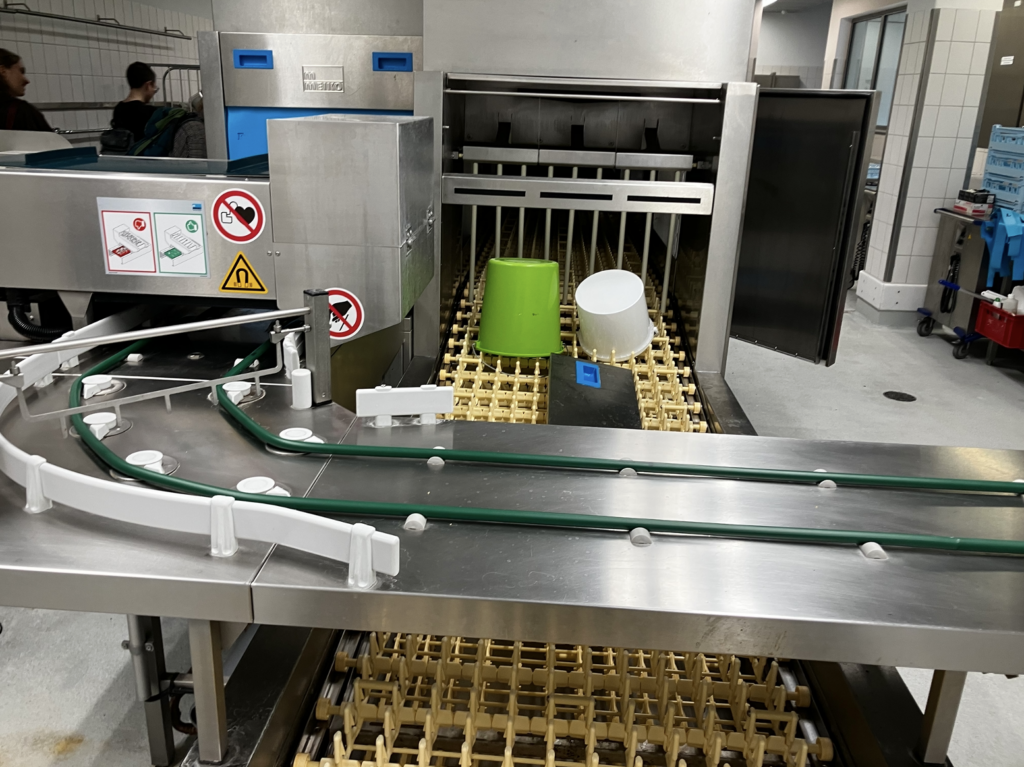
Picture 9: The conveyer belt enters the dishwasher, left is the magnet which attracts silverware

I hope that this post encourages you to think about and have more appreciation for the miraculous feat that is the university canteen. And next time they’re out of your favorite soup or there is a traffic jam at the dish return, maybe you’ll have more understanding armed with the knowledge of just how many moving pieces hide behind this system.
SoLaWhat? – Alternative food systems in Germany

by Alex Arnold ’27

Dear reader,

I’d first like to extend to you a belated new year’s greeting. Wherever you may be tuning in from, us students of the 2025-26 Dickinson in Bremen cohort wish you an exciting and successful start to 2026. Now, on to the meat and potatoes. Well, maybe not so much meat, but the potatoes were no figure of speech. The topic of this blog post is SoLaWi’s!

“Wait, So La What?”, you may be asking yourself. Well, stick around and let me to explain, because if you like to eat food, enjoy nature, or perhaps just playing in the dirt, I wager that you’ll be interested in learning about this topic and that you may even be inspired to discover more after reading this brief post.

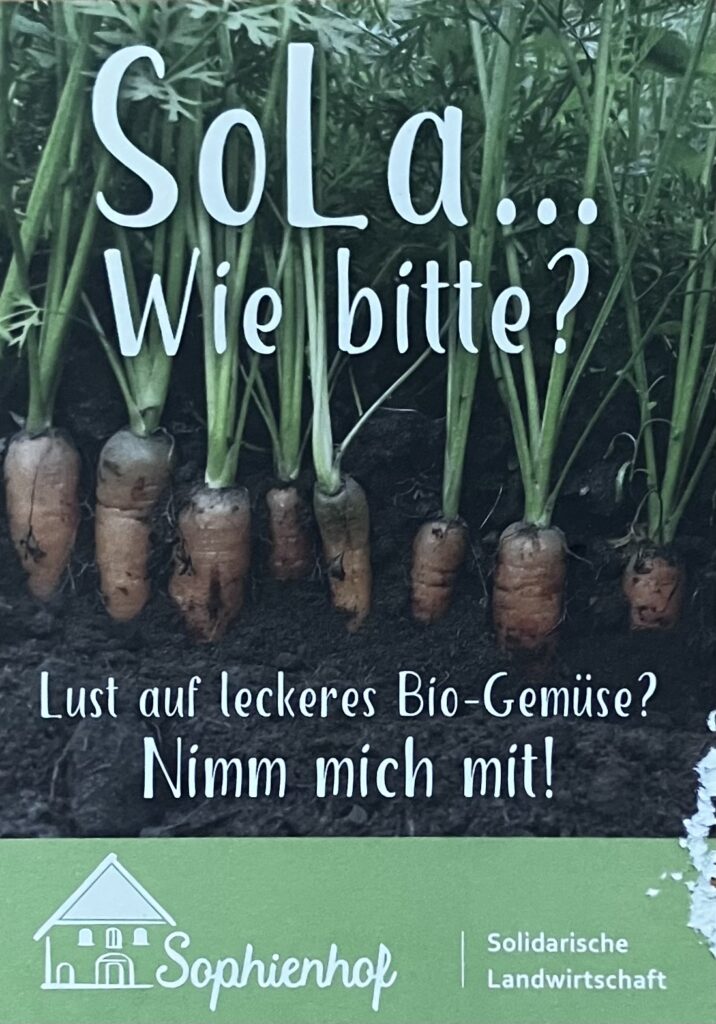
Figure 1: Pamphlet advertising for the SoLaWi Sophienhof in Bremen

Allow me to begin by writing a little bit about my background and why I care to share about SoLaWi’s (SO-LAH-VEE’s). My name is Alex Arnold (‘27) and I am a German major studying in Bremen for the full ‘25-26 academic year. Beyond my major in German, I am also pursuing a Food Studies certificate and am, when in Pennsylvania, engaged with the Dickinson College Farm. In the summer of 2024, after finishing my first year of college, I stayed on campus in Carlisle to work on the farm full time. That summer, I not only became intimately acquainted with each and every street in a 10-block radius of campus, but I also learned about organic farming and alternative food systems. Before I knew it, I had become fascinated with agricultural and food production.

My interest in food systems did not decline after that summer; it developed further as I enrolled in a variety of Food Studies courses, eager for more knowledge about the field that I had been working in–literally. With some information regarding my background provided, I’d like to transition back to Germany and explain why this whole SoLaWi business is so exciting.

Finally, a definition! SoLaWi is an acronym for “solidarische Landwirtschaft” which, directly translated, means solidarity agriculture. For those readers already familiar with alternative food systems, I have a comparison to the U.S. that I will provide in just a moment to help you visualize what sort of system this blog is about. For readers less familiar with the topic, a quick summary of this “food system” talk is helpful for understanding what makes SoLaWi’s special.

Things can quickly become abstract when talking about food systems, but don’t worry, the concept is actually quite simple. A food system consists of all the interactions along the supply network which, beginning with the producers (that’s the farmers who grow food), result in food getting to your plate. In between farms and you are any number of processors, distributors, and sellers, which changes based on commodity, location, etc.[i]  When we look at today’s conventional food system we are looking at systems based on large-scale, intensified agriculture (many crops per unit of space, i.e. high density) in which, worldwide, the number of food-producing farms is decreasing, and size of those remaining farms is increasing.[ii] Furthermore, the length of food chains–the distance food is traveling and how many intermediaries there are in between producer and consumer (that’s you!)–are far longer than they were in the not-so-distant past (1980s), when free trade agreements began allowing for more specialization in food production.

Phew, that got a little dense. I hear you, reader; I’ll get to the point. As you can imagine, today’s food system isn’t without its flaws. Although specialization and intensified agriculture have provided us with year-round access to all sorts of fruits, vegetables, meat and dairy products at prices that are relatively affordable, this has also resulted in a host of problems, both environmental and social. First, intensive agriculture relies heavily on the use of synthetic fertilizers, pesticides, herbicides, and lots of tillage to achieve high yields. Among other consequences, these practices result in a loss of biodiversity and, counterproductively, make soil less and less fertile for crops as time goes on.[iii] Perhaps just as importantly, our current food system has resulted in a disconnect–not just in terms of distance–between us consumers and the places our food comes from, farms and farmers, that is.

Since the late 20th century, these issues have not gone unnoticed. One concept that emerged in response to these trends in the food system was the banding together of communities to collectively bear the costs–and some of the responsibility–of operating a farm. That’s what SoLaWi’s are all about. A community supported farm, so to speak, or a community supported agriculture (CSA). Perhaps you’ve heard of CSA’s; they are essentially the U.S. counterpart to the German SoLaWi. Interestingly, German ideas surrounding agricultural in the early 20th century, such as Rudolf Steiner’s exploration of biodynamic farming, happened to serve as a foundation for CSA in the U.S. The idea of community supported farming isn’t unique to just the U.S. or Germany, however. Similar movements can be traced across the globe, yet their origins are largely independent. Today, however, this network of community-supported, small-scale farms is more connected, with knowledge and experience being shared through various pathways.

This brings us to a small farm in northern Germany called Sophienhof, one of a few hundred SoLaWi farms in the country today. As of 2021, the total number of SoLaWi farms in Germany according to the solidarische Landwirtschaft network stood at 368, reflecting major growth since the founding of the first SoLaWi in 1989.[iv]  Sophienhof is located in a small town about 25 miles outside of Bremen called Oldendorf. In 2013, Sophienhof began operating as a SoLaWi and, as of 2024, supports and is supported by around 420 members, with visions of continuing growth into the future. The farm is ecologically certified under the German Öko certification (similar to an organic certification in the U.S.) and operates with the guiding principles of sustainable resource management and fair treatment of animals. Yes, there are animals on the farm as well; a small herd of cattle, specifically. Beyond a diverse offering of vegetables, members of the SoLaWi can also choose to receive beef as part of their share.

After arriving in Bremen in early October, I soon realized a part of me was missing my work on the Dickinson College Farm and the accompanying supply of seasonal vegetables, the kind so fresh that you can still smell the earth on them. It was in my exploration for fresh produce that I discovered an online tool designed by the solidarische Landwirtschaft network, allowing me to search for SoLaWi’s in my area. A quick search led me to Sophienhof, which appeared to be just what I was looking for. Having some experience with CSA’s, albeit from the producer side of things through Dickinson College Farm’s very owncampus supported agriculture, I was eager to see what it was like being a part of a SoLaWi in Germany. Not to mention, it was becoming harder to ignore the restless dreams I was having about Lacinato kale and radicchio.

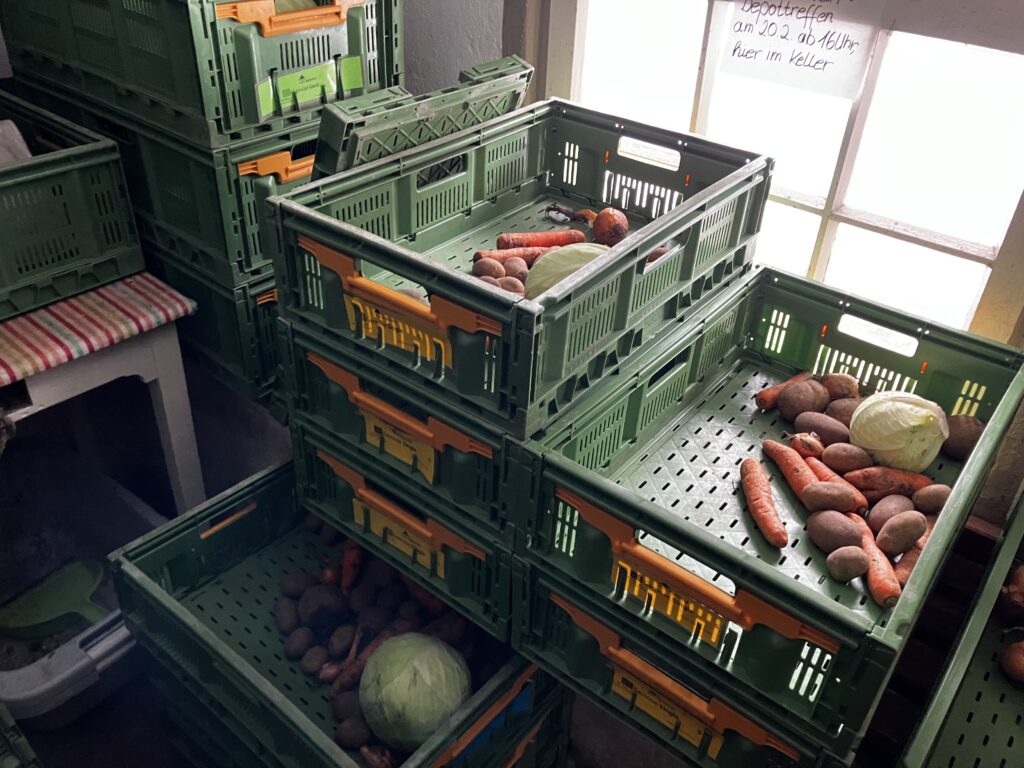
A quick inquiry form was all it took, and I was signed up to receive vegetables from Sophienhof! The way it works in practice is sort of like a subscription service. Members of the SoLaWi pay a monthly “subscription” fee and, in exchange, receive a box of fresh vegetables each week, available for pick-up at select locations across the city. Sophienhof offers a choice between three different portion sizes, at varying price points: small (for a single person), medium (two people), and large (four people). After selecting your preferred portion and pick-up location (in my case, a small portion to be picked up from the nearby home of a long-time SoLaWi member), the fun begins! Each week on Friday, the team from Sophienhof delivers boxes full of vegetables to the different pick-up points. Members of the SoLaWi–“Solawistas” as we are affectionately addressed in farm communications–flock to the depots to pick up our vegetables.

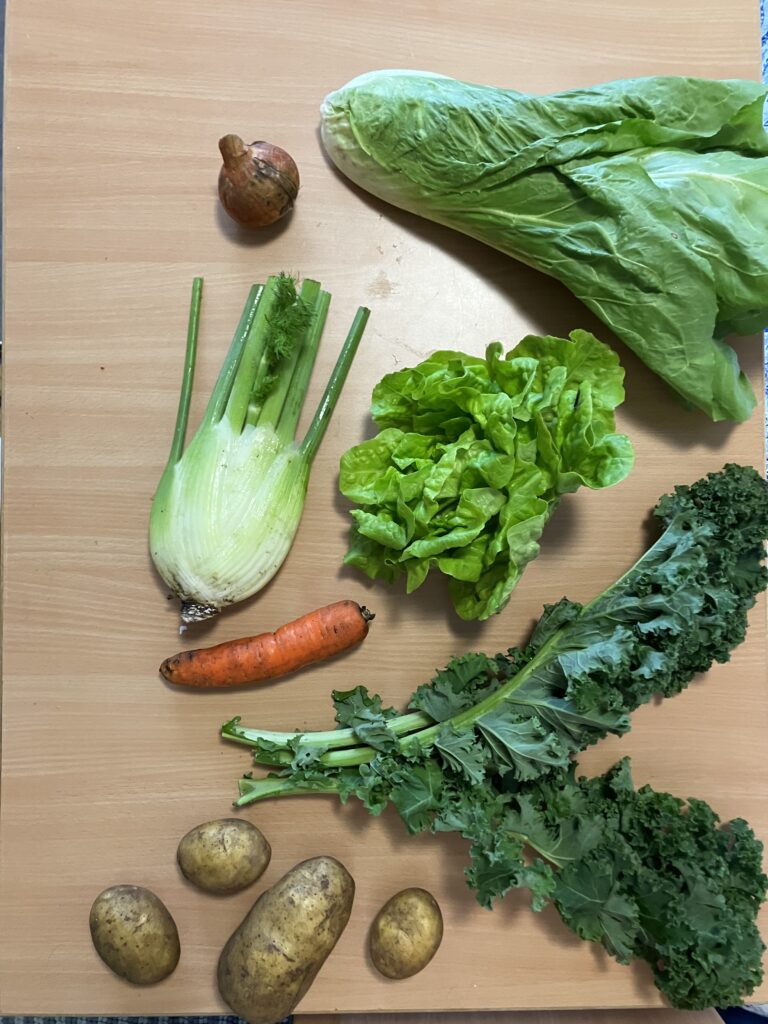
Figure 2: Crates of fresh vegetables ready for pick-up on Friday afternoon

On a regular fall/winter week, I receive cold hearty vegetables such as kale, cabbage (of all varieties), kohlrabi, as well as vegetables that hold up well in storage such as beets, carrots, onions, and lots of potatoes. To any of our readers who have a favorite potato-based recipe, I encourage you to share it in the comments as I would be thrilled to find new ways to eat the high volume of starchy tubers slowly colonizing my shelf space.

Figure 3: My first portion of vegetables from Sophienhof in November

An important question is how much this all costs. As I began considering the possibility of joining a SoLaWi, I wasn’t sure that it would be feasible on our stipend budget. However, I was surprised by the affordability of vegetables through Sophienhof. Per month, it costs €61 for my “small” share of vegetables. This puts the cost per week at just over €15, which is still well within my weekly grocery budget. I found the relatively low cost surprising, having conceived the price for fresh, organic vegetables to be much higher. In fact, after doing some comparison, I discovered that if I were to purchase the same quantity of organic produce at a supermarket, it would cost the same if not more than what I pay to directly support Sophienhof.

I’ll leave you with this reflection about what makes this concept of community supported agriculture so special. By choosing to buy my produce from a small, local farm, I am accomplishing a few really cool things at once. First, to my benefit, I am receiving fresh veggies at a fair price that are, without a doubt, tastier than what I can find in stores. Additionally, shifting toward the broader social benefits, I get the privilege of knowing exactly where my food is coming from, who is growing it, and what their philosophy for tending the land is (e.g. what types of inputs they are using, how they are treating the soil and ecosystem, etc.). At a community level, I am supporting a local business and in turn supporting the region itself. By being a part of a SoLaWi, I am not just paying for vegetables, I am paying to support well-paid agricultural jobs in the area, to strengthen community ties through food, and to support folks who manage the land in a respectful and sustainable way. Lastly, there is the environmental aspect to consider. By taking part in an alternativefood system, I am choosing a path that seeks to remedy some of the flaws in today’s conventional system. Sourcing local vegetables through a SoLaWi means less transport and associated emissions, little to no packaging waste, and more responsible land stewardship without the use of harmful chemicals.

Thanks for reading along and I hope that I’ve sparked some curiosity regarding where your food comes from!


[i] Parasecoli, Fabio. 2019. “Making Sense of Food Systems.” In Food. MIT Press. 45.

[ii] Lowder, Sarah K., Jakob Skoet, and Terri Raney. 2016. “The Number, Size, and Distribution of Farms, Smallholder Farms, and Family Farms Worldwide.” World Development 87 (November): 16–29. https://doi.org/10.1016/j.worlddev.2015.10.041.

[iii] Gomiero, T., M. G. Paoletti, and D. Pimentel. 2008. “Energy and Environmental Issues in Organic and Conventional Agriculture.” Critical Reviews in Plant Sciences 27 (4): 239–54.     https://doi.org/10.1080/07352680802225456.

[iv] Netzwerk Solidarische Landwirtschaft e.V. 2021. Solidarische Landwirtschaft: Das Netzwerk stellt sich vor. Accessed on 01.18.2026 from https://www.solidarische-landwirtschaft.org/fileadmin/media/solidarische-landwirtschaft.org/Das-Netzwerk/Ueber-uns/Selbstdarstellung_2021_DRUCK.pdf