If you would like to know what happend in an eventful, exciting year, please read our annual report 2017/18:
Durden Dickinson Bremen Program – Annual Report 2017-18
If you would like to know what happend in an eventful, exciting year, please read our annual report 2017/18:
Durden Dickinson Bremen Program – Annual Report 2017-18
by Kyu Ri Hong
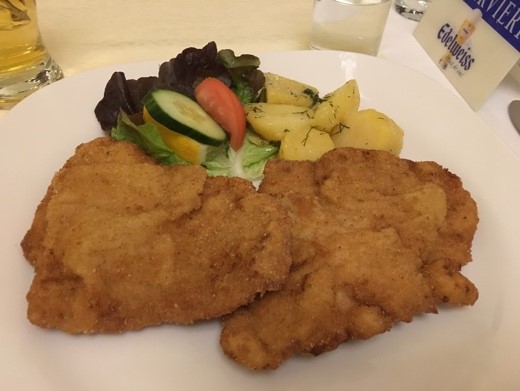 The first thing that comes up in my mind whenever I think of Vienna is coffee and food. There are so many options for good food and coffee and desserts in the city. While we were in Vienna for a little over a week, I was able to experience the café culture as well as try many traditional dishes. Upon arrival, we went to a traditional Viennese Restaurant called “Restaurant Vienna” where I ordered the Wiener Schnitzel vom Kalb. The Wiener Schnitzel is a deep
  fried, tender-hammered meat (it has to be veal to be called “Viennese;” if it is pork, it will be cheaper and only called “Schnitzel”) and is usually garnished with a slice of lemon. Depending on where you go, you could also get a side of potatoes, a mixed salad, or cranberry sauce. For dessert, I ordered a typical Viennese pastry: Apfelstrudel, and it usually comes with warm vanilla sauce and powdered sugar on top.
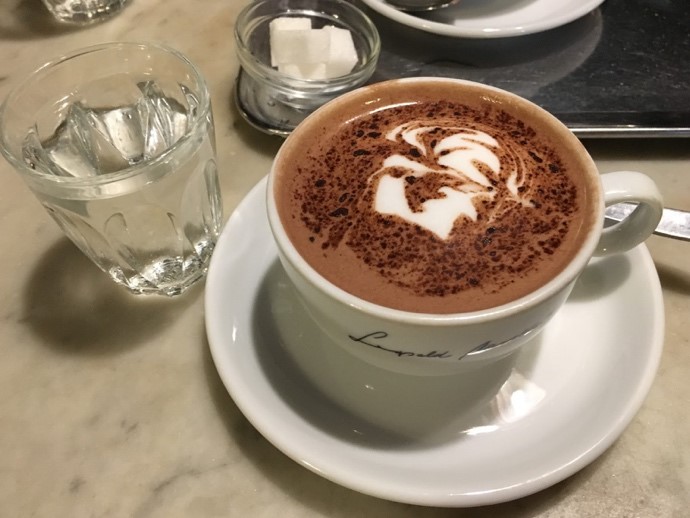 Ordering a coffee at a Viennese café is not as easy. For example, when ordering a latte, you should ask for a ‘Melange’ instead of ‘Kaffee mit Milch.’ To get the whole Vienna café culture experience, I went to a traditional café called “Hawelka.” When ordering a beverage at a café in Vienna, you are always served a glass of water with it, which I thought was great because usually in Europe, you have to buy your own glass of water; it is rare for people to ask for tap water. Hawelka is one of the oldest cafes in the city and is usually crowded with both locals and tourists, just like it was when I went to get my cup of hot chocolate. Nevertheless, the waiters were nice and the hot chocolate was delicious.
DDR Museum
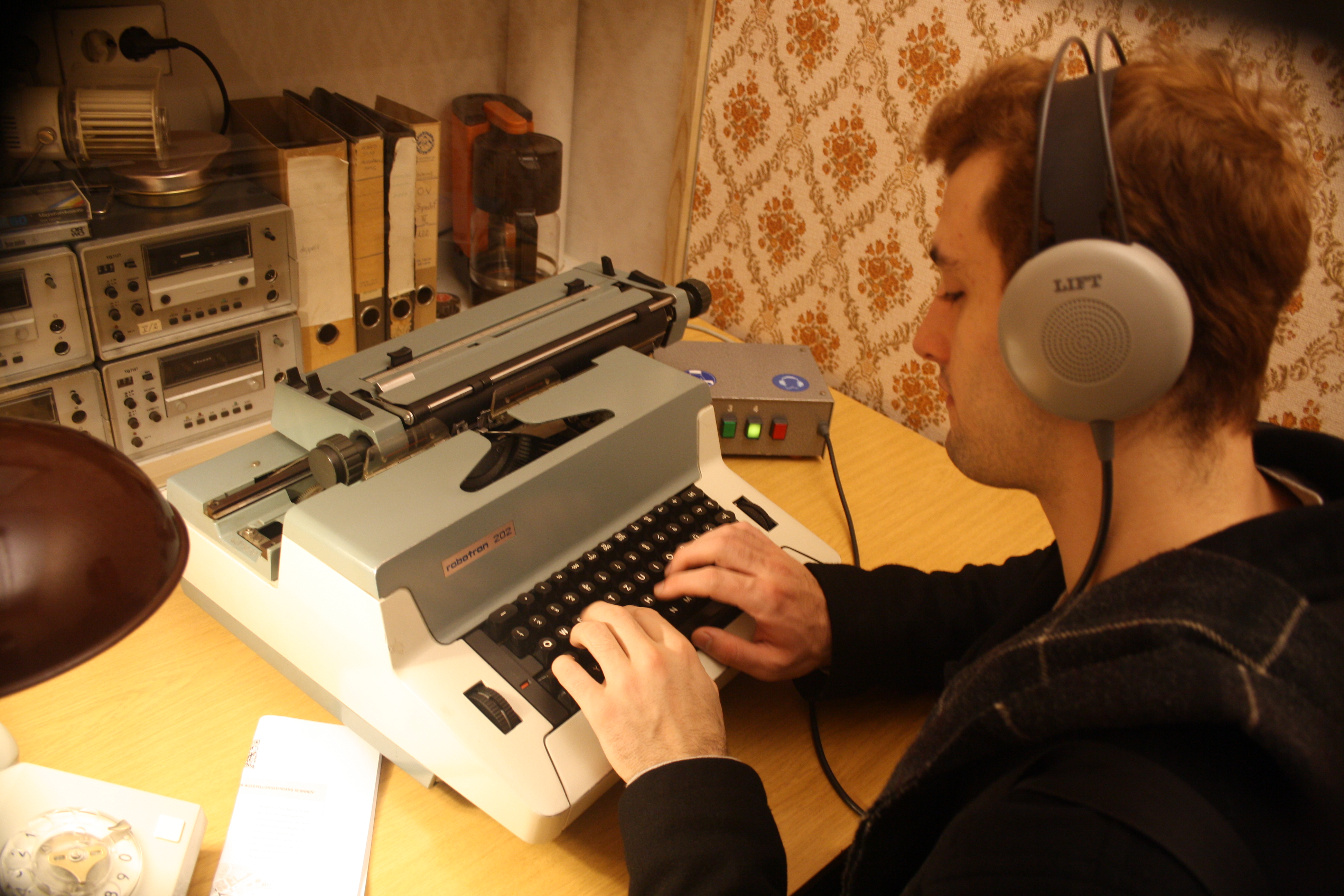
Our Berlin excursion began with a look into the past by visiting the DDR museum and meeting a well-known figure from that time. First, we enjoyed the immersive experience the museum offered about life in the German Democratic Republic – East Germany. Afterwards, we had the chance to receive first-hand insights from Dr. Hans Modrow, the last chairman of the DDR Council of
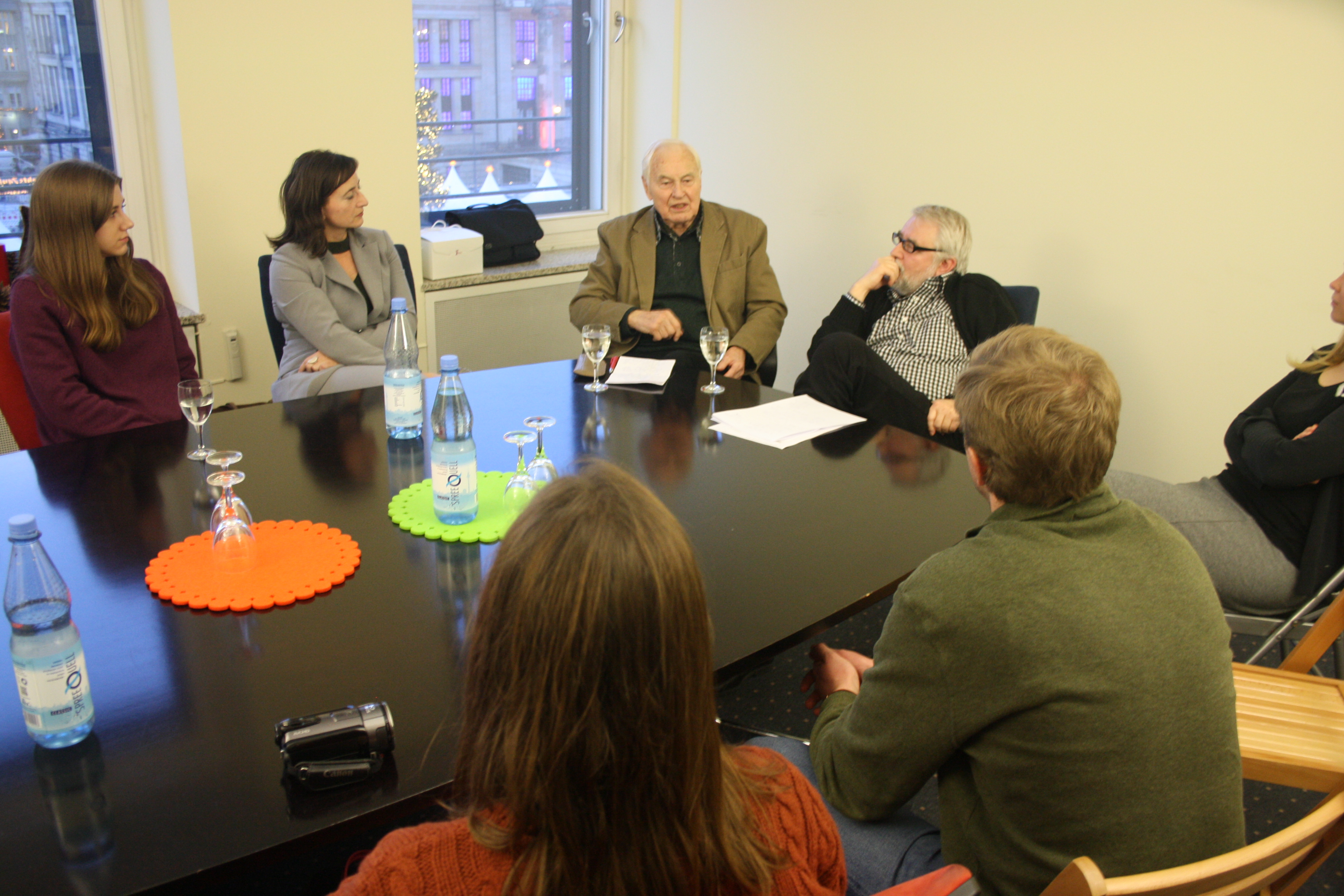
Meeting with Hans Modrow (middle)
Ministers. We also visited the infamous Stasi prison “Hohenschönhausen” and the Stasi archives in the former central building of this seceret service – where the office of its last chief, Erich Mielke, is still intact. A tour through the underground Cold War bunkers rounded up this trip into the times of the once divided city.
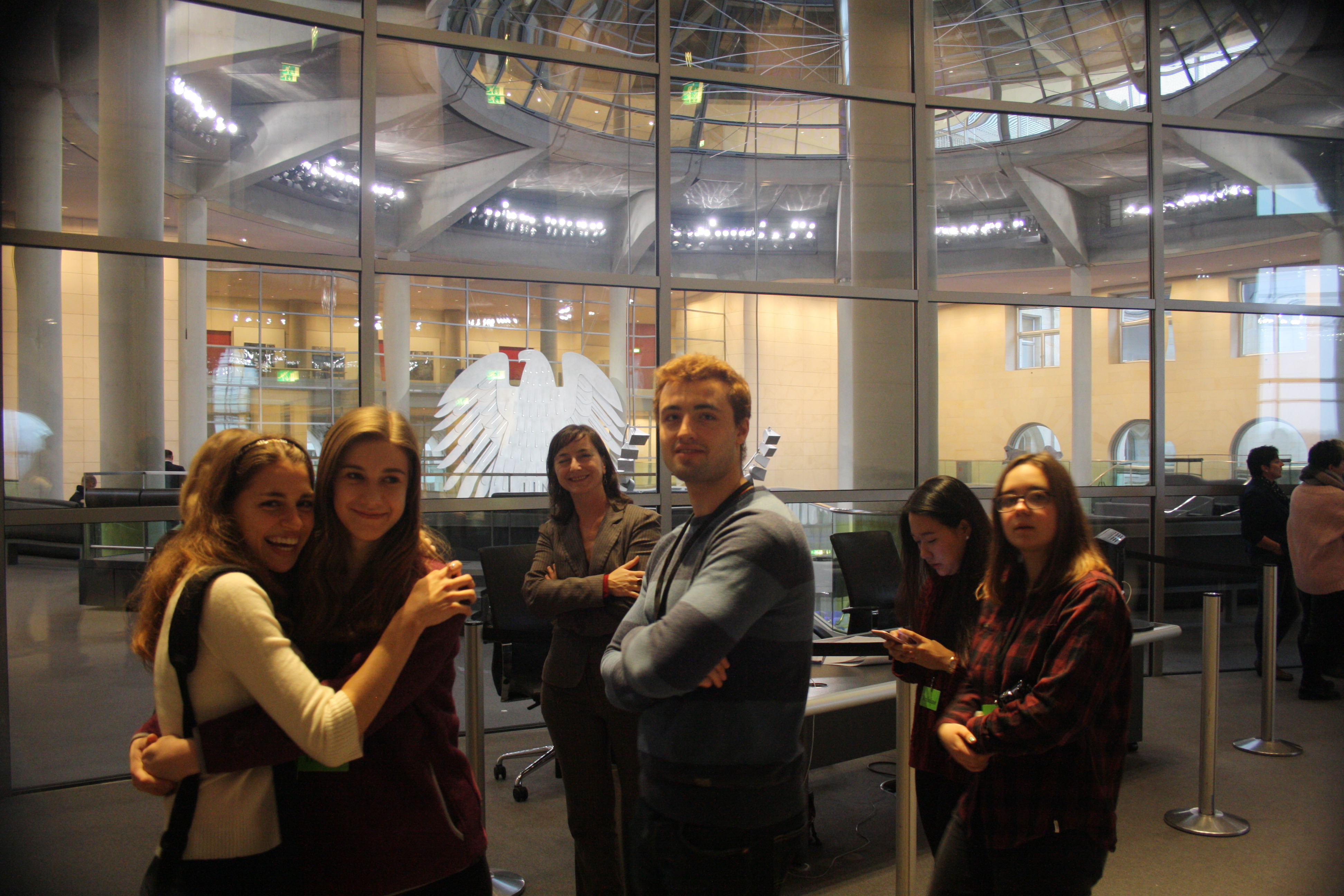
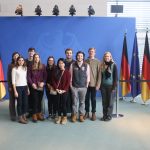
In the Reichstag (parliament)
Later in the week, we turned to current political times by visiting both the Chancellery and the “Reichstag” with a guided tour. We were allowed entry to the state department (Auswärtiges Amt) where we met the referent of the governmental Coordinator for Transatlantic Cooperation who not only answered our questions on the current state of German-American relations, but even showed us around the house and took us to the roof to enjoy a wonderful view.
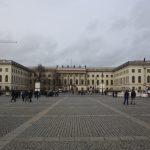
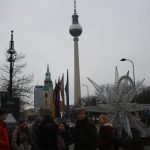
Besides, we seized the opportunity to entertain ourselves with the extensive activities and sights Berlin has to offer, e.g. East Side Gallery, Museum Island, Deutsches Historisches Museum, christmas market, and, of course, the Brandenburg Gate.
Another year has gone by. Another group of students has spent a year in Bremen and has gone back to Dickinson for their senior year. Please find our program report on what we did in this past academic year here:
Durden Dickinson Bremen Program – Annual Report 2016-17
Greetings from Bremen!
Janine Ludwig, Academic Director
Meghan Straub
All pictures: Meghan Straub
Vienna has quickly become one of my favorite places in the world. I had the wonderful opportunity of living in Vienna for a month while completing my intensive course before coming to Bremen. It was an amazing month filled with travel, history, music, and ice cream. I had such a great time that it was hard for me to pack up my things and leave to start the program in Bremen. Little did I know it then but I would return to my European home of Vienna 2 more times this year (once with my parents and once with the program). As part of the Dickinson in Bremen program we have the opportunity to go on a weeklong excursion to Vienna. We spend the week learning about the history of the city as well as experiencing all of the many facets of culture Vienna has to offer. In this blog I’d like to share some of my favorite moments from the excursion as well as some of my tips as someone who knows Vienna well. But as Julie Andrews says lets start at the very beginning…
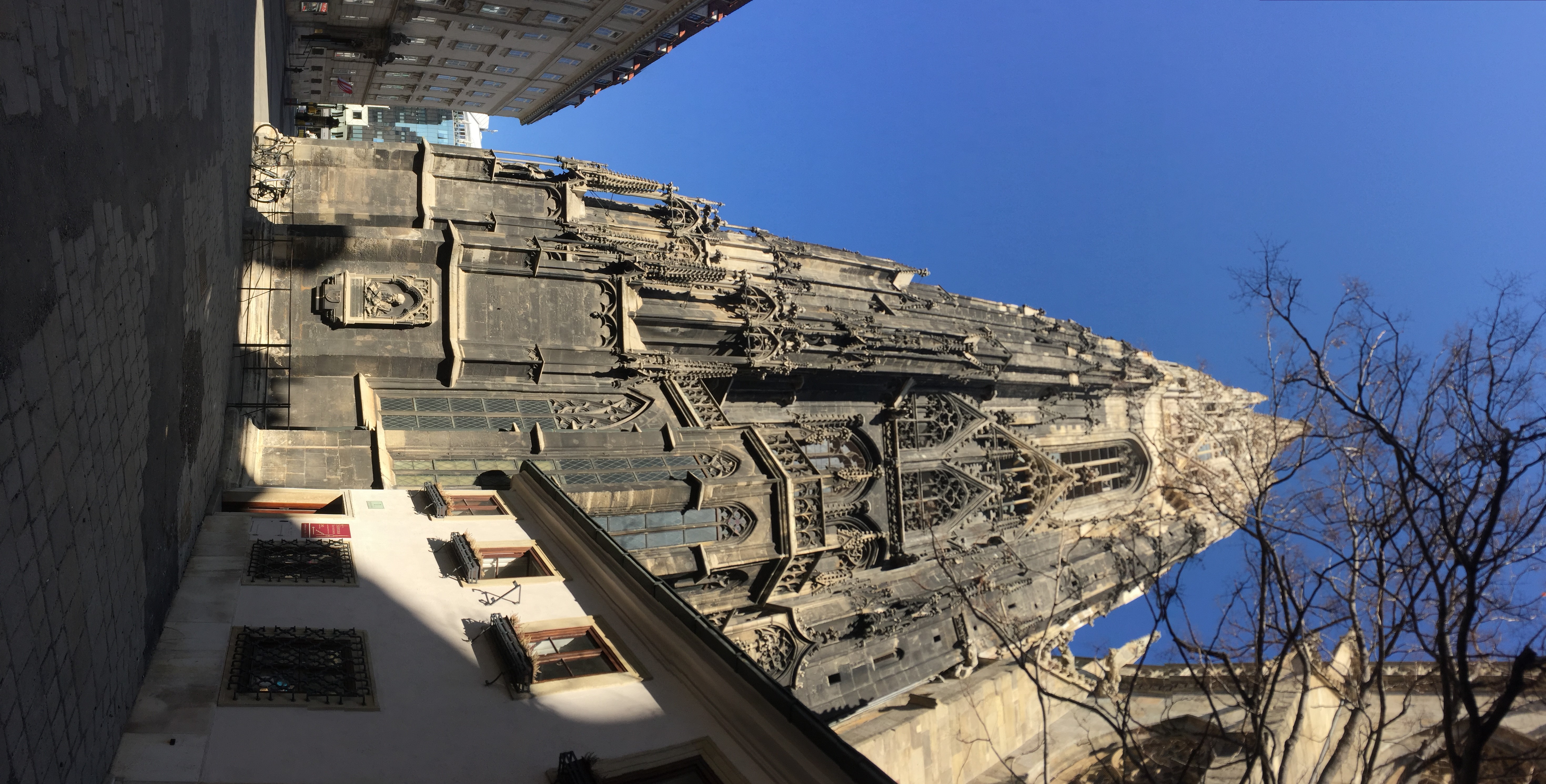
 Located at the very center of the city, St. Stephan’s is the most important building in the whole city. It is an easy navigation point, many of the city’s sites are within a 10-minute walk from its front door, and it is one of the most beautiful churches I’ve ever seen. We got an “All Inclusive” ticket which let us do the audio guided tour of the inside of the cathedral, a tour of the catacombs, an elevator ride to the north tower, and the climb up to the south tower. When I was living in Vienna, I never had the chance to do all of these so I was excited and St. Stephan’s didn’t disappoint. I learned so much about the church from the audio guide and the views from the towers just can’t be beat.
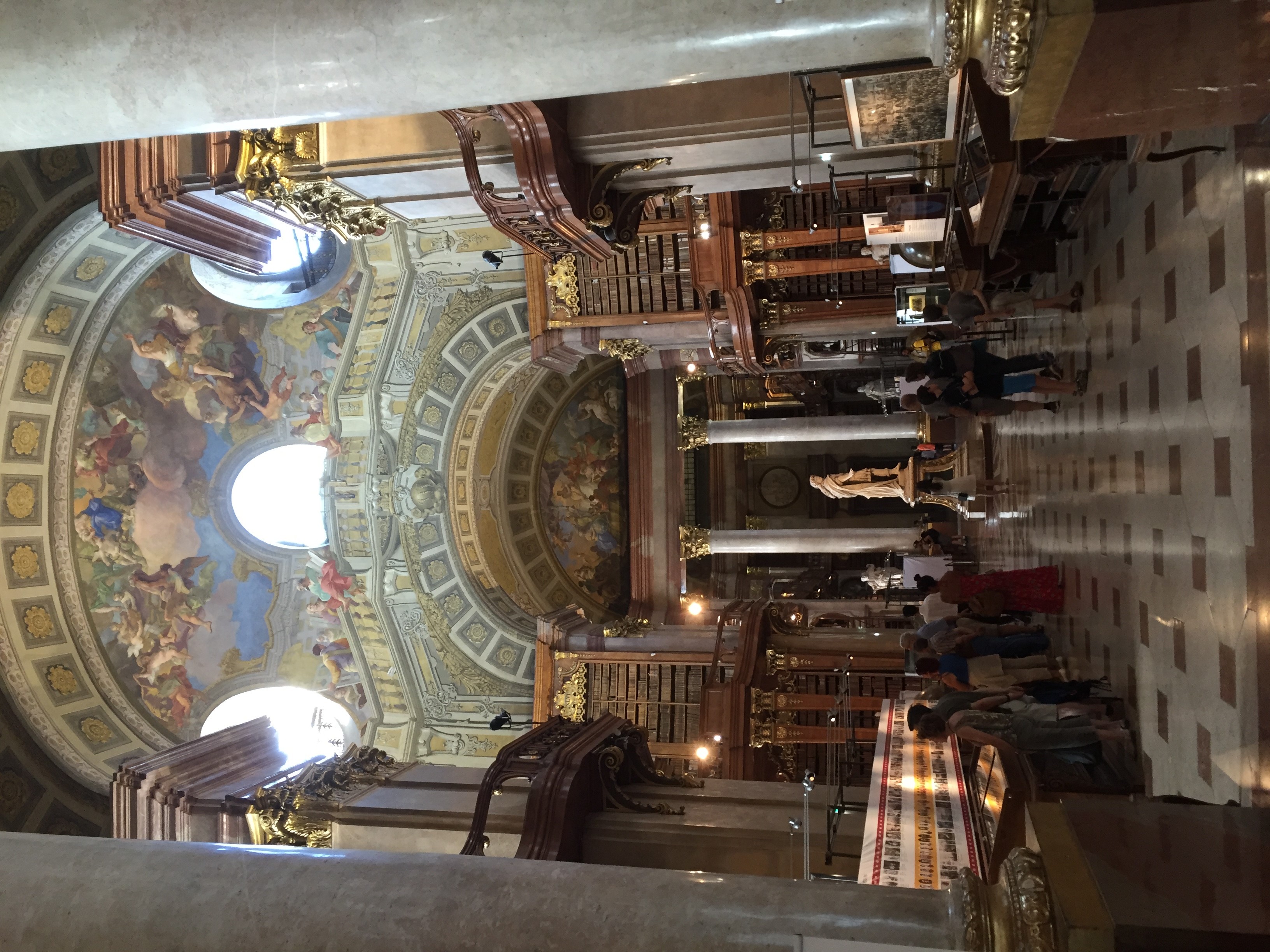 Just down the Graben (the pedestrian area at the center of the city) and around the bend is the Hofburg Palace of the Habsburg dynasty and within this gorgeous palace is the National Library. I’d been to the library before, but this time, we had the extremely fortunate opportunity of getting a special tour. We learned all about the care of the books and the history of the building. The best part for me was getting able to see some selected books like a Gutenberg Bible up close and even touch it. My nerdy book-loving soul was close to exploding. The trip to the library was an absolute highlight of our trip for me.
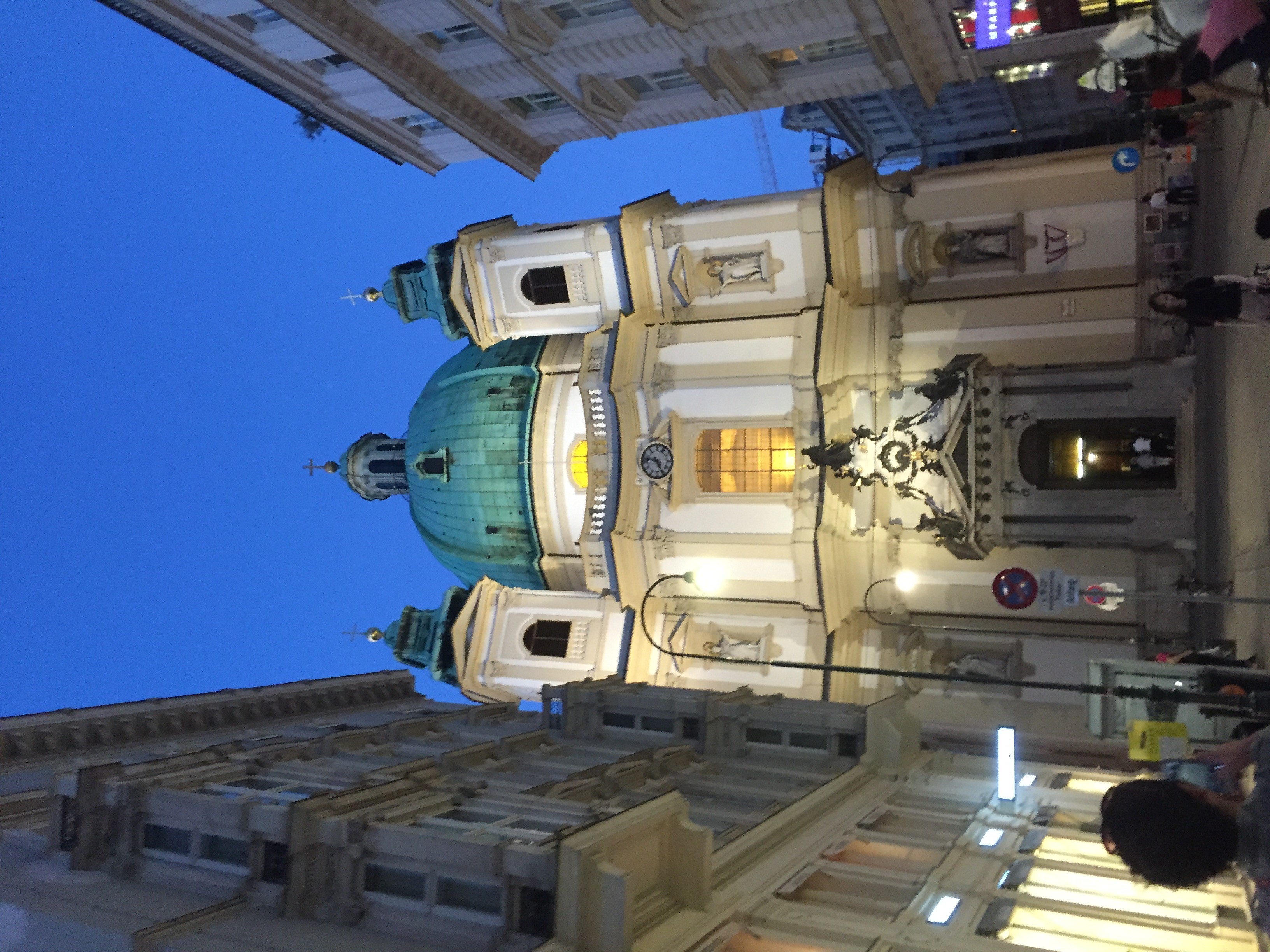 My favorite place in all of Vienna is St. Peter’s church. Located right off the Graben, St. Peter’s is often overlooked. This church is beautifully decorated and offers free concerts almost every night around 7:30pm. They put out a schedule of the weeks events including concerts by violinists, singers, and most importantly (in my opinion) organists. My favorite thing to do in Vienna is to take a late night walk from the Rathaus through the Volksgarten and the Hofburg all the way to my final stop at St. Peter’s church just in time for the concert. There is something magical about sitting in the candle-lit church as a talented musician plays Bach’s Toccata and Fugue on the organ while the whole
 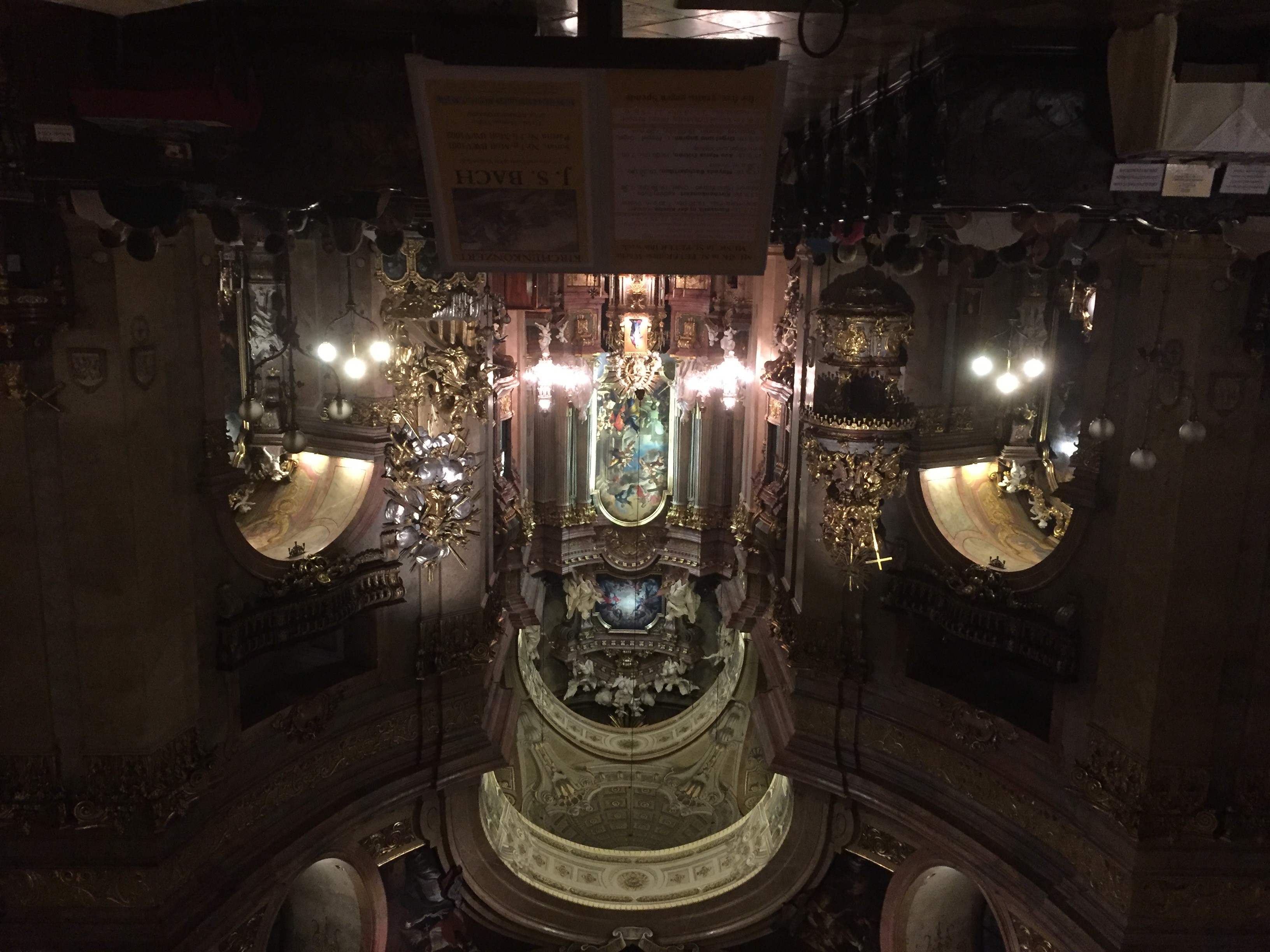 building shakes from the sound. I highly recommend stopping by if you get the chance. The price (just a tip for the musicians) can’t be beat.
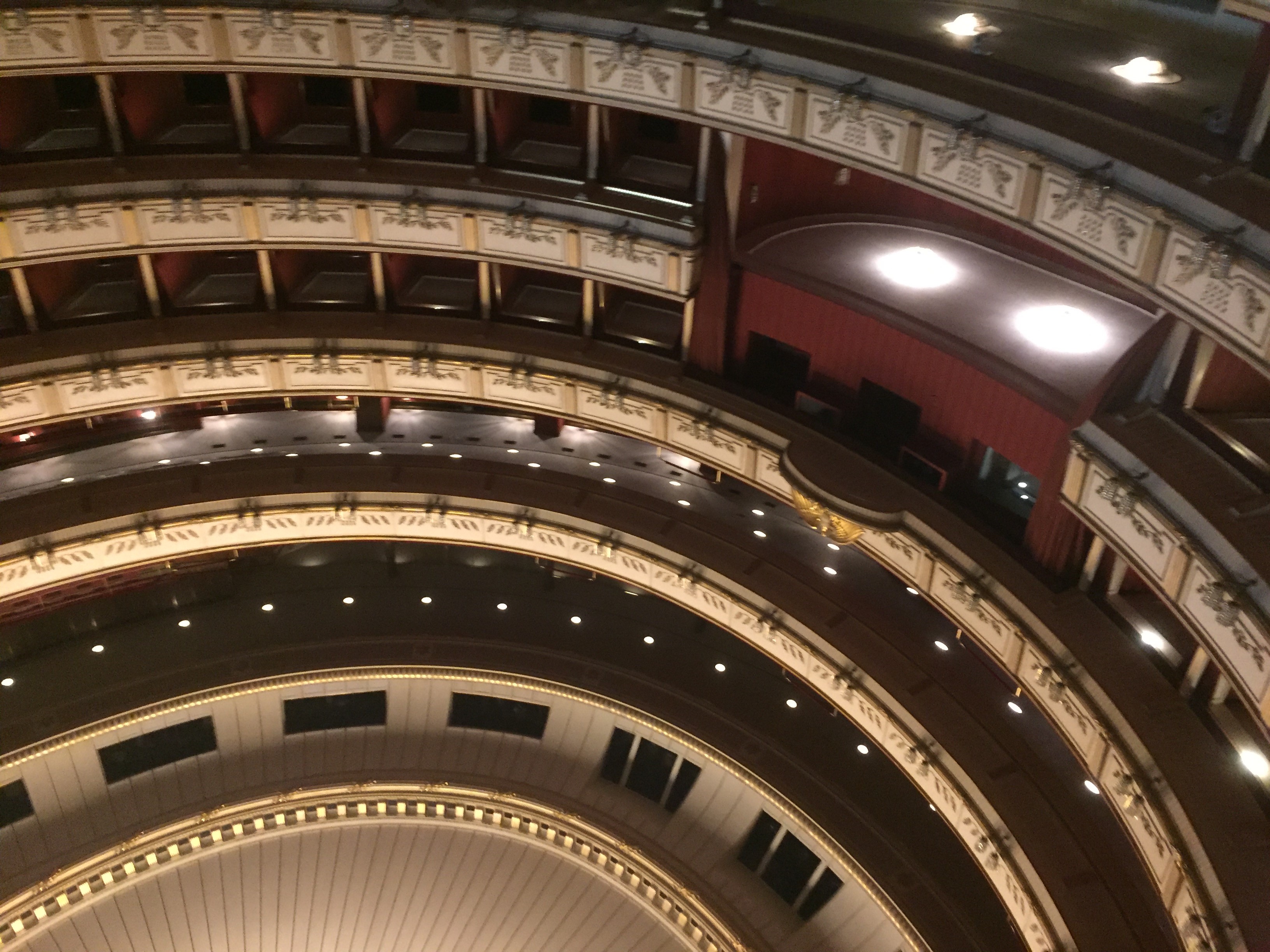 The city of Vienna is filled with music everywhere you go and the very center of that music is at the state opera house. Located between the Graben and the Ringstraße, the Vienna State Opera is housing performances every night including ballets and of course Operas. As a famous attraction in Vienna, the ticket for the Opera can be quite expensive and often go fast. If you really want to see a performance there you have two options. The first is acquiring a standing room ticket. If you wait outside the building in a line about 80 minutes (or more depending on what show is being performed) before the show you can get a ticket for around 3 euros. Though time consuming and often grueling on hot days, a ticket for that price is hard to pass up. Another option is the large screen outside of the opera house on Kartnerstraße. A couple nights a week the opera displays the performance of the night outside free to the public on a large screen. People bring chairs and blankets to sit outside and enjoy the good weather and beautiful voices for free. If you, like me, aren’t that interested in hearing the voices of the world’s best singers and are more interested in seeing what the inside of the opera house looks like tours are also provided during the day. For about 4 euros (with a student discount) you can go on a tour of the interior of the building and learn all about how the shows are organized and the long history and tradition of opera in Vienna. I highly recommend.
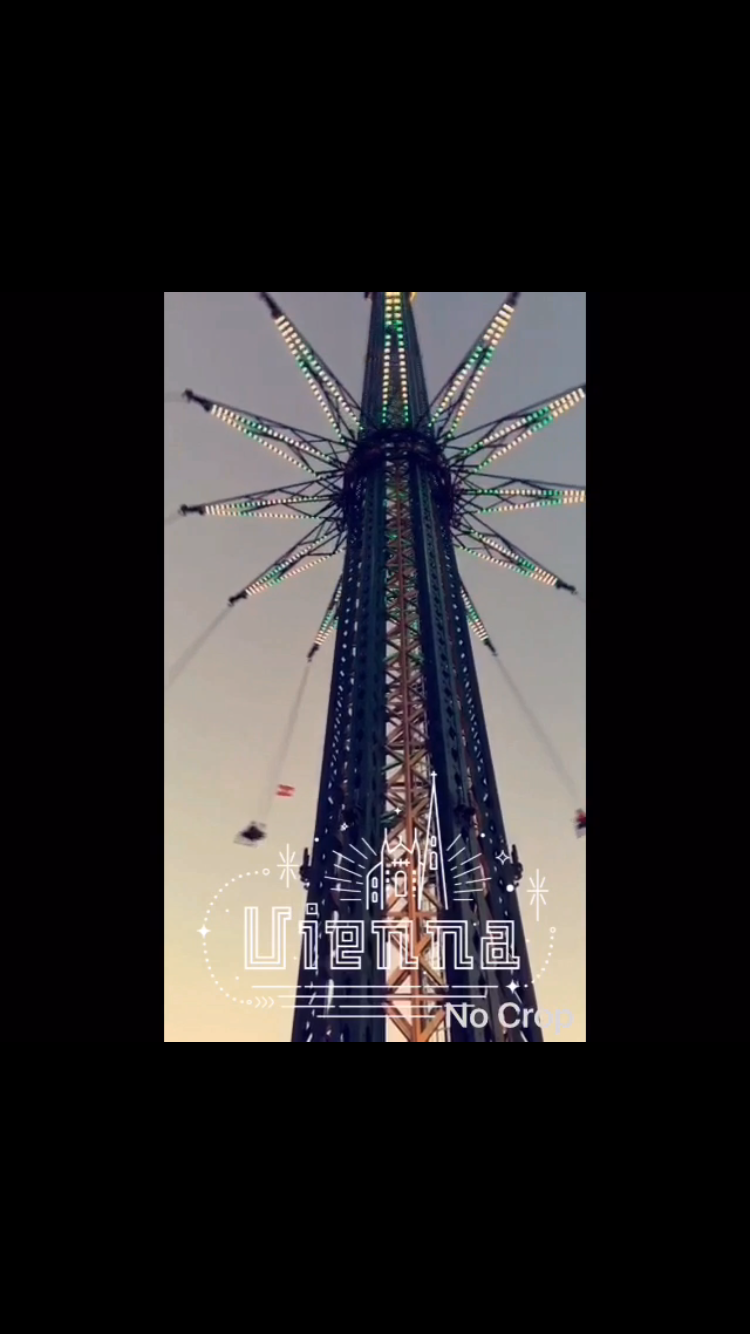 Right outside of the inner city of Vienna is the Prater. Founded in 1766, the Prater is essentially an amusement park. The park is open from 10am until 1am and housing tons of restaurants as well as rides. The most famous of which is the Wiener Riesenrad or Ferris wheel. The wheel is 212 feet tall and is famous for its appearance in the movie The Third Man. My favorite ride is not the famous Ferris wheel but rather the tower swings. The Prater Tower is 117m high and offers a breathtaking view of the whole city. If you are afraid of heights it will likely be too much for you but otherwise it is a great way to see the whole city for only 5 euros.
I hope that these tips/suggestions help you to get the most out of your visit to Vienna if you get the opportunity to go. If you do, I hope you enjoy it as much as I have this past year. Ciao!
by Kate King
Most people familiar with the German Department at Dickinson are aware that in Bremen full year students take one Dickinson course taught by Dr. Ludwig, better known as Janine, our academic director. The course is a cultural comparison of Germany and the USA. In our first few classes, we discussed emigration from Germany to the USA, which began in the late 1600’s and continued, usually in waves depending on what was going on in Europe, for the next few hundred years.
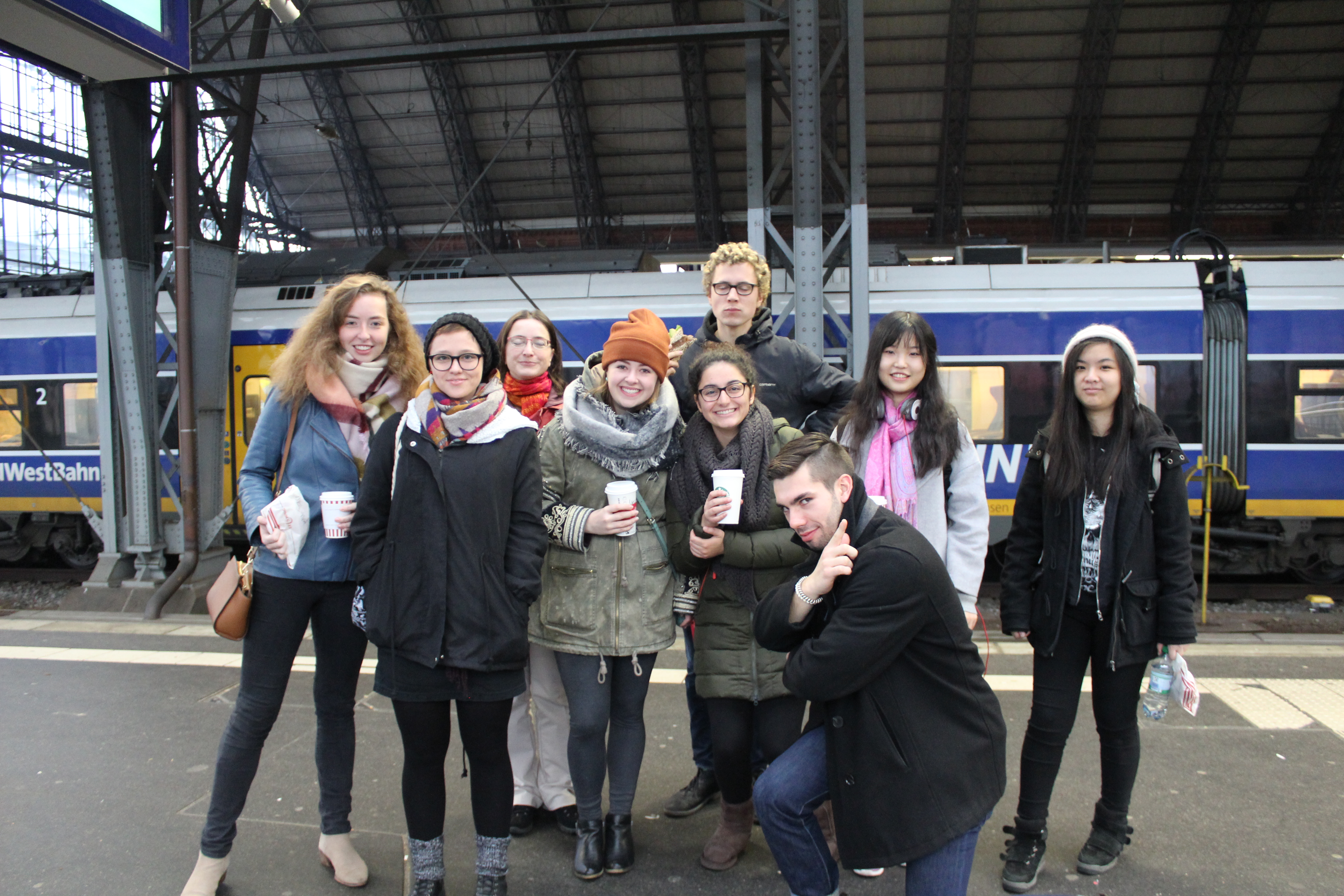
Kayla, Yvonne, Meghan, Caroline, Lee (fr.l.t.r.), back row: Janine, Fynn, Zhen, Siyun
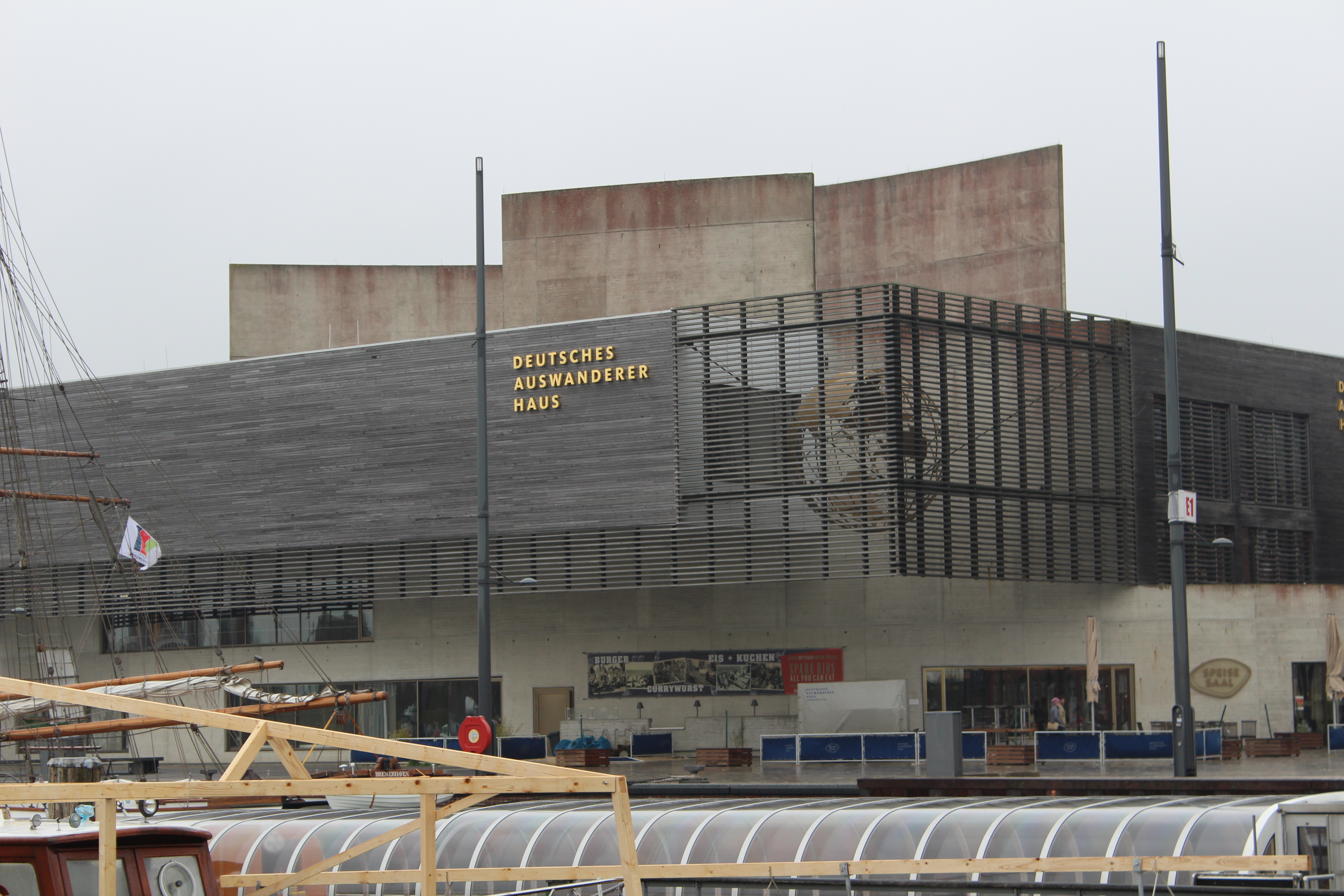 To learn more about this, we took a field trip to Bremerhaven (the second city of the Bremen city-state) to visit the Deutsches Auswanderer Haus, or German Emigration Center. Bremen bought Bremerhaven in 1827 to replace its inland ports that were at risk from sediment deposition and it quickly became a hot spot for emigration due to the quick access to the North Sea and Atlantic Ocean.
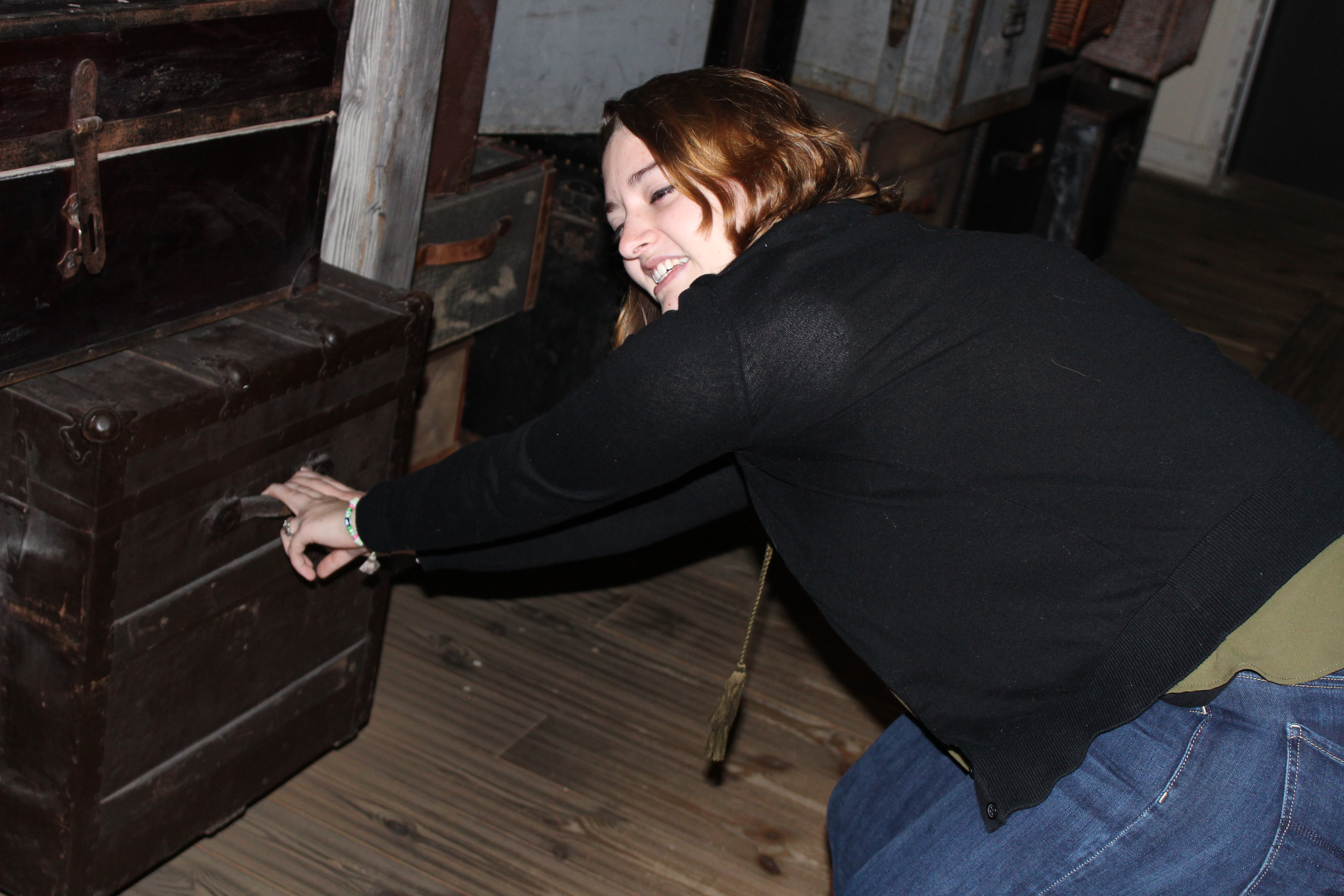
Me, Kate
Now if anyone reading this knows me, you probably know that I am a double science major and I minor in German for the language skills – I do not enjoy museums. I am like a three-year-old child in museums: if you don’t keep my attention with interactive things, I get tired and hungry and just want to go home. This museum catered to my inner toddler. Upon arrival, we were all issued boarding passes with the name of an emigrant of Germany and another name of an immigrant that came to Germany.
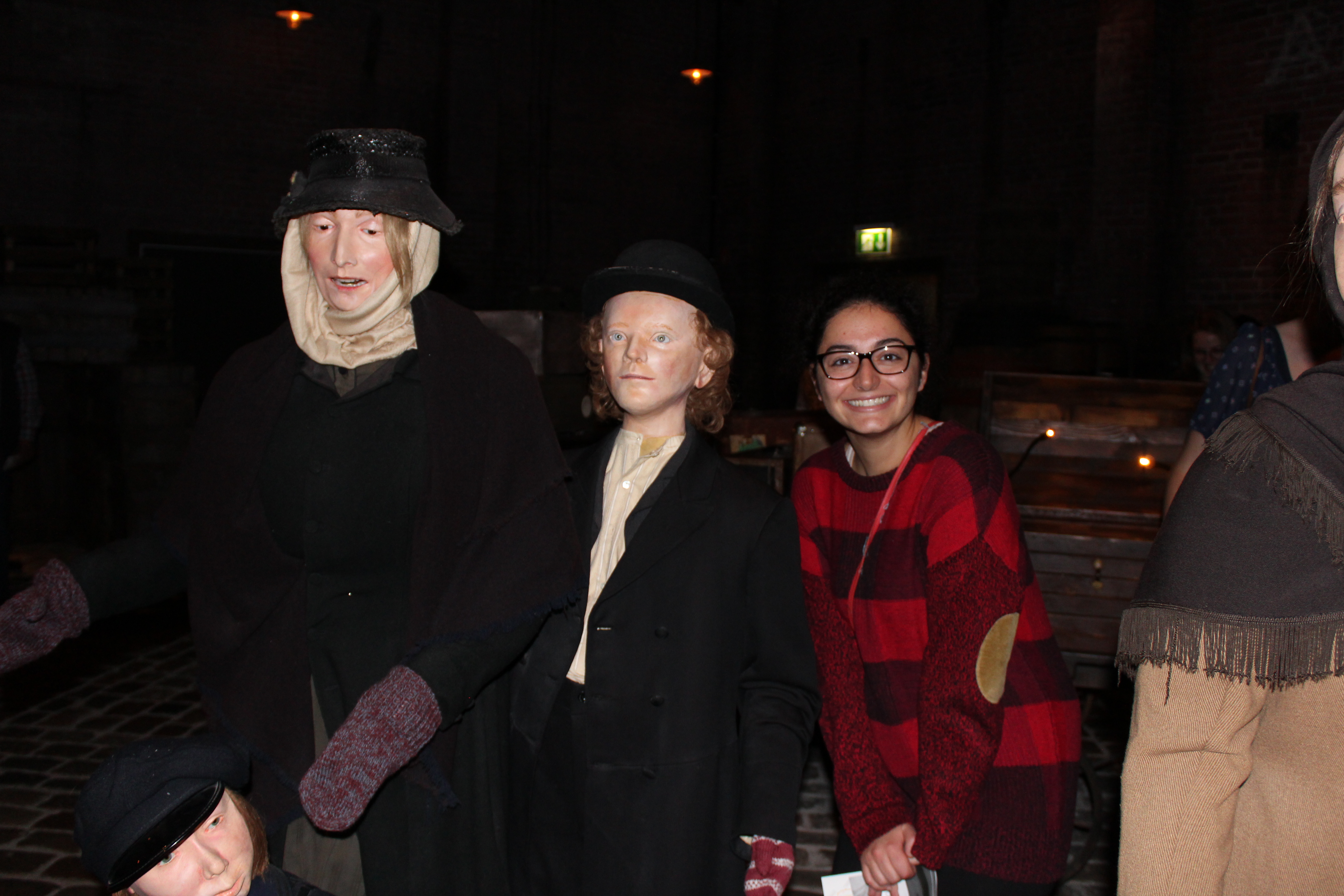
Caroline and friends
We started the tour by entering a replica of the waiting hall, which was part of the original emigration office that millions of people went through to leave Europe.
We were then guided into the next room to the docks where heard farewells from families. The next room, the Gallery of the 7 Million, allowed us to hear the personal stories of our emigrants. We then climbed the stairs of the ship seen from the docks and entered the ship to begin our voyage.
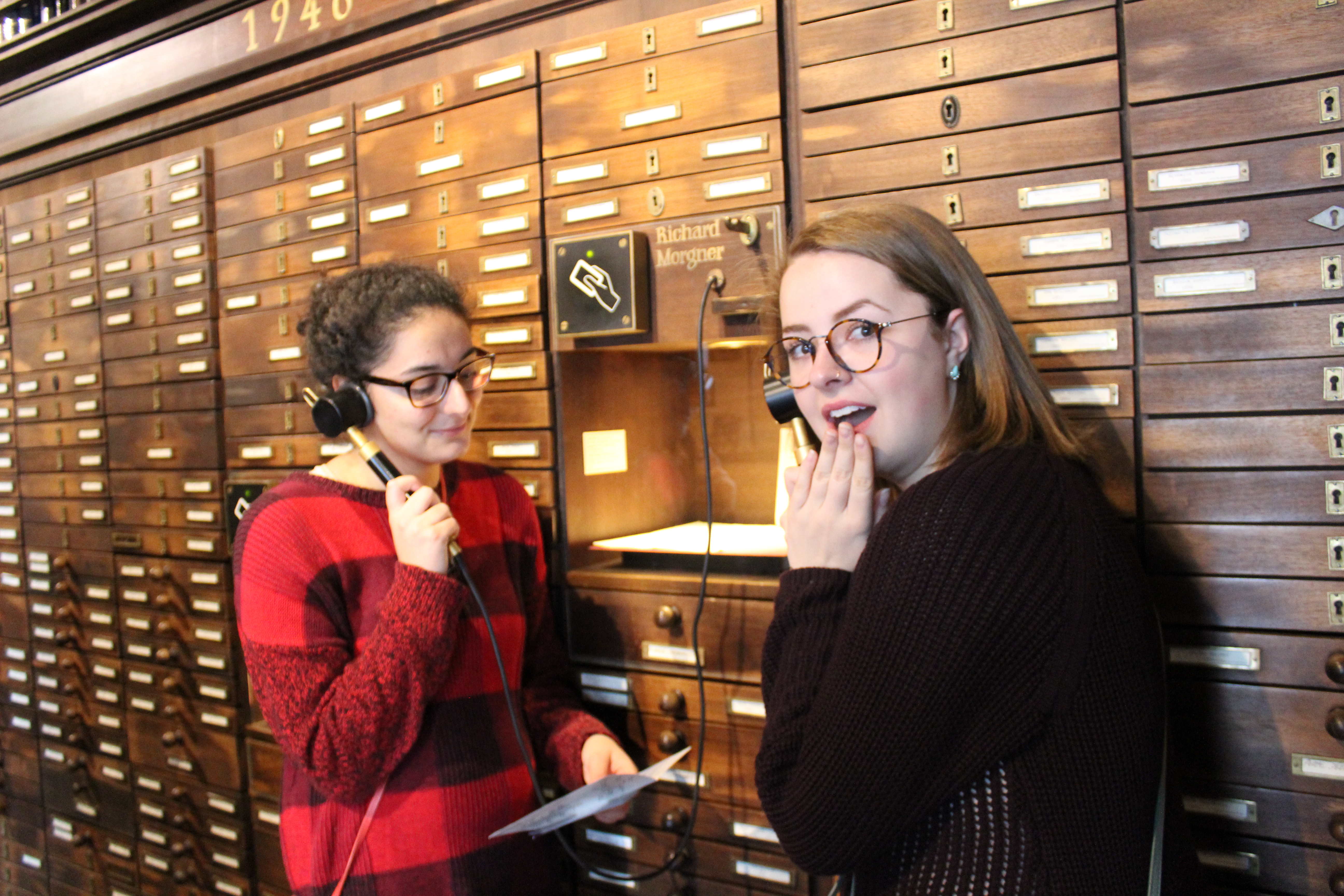
Caroline and Meghan
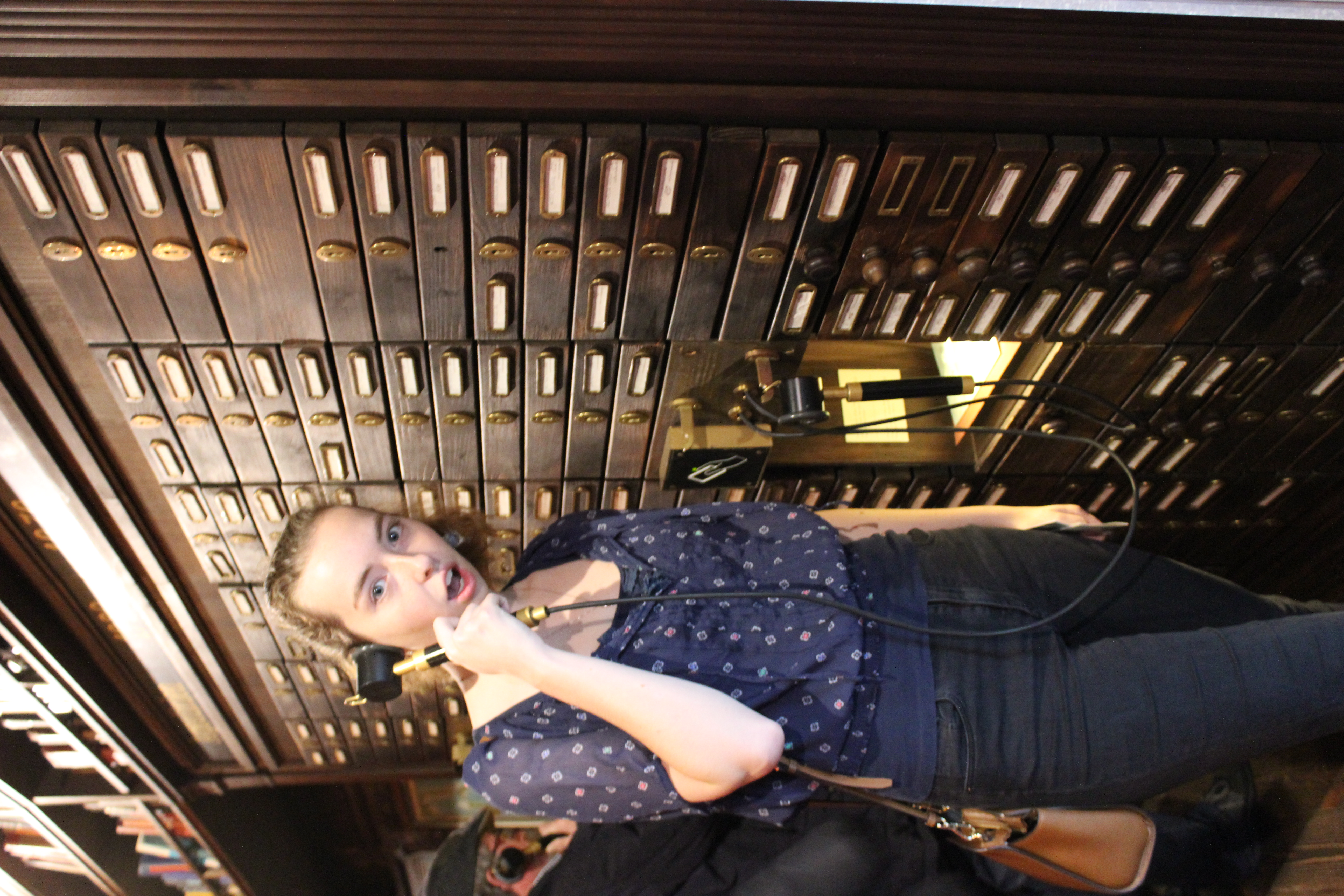
Kayla
We ended up walking through different points in technological developments. The first had a small room, close to a double dorm room on Dickinson’s campus, with most of the room being built up into a bed with hay, a bucket, and no electricity. The room would have been shared by multiple families. The next stage had more of individualized bunk beds and a bathroom. The final stage had individual beds with proper sheets and an attached dining room with windows, all with electricity.
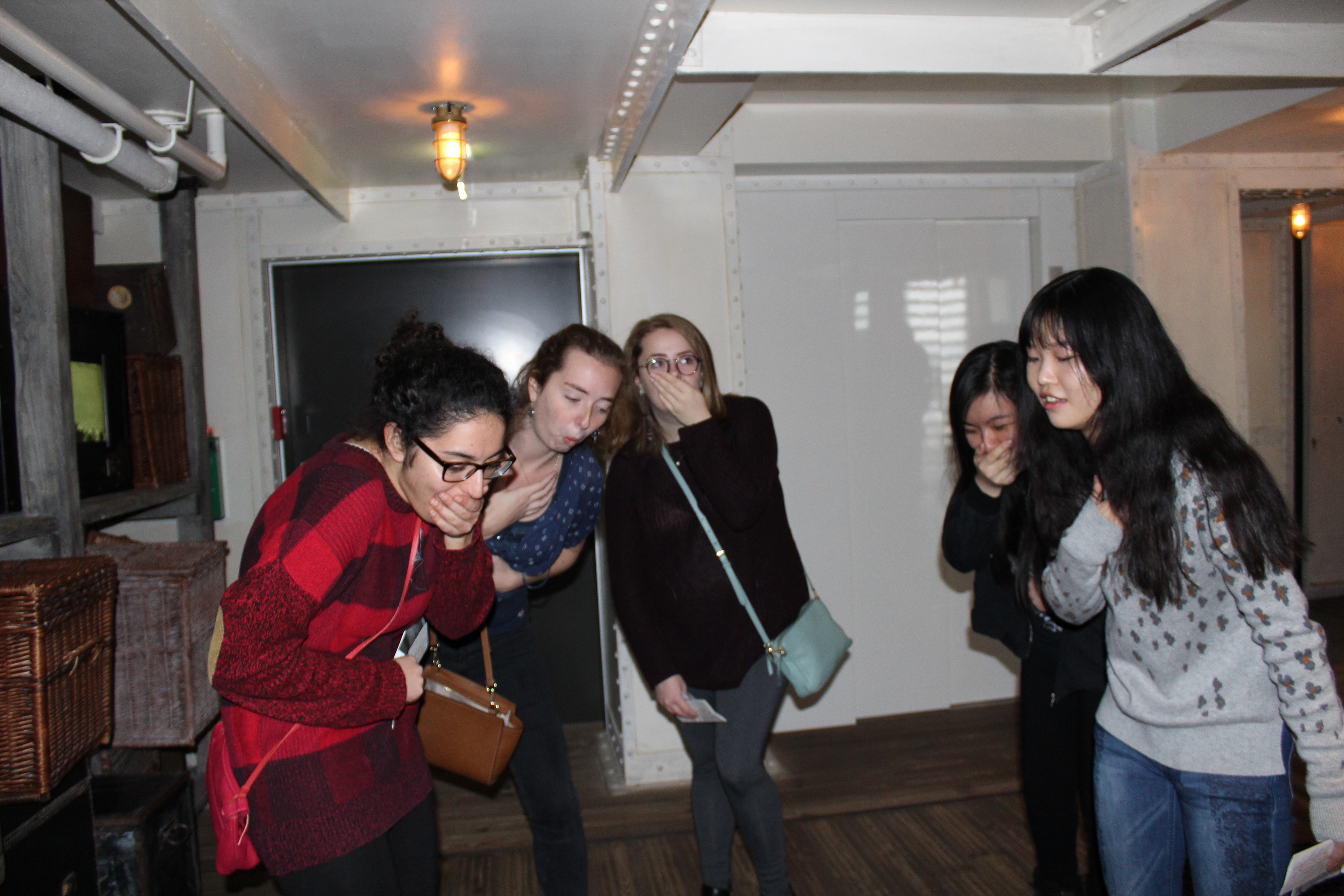
Ship in rough sea…

Poor emigrants: Meghan, Zhen, Kayla, Kate (fr.l.)
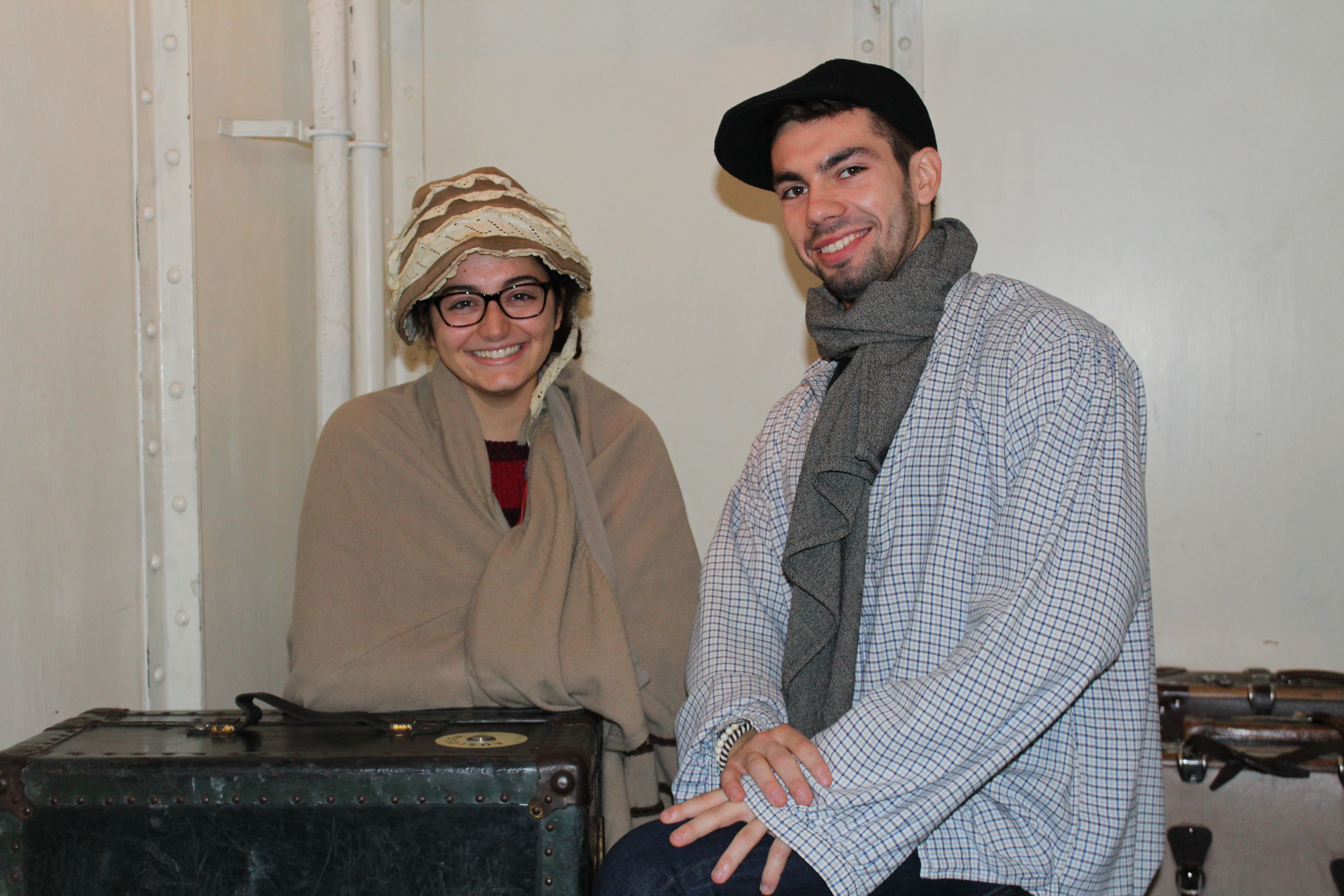
Caroline and Lee emigrating
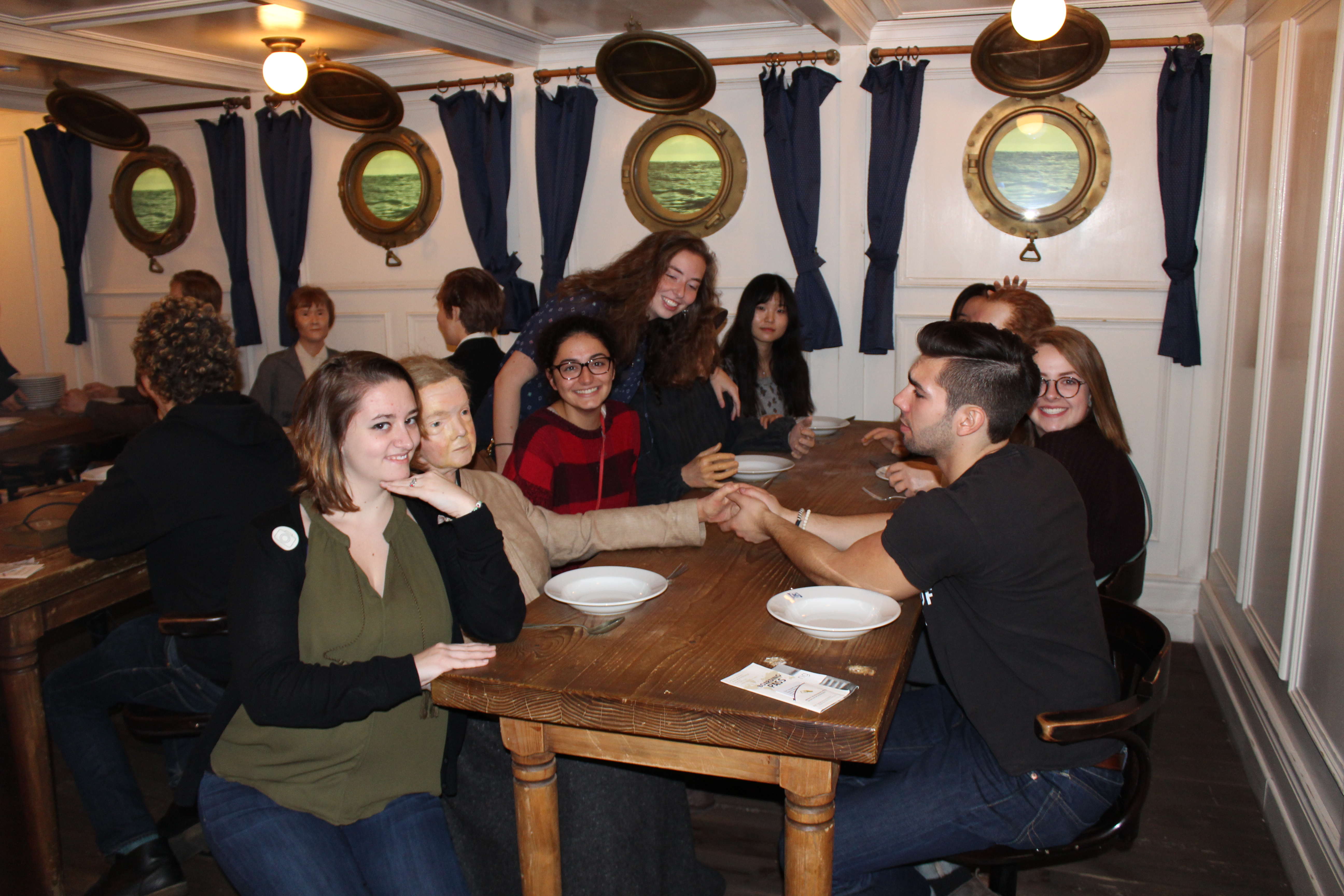
Everyone at the dinner table of the steam liner
After we enjoyed our dinner with the passengers, we arrived in the New World. We were taken to Ellis Island where we were tested to see if we could enter the country. If we passed (Lee did not), we could continue to New York City to Grand Central Station. At Grand Central we listened to the end of our emigrants’ stories. Mine emigrated to Brazil and opened a tea company and the descendants still meet up regularly.
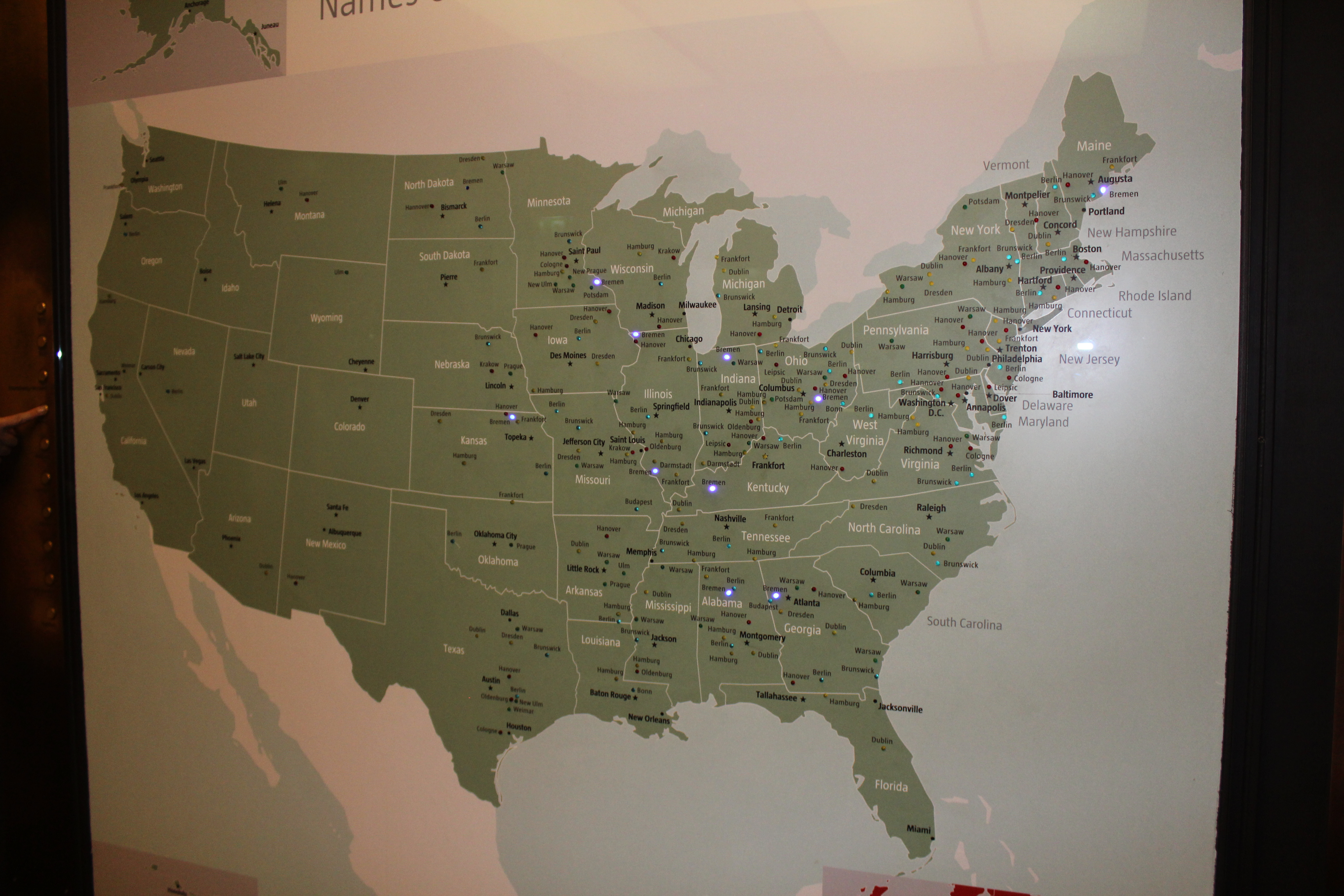
Blue dots = Several Bremens in the USA…
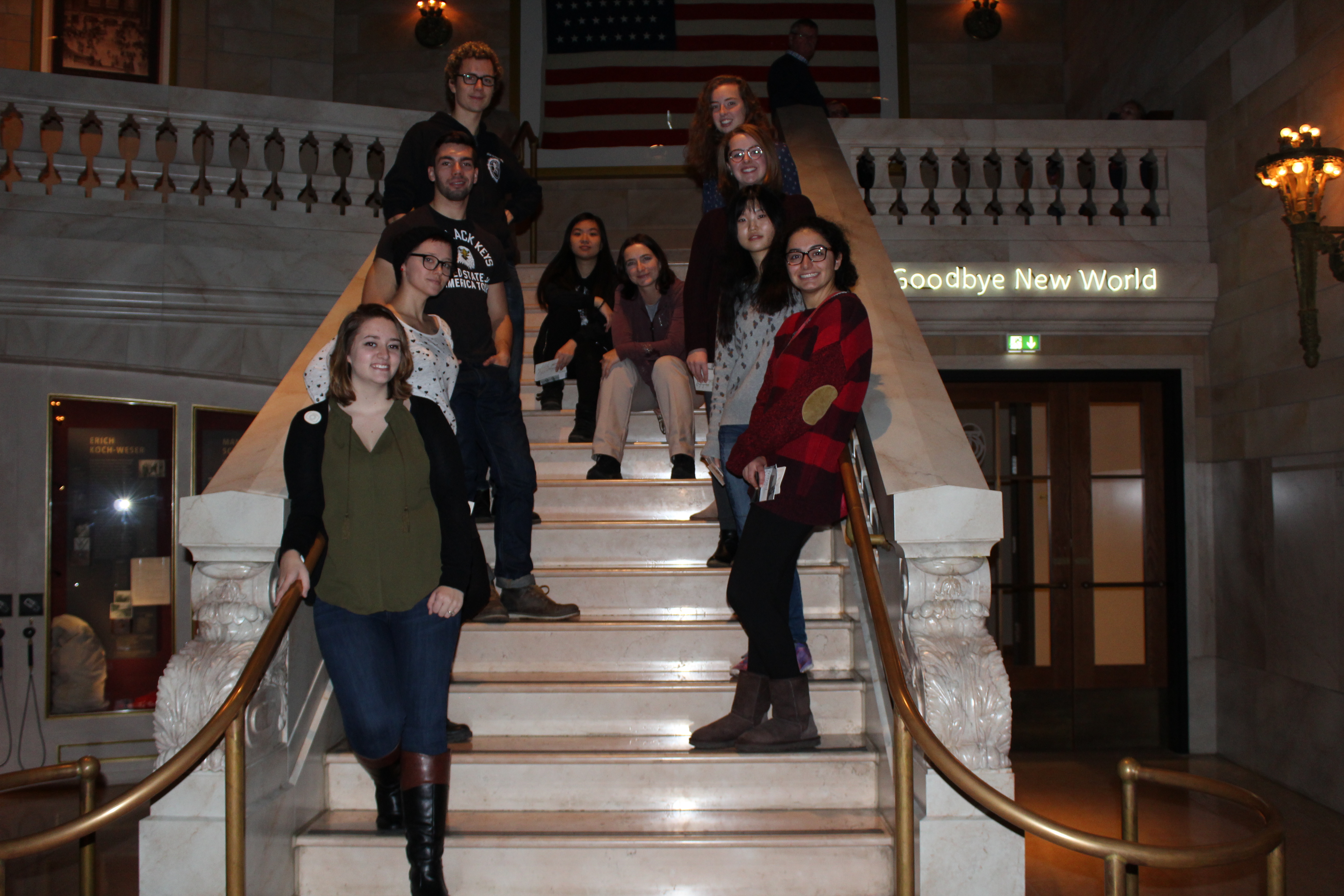
The seminar group at Grand Central Station
After leaving Grand Central, we crossed the bridge and became immigrants into Germany. This area had replicas of different shops that were opened by immigrants in the 1950’s-70’s. There was an ice cream café, hair dresser, camera shop, book shop, department store, kiosk, and cinema. The cinema showed films about immigration in Germany, but they were showing a feature while we were there that looked at relationships between Turks and Germans.
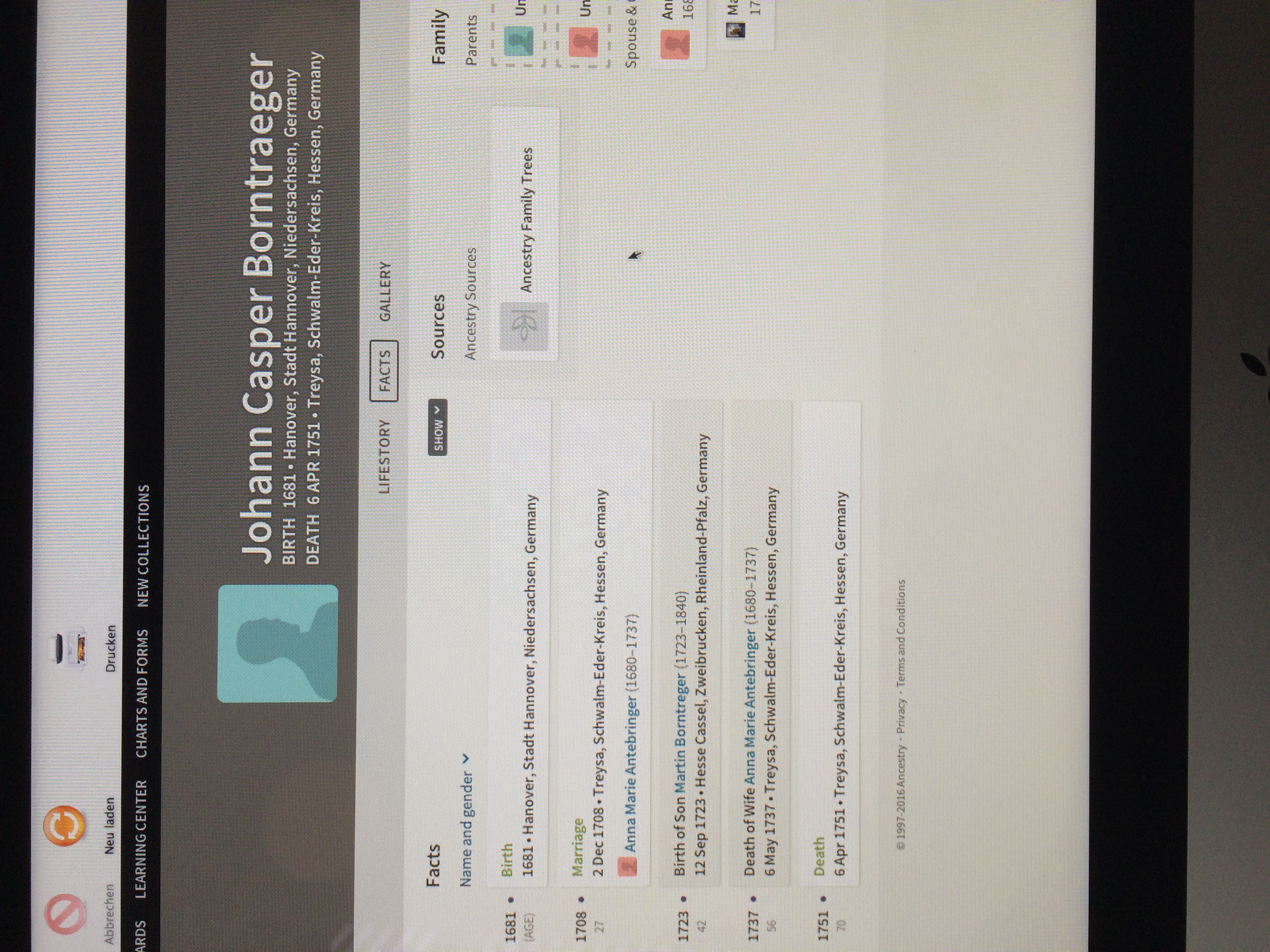
Katie’s possible ancestors
My favorite part of the whole tour was the family history room at the end. You could look through their computer records and find your family members. A few of us came prepared with names. I had photos of a genealogy book that someone in my family had put together not too long after I was born. So I went to the oldest name I could find and traced it back another two generations. The book I had said that he came from Switzerland, but the information I found through the ancestry.com portal said that he was born in Zweibrücken, which is close to where I lived when I did my exchange year in high school, and his father was born in Hannover in 1681, which is right next to Bremen. It is definitely something that I want to investigate further. Hopefully, I can find some living German relatives.
Animated photo show:
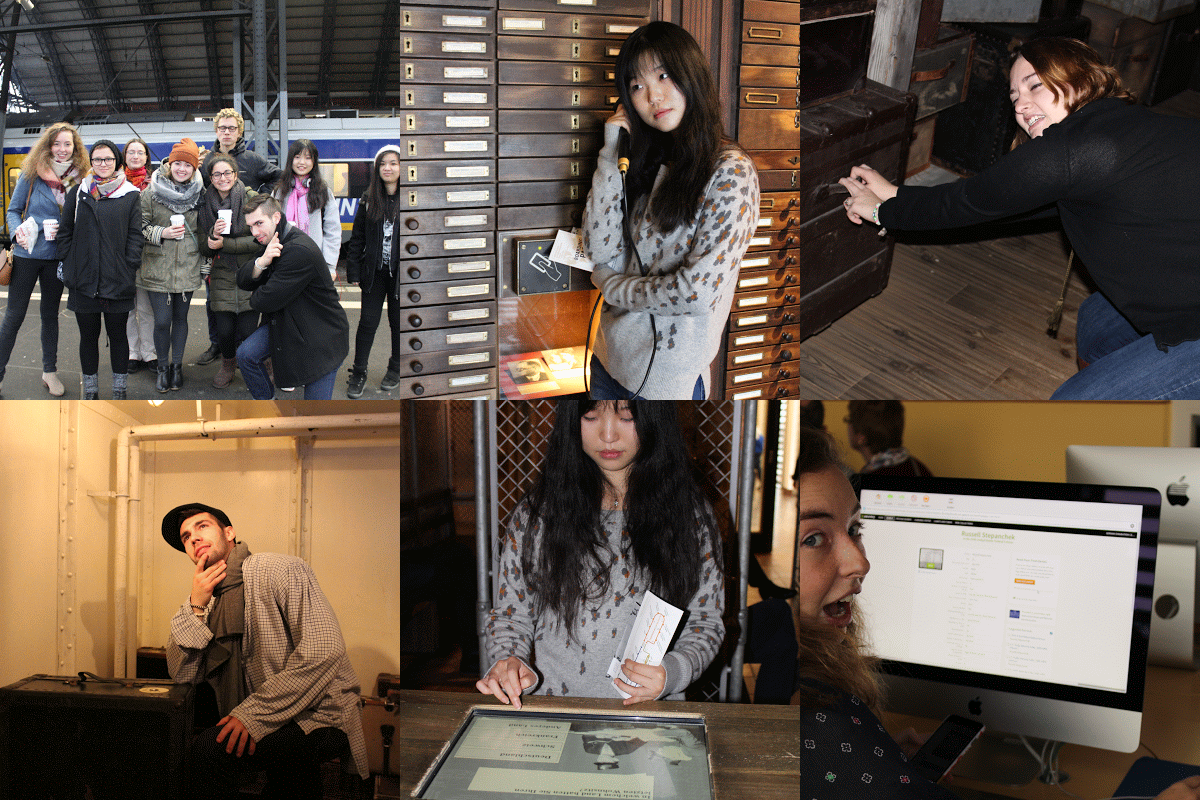
by Dr. Janine Ludwig
Another year has gone by. Another group of students has spent a year in Bremen and has gone back to Dickinson for their senior year. Please find our program report on what we did in this past academic year here:
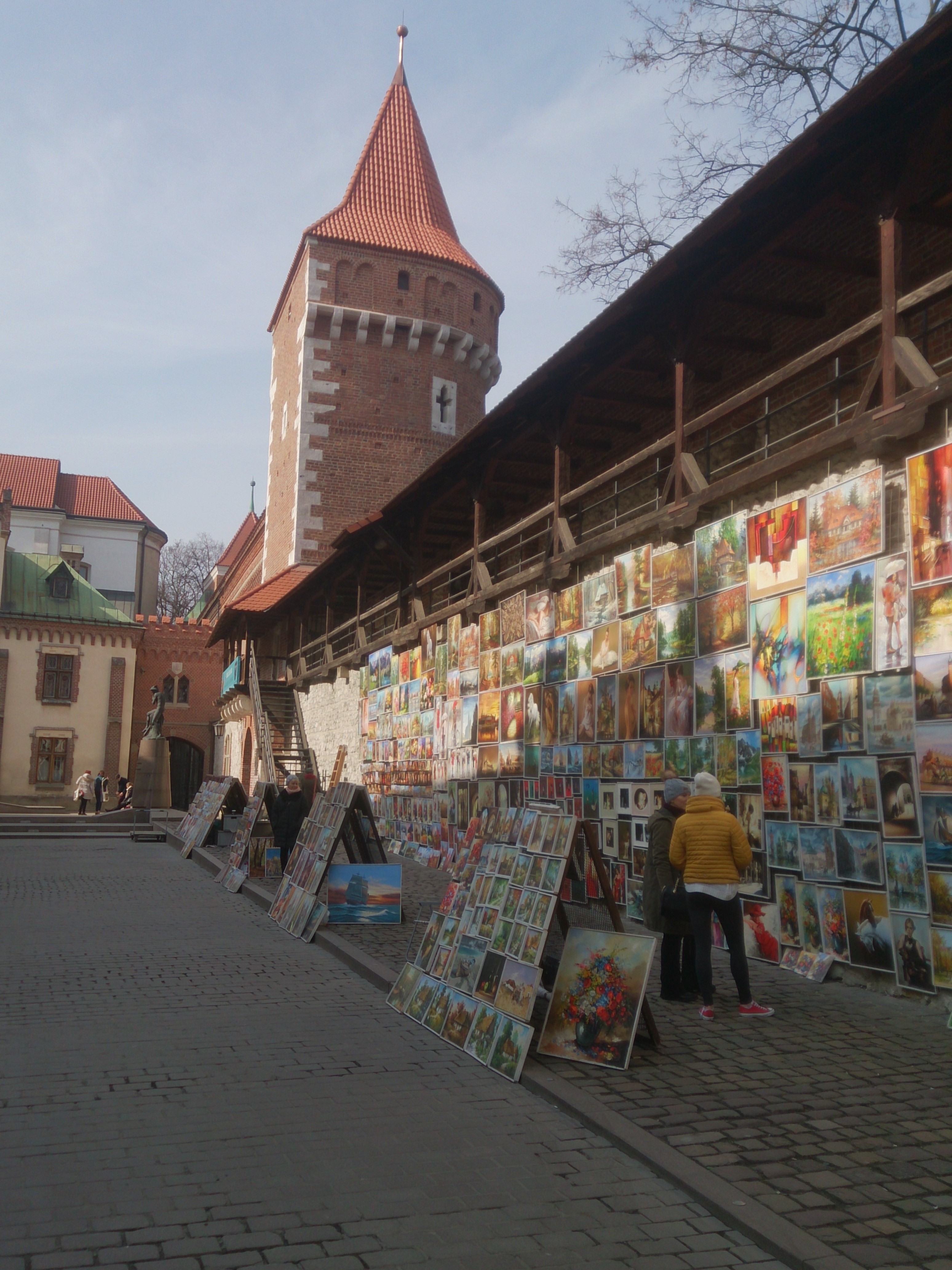
Art exhibition along the city wall of Kraków.
Kraków Old Town
Our Dickinson-in-Poland excursion was very diverse and well-planned. The schedule provided us with friendly and knowledgable Polish tour guides who made sure we were not walking through the old and historical cities without knowing what we were walking past. I found the group walking tour of Krakow to be especially interesting and also helpful. Thanks to the tour, we were given a good overview of the different areas of Krakow and we never needed to use a map in order to refind those places to which we wanted to return. Despite trekking through the one day of not-so-great weather, the tour introduced us to the most beautiful and most historical of Krakow and I enjoyed every minute. Ultimately, despite having spent only a few days there, I felt as though I received a good sense of how the city was shaped by hundreds of years of history and tradition, an understanding that cannot be neglected if one is to really feel as though any foreign city has become a temporary home. >Carol Rynar ‘ 17<
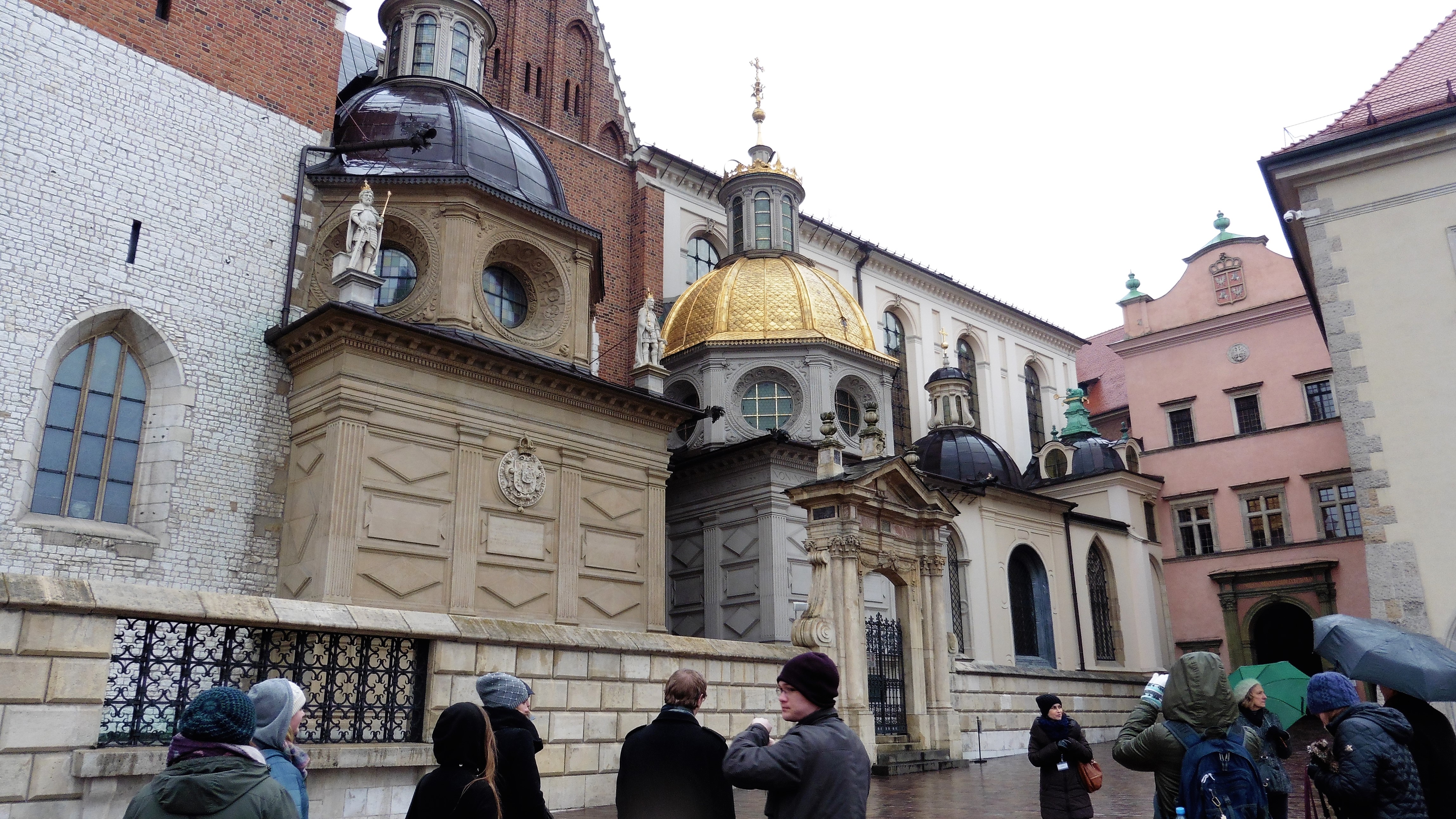
The Wawel Castle
One of the highlights of this excursion was the beautiful, historic centrum of Kraków, the Old Town Market Square or Rynek Główny. One of the largest historic market squares in Europe, the unique and lovely spot contains an underground archeological museum, the ornate and awe-inspiring St. Mary’s Basilica, a line of shops and carriages, hundreds of flocking pigeons, and the Jagiellonian University class where we had our interesting lecture series. We were especially lucky to experience this vibrant city around Easter with a charming Easter and spring-themed market on the main square. >Helen Schlimm ‘ 17<
Gdansk
One of our first days in Poland, we visited the city of Gdansk, which involved a three-hour train ride from Warsaw; a far but worthwhile journey. We met with our tour guide outside the train station, who led us towards the shipyards where the Solidarity movement grew its roots. We walked under the gate where Lech Walesa shared the news that a deal had been made with the communist government in 1980. We entered the museum to learn of the events that led up to that critical moment. Through interactive dioramas, props and photographs, we learned about the struggle against communism and martial law and the numerous political uprisings that took place because of that struggle. We saw the original 21 demands of the 1980 shipyard demonstration handwritten on old plywood, which led to the creation of the first trade union. I learned a lot about Polish history and am really appreciative of the opportunity to have seen this great historical city. >Phoebe Allebach ‘ 17<
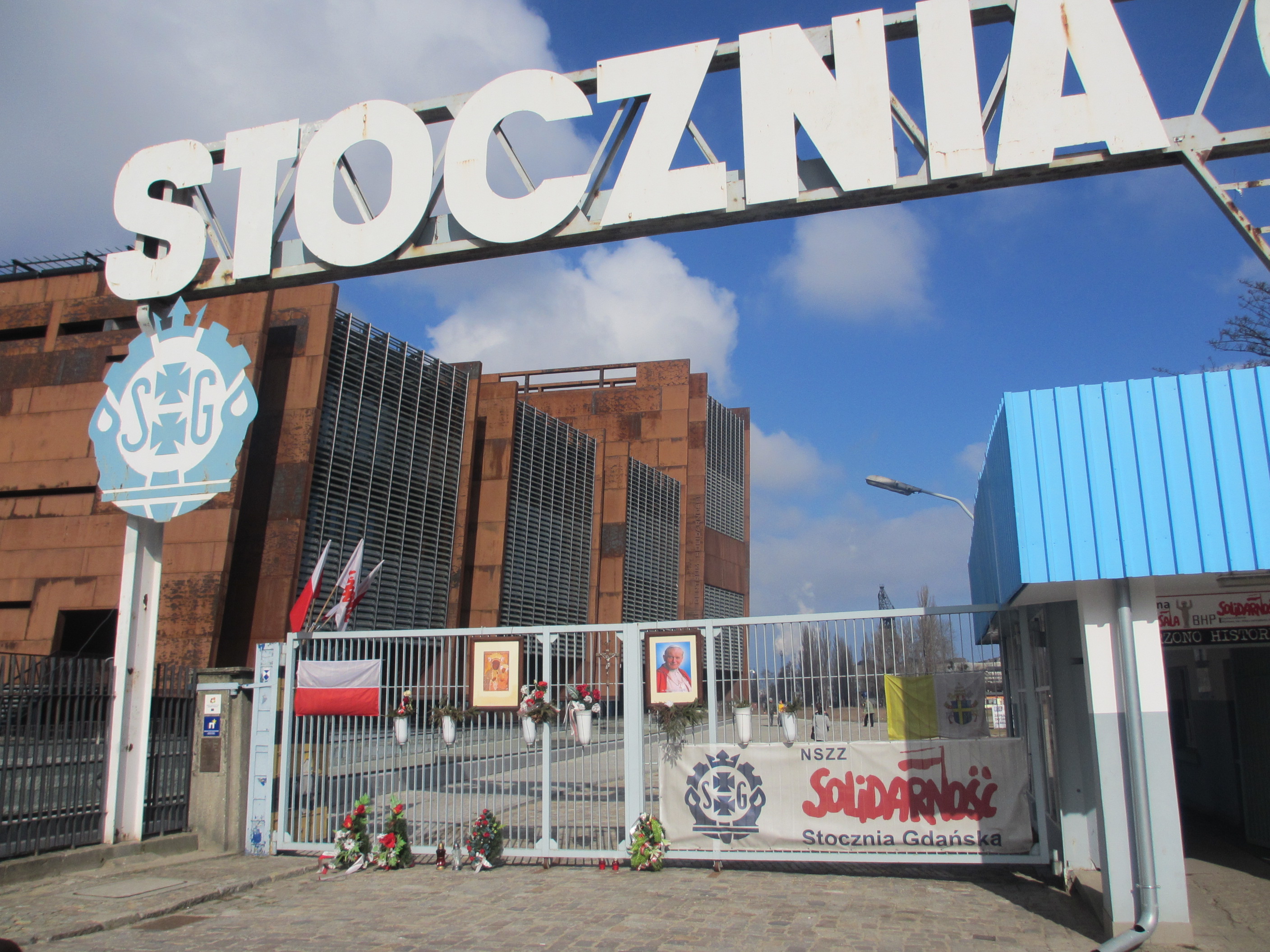
The famous Gate No. 2 at the Gdansk Shipyard.
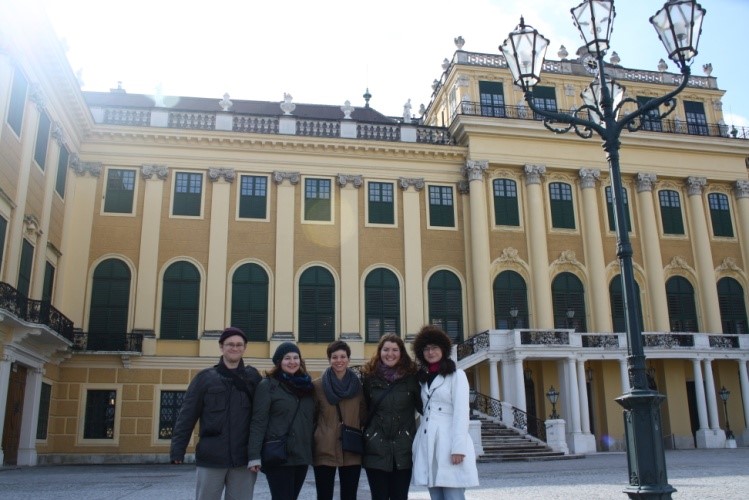
From left to right: Ira, Phoebe, Carol, Helen, Janine Ludwig
We were really lucky to experience the Schönbrunn Palace on the sunniest day of our excursion! Only a twenty-minute train ride outside the city center, this absolutely stunning palace and gardens really lives up to its name with an unbelievable self-guided tour through the regal halls and rooms of the summer home of the Hapsburg Emperors and Empresses, most notably Maria Theresia and Elisabeth “Sissi”. From finely enameled wallpaper and portraits to bejeweled mirrors, chandeliers and furniture it was really exciting to experience the wealth of the empire and imagine living in a time where one might actually attend a ball in the great hall. The gardens and grounds were also gorgeous and provided an awesome view of the city from the short hike up the hill! >Helen Schlimm<
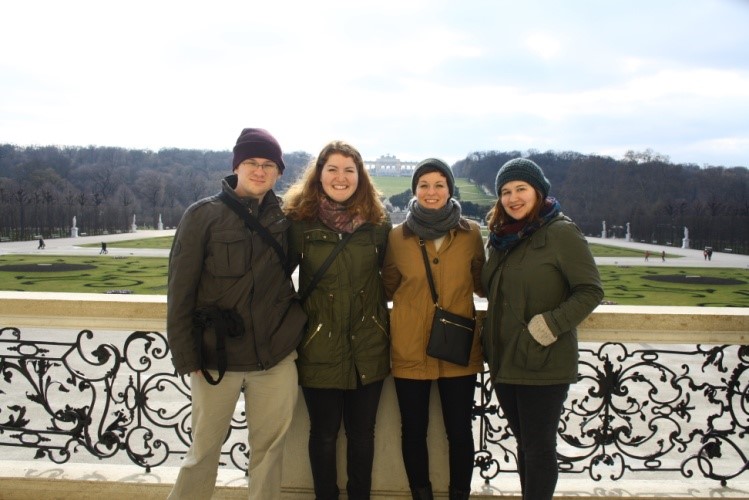
Schönbrunn Gardens: Ira Lauer, Helen Schlimm, Carol Rynar, Phoebe Allebach (from left to right)
One of my favorite experiences on this trip was our visit to the national library. Thanks to 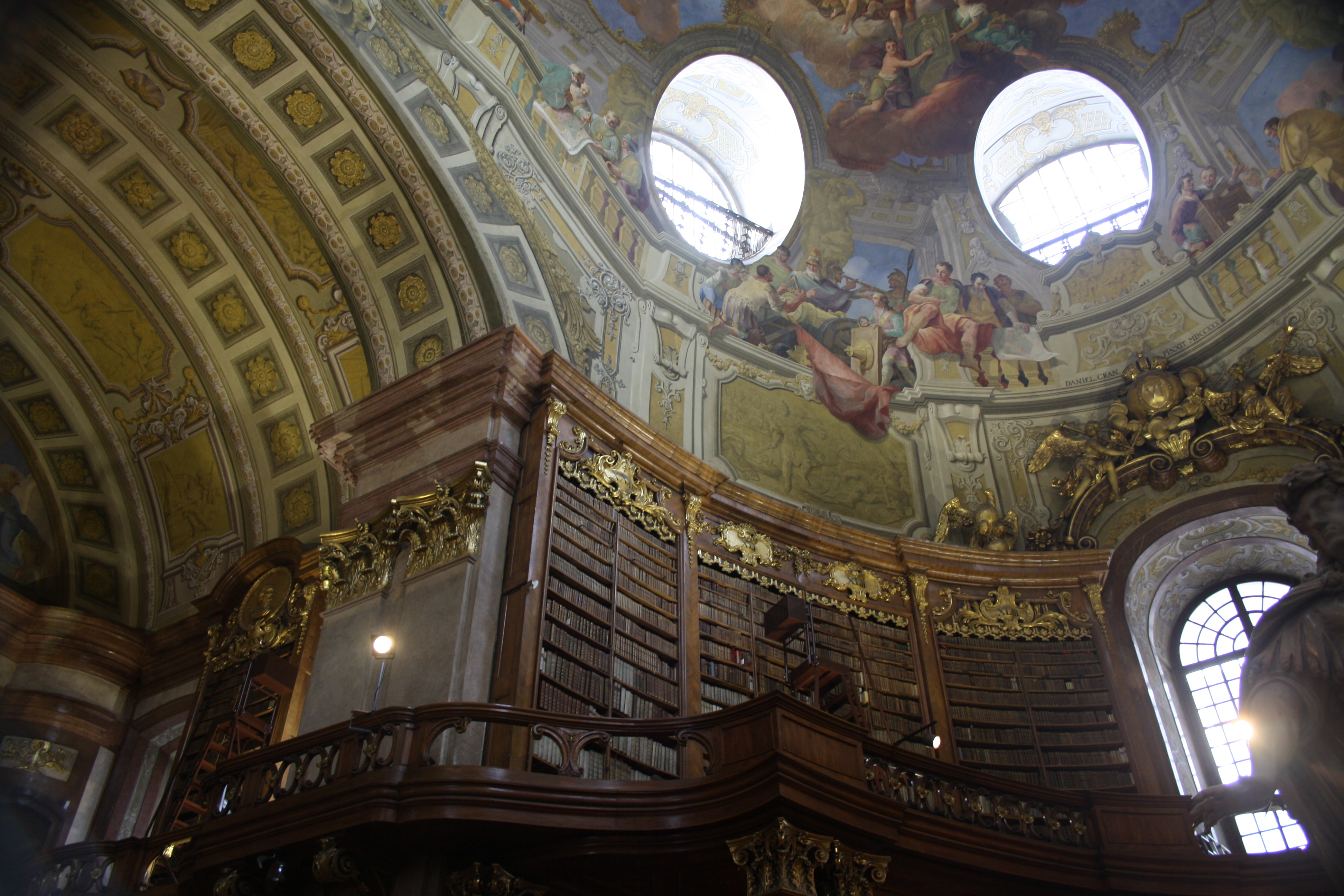 our program, we were given this unique opportunity that we would not have otherwise had, had we just visited on our own. (It was incredibly satisfying to be ushered behind a red velvet rope to an off-limits section of the library for a closer look at the books while normal tourists watched jealously on.) We were given a private tour by a very knowledgeable and friendly professor, who gave us a thorough history of the library building as well as of the books. We began outside the doors with a description of the library’s impressive exterior before we headed up the Stiege (a new regional German word was learned on the way up the stairs) and I was able to use the same key Maria Theresa used during the 18th Century to open the large library door into one of the most beautiful and priceless rooms I have ever seen.
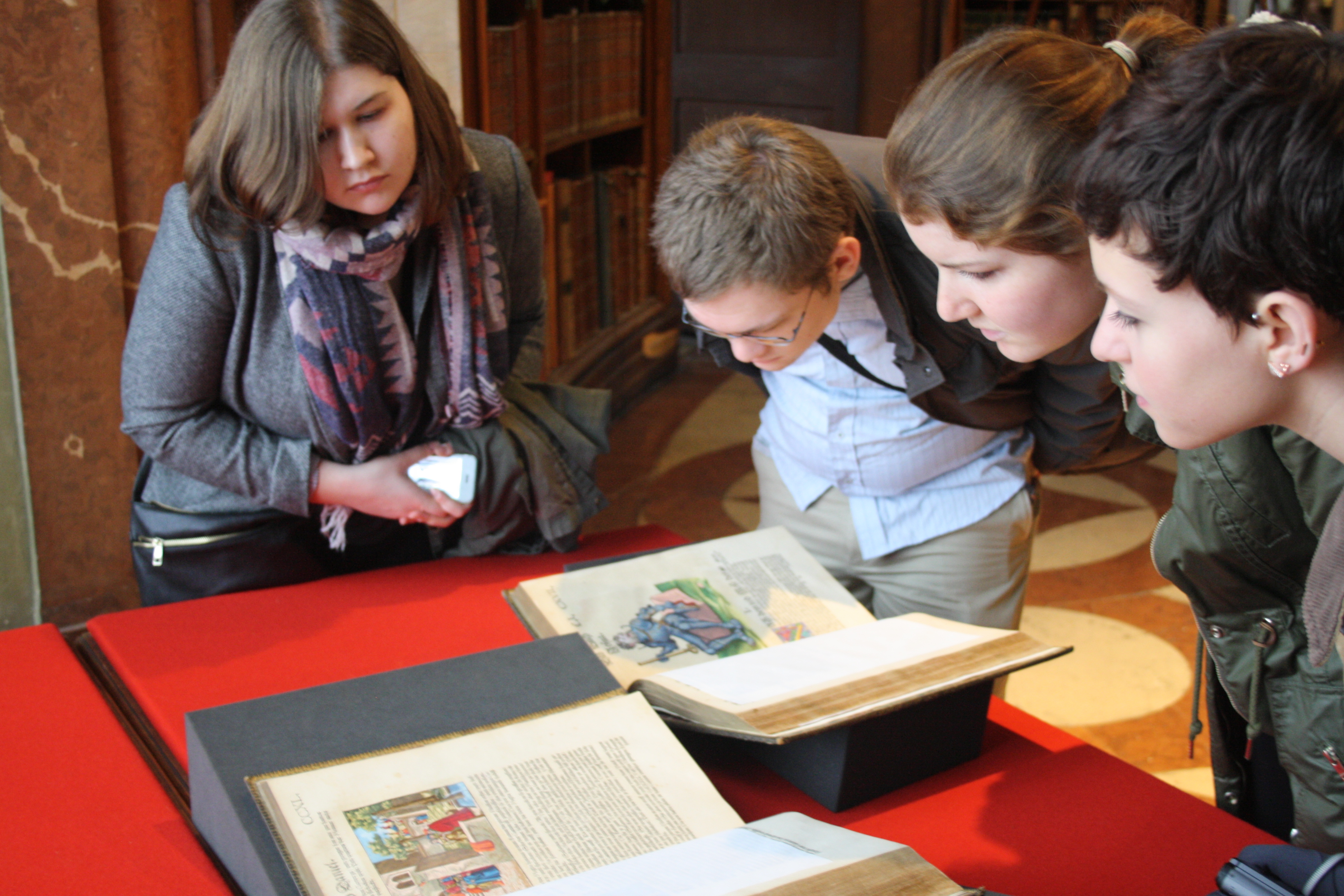
Students looking at an original Luther bible from the 16th century, adorned with paintings from Lucas Cranach the Elder!
We learned how to read a bit of the symbolism painted on the impressive ceiling fresco before we had the opportunity to actually read (and handle!) two texts from the Habsburg collection from the 16th Century. Vienna is a city full of history, that fact can be grasped easily enough just by walking down the street, but to actually hold in your hands a document so incredibly old and so carefully cared for helped me to appreciate how valuable such history is and how concerned Vienna is with conserving it. From the Schatzkammer to the Kunsthistorisches Museum even to the Kaisergruft, it is obvious the Habsburgs liked to collect priceless artefacts, but I think it is safe to say that the Nationalbibliothek contained Vienna’s most impressive collection. >Carol Rynar<
One of the best experiences of my time in Vienna was our city tour. Vienna is such an old and beautiful city with nearly 1000 years of history. Walking through the city’s streets lined with architecture from Baroque to Art Nouveau was out of the world and will be a life-long memory. >Ira Lauer<

The broader theme of this excursion is German-Austrian history and culture from the middle ages until today. In three introductury lectures, I lead the students back to the origins of what is “German,” (an umbrella term coined by Tacitus) and why we are named after different tribes in other languages, like “Allemannen”, a.k.a. Swabians or “Deutsch,” stemming from “theodisk” which actually means belonging to the people / folk-like. From the defeat of the Romans in the Battle of the Teutoburg Forest through the migration period, we follow the emergence of the Holy Roman Empire of the German Nation, from Charles the Great (800) to its dissolution after the Napoleonic conquests (1806) using historic maps and documentaries. At the same time, we track the rise of the Habsburg dynasty from 1273 until 1918 and the overlapping of the Austro-Hungarian k.u.k Monarchy, later the Austrian Empire (1804-1918) with the German Empire (1871-1918). Backed up with this information, the students can better understand the museum exhibits and grasp the importance of Vienna as a former political and cultural center of Europe. And additionally, we indulge in the imperial glamour and the culinary abundance of this beautiful city. >Dr. Janine Ludwig<
Our Berlin excursion began with the exciting and unique experience to meet the last Premier, or Chairman of the Council of Ministers, of the German Democratic Republic (East Germany), Hans Modrow! Herr Modrow’s fascinating history includes living through four different political and social regime changes in Germany, and he is currently the honorary Chairman of die Linke Party (the Left). Most fitting to our theme of German Reunification was his detailed description and explanation of the political transition in East Germany from the fall of the Berlin Wall on November 9th, 1989 to official reunification, nearly a year later, on October 3rd, 1990. We asked questions about his involvement and opinions on this time and the time since for the better part of three hours. In turn, we received a very interesting perspective from the side of the GDR, a typically lesser known part of recent German history than the West. >Helen Schlimm<
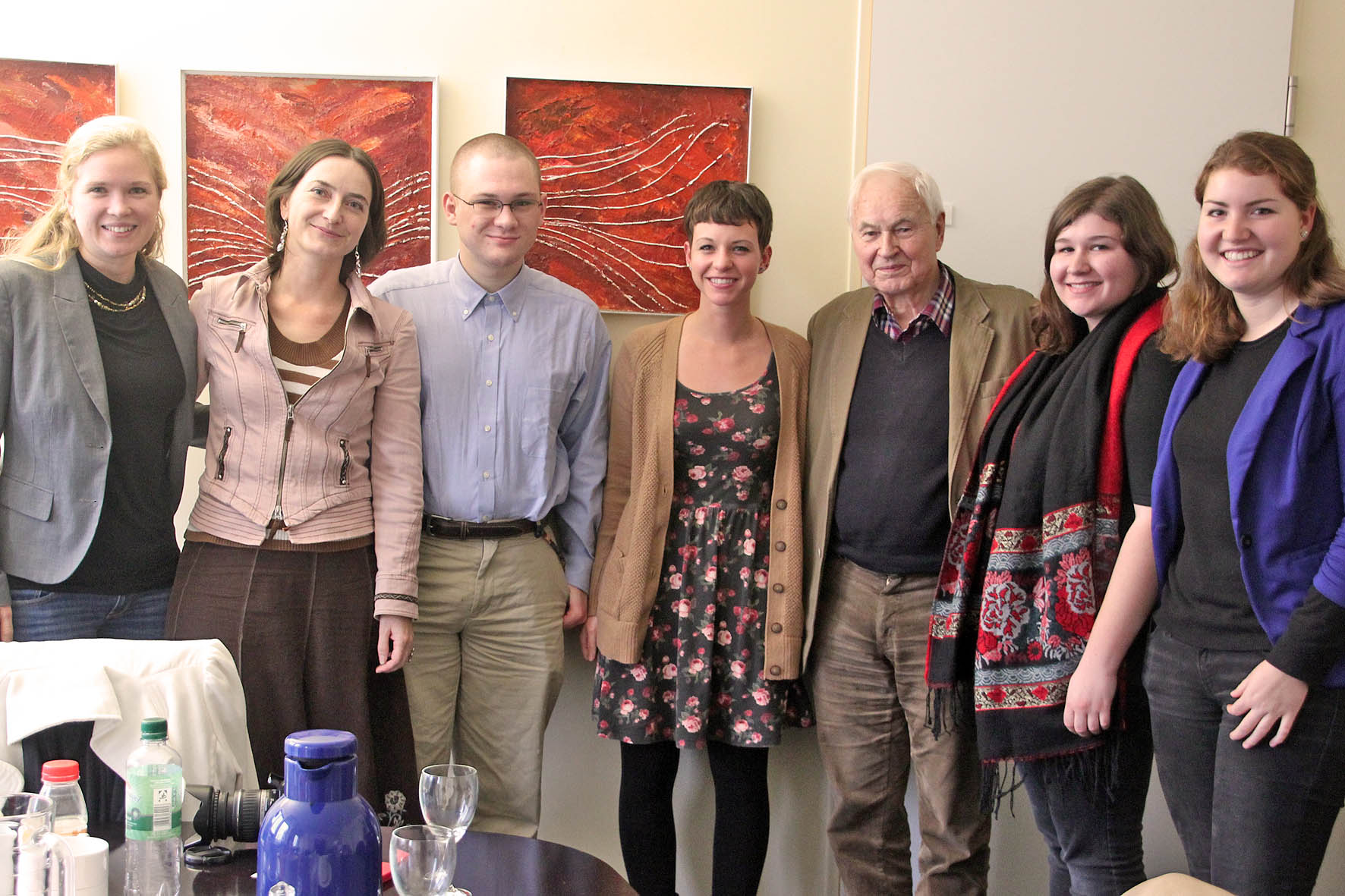
From left to right: Verena Mertz, Janine Ludwig, Ira, Carol, Hans Modrow, Phoebe, Helen. © Frank Schumann
As part of our Berlin trip, we got to meet several political figures from the former German Democratic Republic. We met with Hans Modrow, who was the second last leader of the GDR. We had a long discussion about life, politics of East Germany and the fall of the Berlin Wall. He painted a picture of how the integration of East Germany into the West could have gone and how things would be different for it. Later in the week we had the opportunity to meet member of the Bundestag, Gregor Gysi, who is a leader in the Left party in the Bundestag. With him, we also discussed East Germany and the fall of the Berlin wall. We also learned about the current political climate surrounding the former GDR, such as the debate about whether or not the GDR was a nation built upon the rule of law. From both of these meetings with influential political figures, we gained a much deeper understanding of the politics that surrounded the fall of the Berlin Wall and the ramifications of German unity. >Ira Lauer<
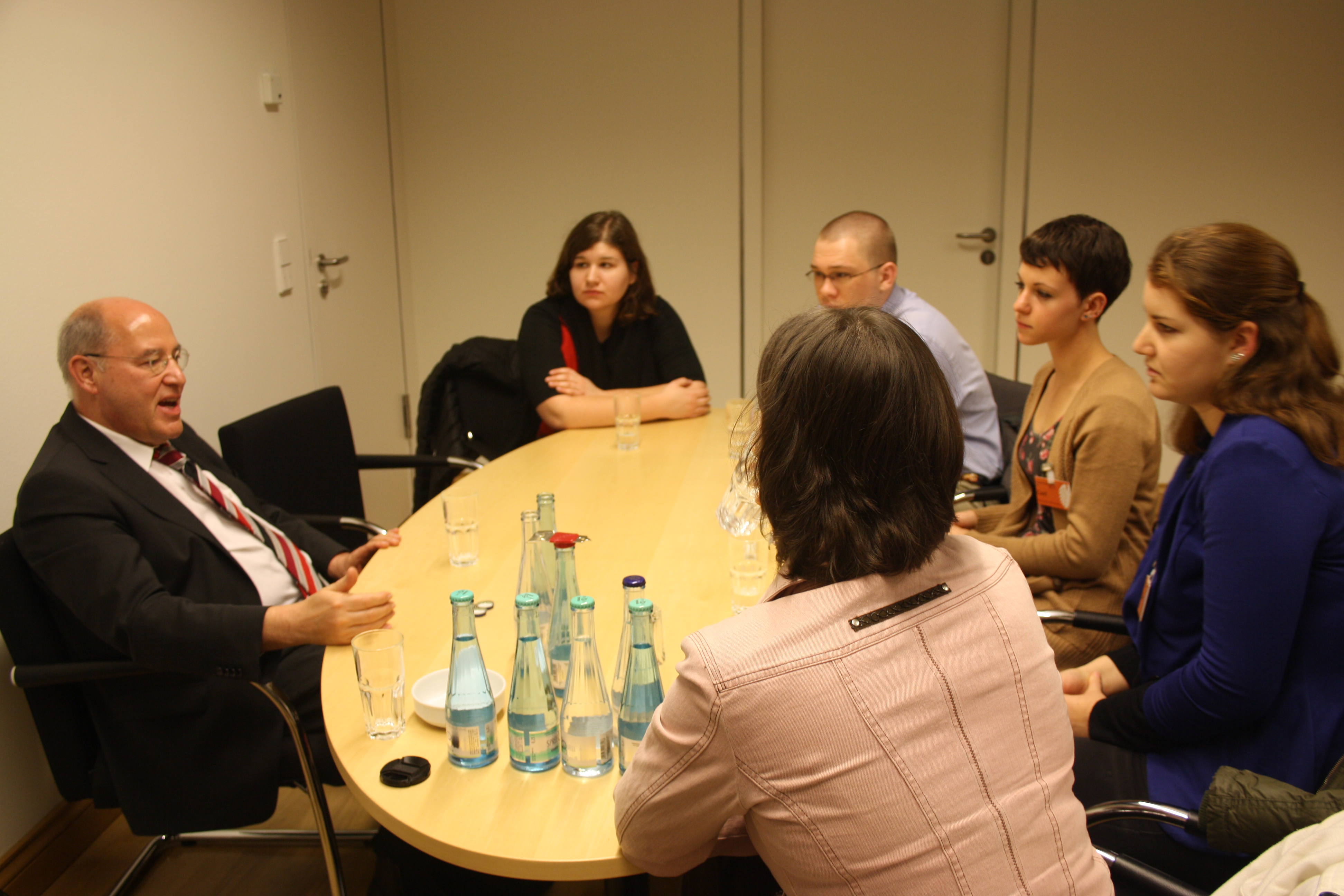
Left: Dr. Gregor Gysi. From front: Janine Ludwig, Helen, Carol, Ira, Phoebe. © Verena Mertz
Meeting at the Federal Foreign Office (Auswärtiges Amt)
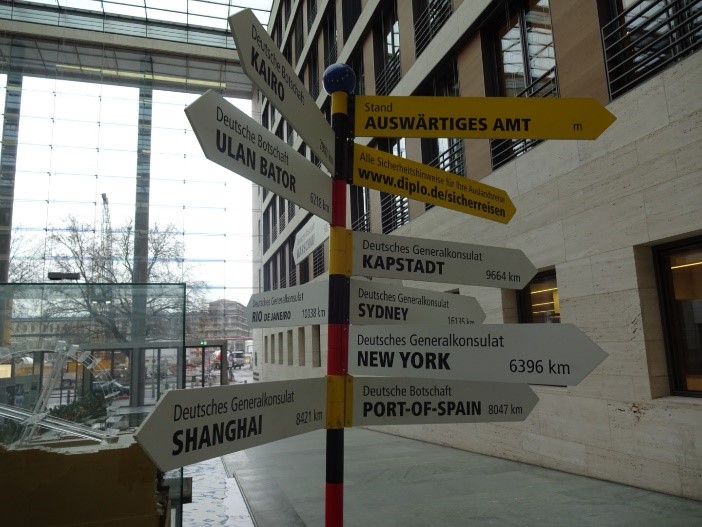 Our group also got the fascinating chance to meet with a member of the Transatlantic Coordinator’s Office at the Federal Foreign Office! We were lead through a tour of the unique space that was also the National Bank for the Third Reich and the Central Seat of the Socialist Unity Party of East Germany, take (unofficial) press photos, and even got to ride on a Paternoster lift! We had a lively talk and discussion of our questions relating to the American-German relationship in the past, present and future. Themes included the Office’s strategies to inform more Americans and Germans of their program and the importance of the relationship between the two countries, the upcoming presidential elections in the US, and stereotypes of both cultures and how or if they can be changed in the future. It was an extremely interesting meeting and tied in very nicely with our class this semester taught by Janine: Kultur heißt Vergleichen- USA/Deutschland. >Helen Schlimm<
Julian Assange & the BStU
When I first learned that a mass Skype-call with founder of WikiLeaks Julian Assange was on the schedule for the day, I had two initial reactions: firstly, one of excitement that I was to be given an opportunity to be in attendance during a critical contemporary dialogue led by one of the most influential whistle-blowers of the modern age, but secondly one of surprise as well. After speaking with two relevant German political icons earlier that day, the last communist premier of East Germany, Hans Modrow, and the last leader of the Socialist Unity Party (SED) in East Germany, Gregor Gysi, I was curious to see how listening to the ideas of an Australian journalist would fit with our excursion’s overall theme of the division and unification of East and West Germany. What this Skype event quickly helped me to realize, however, was that there really is an incredible amount of thematic overlap with what is happening in the world today and what was happening behind the Wall not too long ago, particularly concerning the right to access information, the notion of privacy, and the necessity of recognizing and spreading the truth. These ideas constituted the theme of the night’s conversation with Assange, titled “The End of Democracy.”
Julian Assange warned us in his speech against the power of technology and of the unchallenged authority of the Silicon Valley. He told us of Google’s geopolitical aspirations, of its closely-established relationship with the United States government, and of its frighteningly-powerful surveillances capabilities. He called us to arms in the fight for justice for a world of clarity and truth, to expose the reality that we are living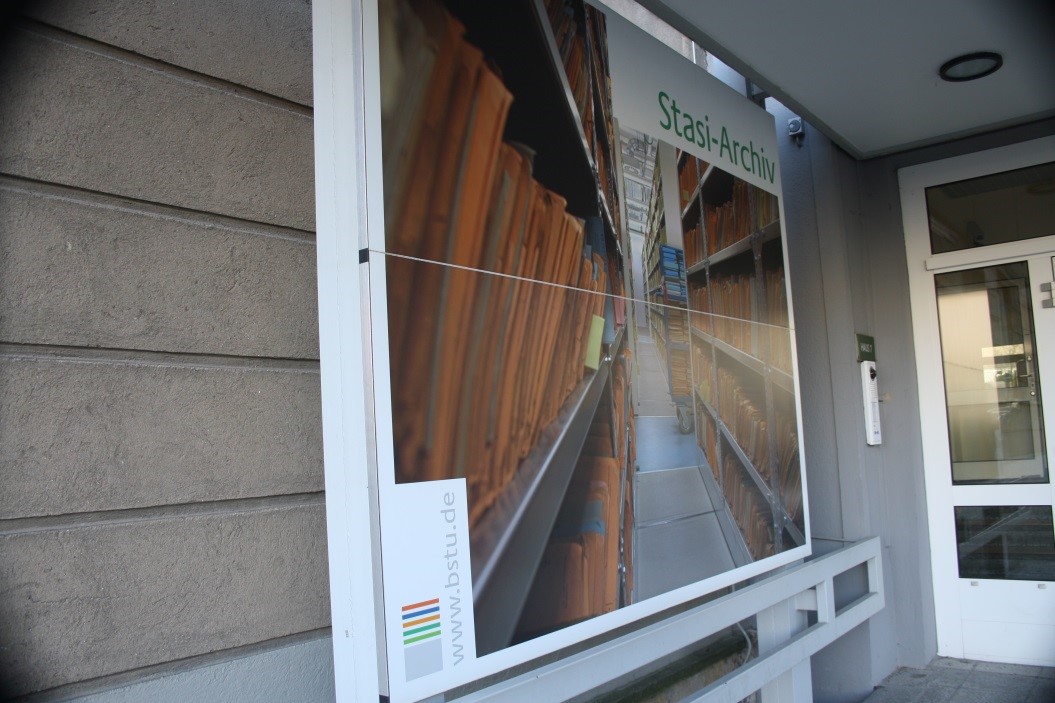 behind our own virtual “Wall,” while being watched by our own kind of Stasi, an overlord we ourselves have chosen and support both through our dependency on technology and our compliancy to resist the implementation of a severely-limited sense of freedom in today’s world. These ideas were still fresh in my mind when the Dickinson group visited the BStU (Official German Stasi Archive) the next day. >Carol Rynar<
We went to Hohenschönhausen in Berlin, the former prison for the East German Ministry of State Security, the Stasi. A former prisoner, who had an amazing and moving story of imprisonment, gave us a tour. We saw rooms where prisoners stayed which were comprised of a wooden bunk and a bucket for a toilet. We saw a reproduction of a Chinese torture apparatus, in which water was slowly dripped on the person’s forehead for an indefinite amount of time. I was surprised to hear that 90% of the prisoners in Hohenschönhausen were innocent of the so-called crimes they committed. Our tour guide was imprisoned for helping others escape over the wall. The second time he tried himself to escape, he was captured. His best friend was shot and killed. He was put in solitary confinement for 3 years. When he was released, he continued to help people escape into the West. Because of his intense, life-long fight against oppression, he isolated his wife and children, leading to a long estrangement. He told us this with a shaking voice and teary eyes. At this point, the language barrier didn’t matter. I could see and sense his pain, but could only imagine how much he hurts. I couldn’t help but wonder how difficult it must be for him to walk through the halls of the prison daily. Has he numbed himself to the painful physical and emotional memories? Or perhaps in informing others of his difficult plight, he is given strength; there is a renewed purpose to what happened. The tour through Hohenschönhausen was a moving experience and I learned a lot. I would definitely recommend a visit.
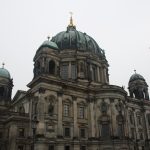
During our free time, Helen, Carol and I went to the Museumsinsel and visted the Alte Nationalgalerie (Old National Gallery), which presents a collection of 19th century art. We saw pieces by Adolph von Menzel, Claude Monet, Max Liebermann, Auguste Renoir and our personal favorite, Caspar David Friedrich. It was really cool to see art that we studied in “German Cultures!” The museum itself was stunning, modeled after the Acropolis of Athens. Afterwards, we walked over to the Berliner Dom and for an afternoon, we enjoyed being surrounded by beautiful architecture. >Phoebe Allebach<
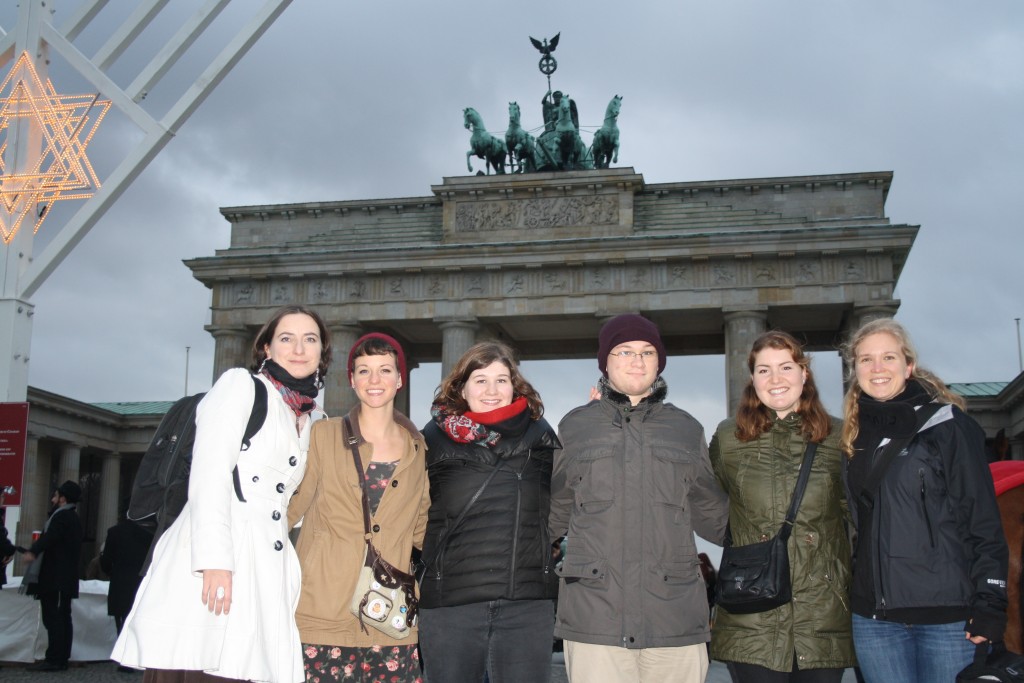
From left to right: Janine Ludwig, Carol, Phoebe, Ira, Helen, Verena Mertz