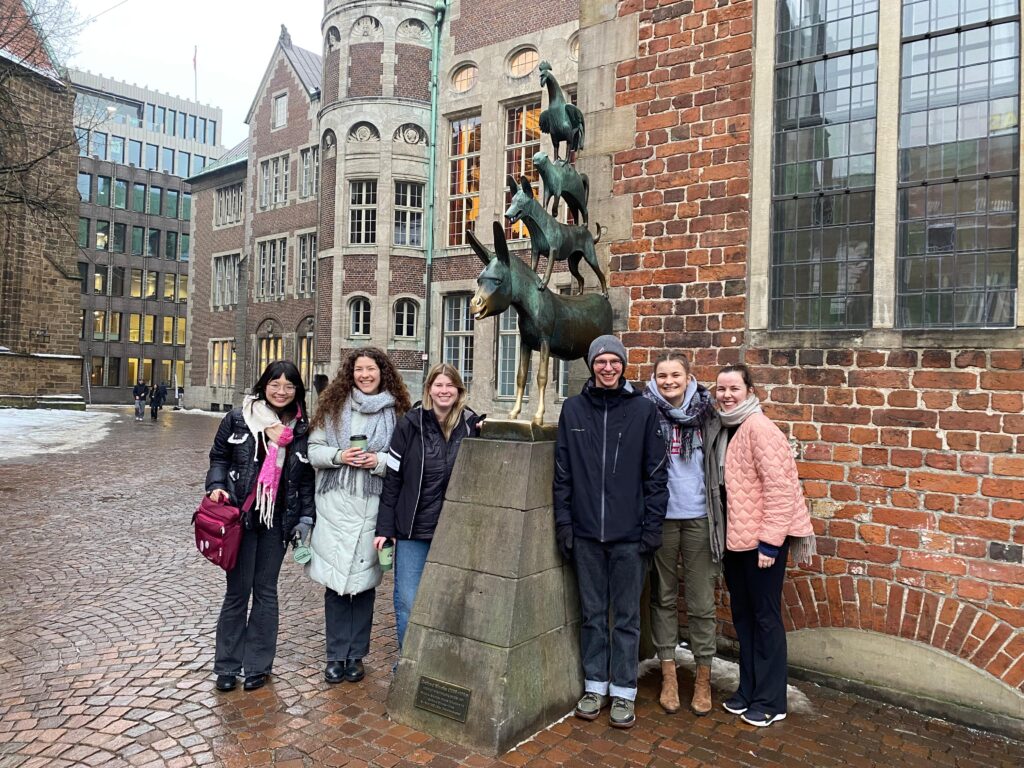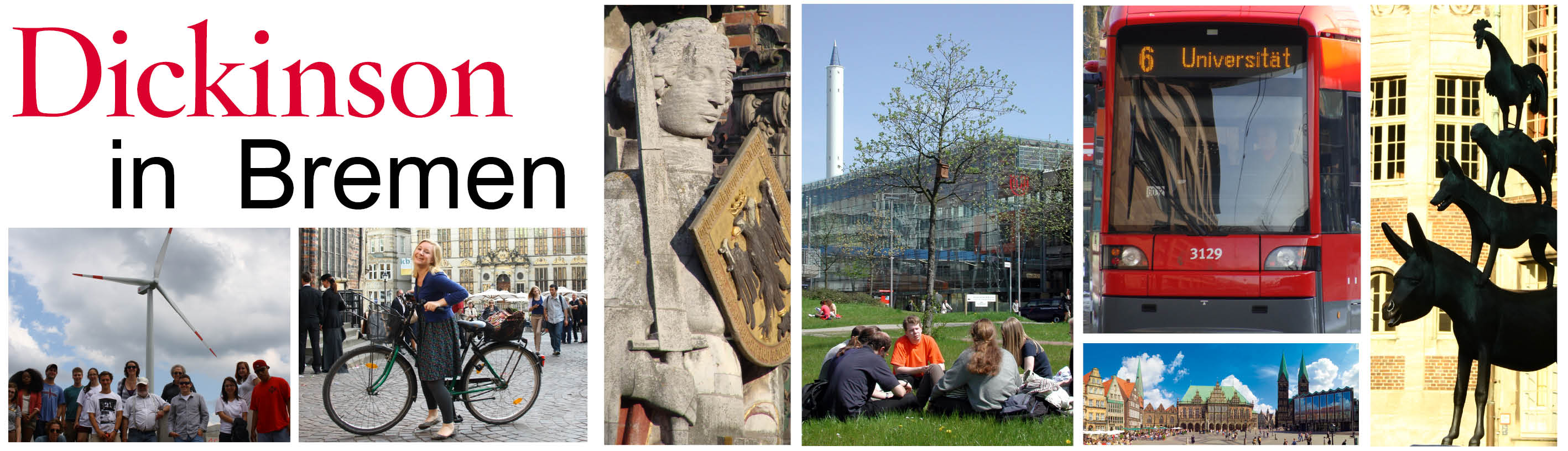
Typically, when folks hear “study abroad” they think about cheap flights to Italy or weekend excursions to Prague. In other words, “abroad” usually comes first and “study” second in the archetypal image of study abroad. But what comes third? While travel adventures and classwork certainly were part of my experience abroad, I want to share in this post about the less rumored but equally (if not more) meaningful elements that shaped my time in Bremen. These being community engagement and volunteering. In doing so, I also hope to convey precisely why these experiences are so meaningful during study abroad and how they contributed to my time in Germany.
To begin, it is important to mention that volunteering isn’t something that always “comes third” during study abroad. The Dickinson in Bremen program is unique in this way. Built into the Germany program is a student community engagement requirement. While the idea of seeking out and applying to volunteer with local Bremen organizations is – to be fully transparent – usually met with a certain degree of fear by the students, I’d like to share how my perspective changed through and after volunteering. I, too, had reservations in the beginning, but was able to outgrow these fears and build connections in Bremen through volunteer work.
How did I get engaged? Scrolling through the “Freiwilligen-Agentur” website (linked below), Bremen’s online platform where organizations seeking volunteers post opportunities, I stumbled upon a posting from Johanniterhaus. The nearby retirement home, located in Bremen Horn, was requesting cheery individuals to bring companionship to retirees. With many doubts about the aptness of my German skills but convinced that I could brighten the lives of a few retirees, I decided to reach out to the retirement home.
My doubts were assuaged by the immediate and enthusiastic welcome I received from staff at the home. At first, I was puzzled by just how welcoming the staff members were. My hand was shaken at least ten times and I received more smiles from strangers than I had in the previous five months of being in Germany. I couldn’t see what I had done to deserve such a warm reception on my very first orientation visit. The following week, upon meeting with a group of residents for the first time, however, I understood.
To those unfamiliar with retirement homes, everything works on practically the same schedule, day in day out. Despite attempts to liven up the routine with programming such as bingo, movie screenings, and the occasional concert, there is just no helping the fact that life in a home can be utterly dull; especially for residents with decreased mobility, which is to say most. Thus, an eager 20-year-old walking through the doors of an assisted living facility is essentially like the sun entering on two legs. Add to it that I was an exchange student from the United States and you can believe I was the most interesting subject that had stepped foot inside the home in a decade.
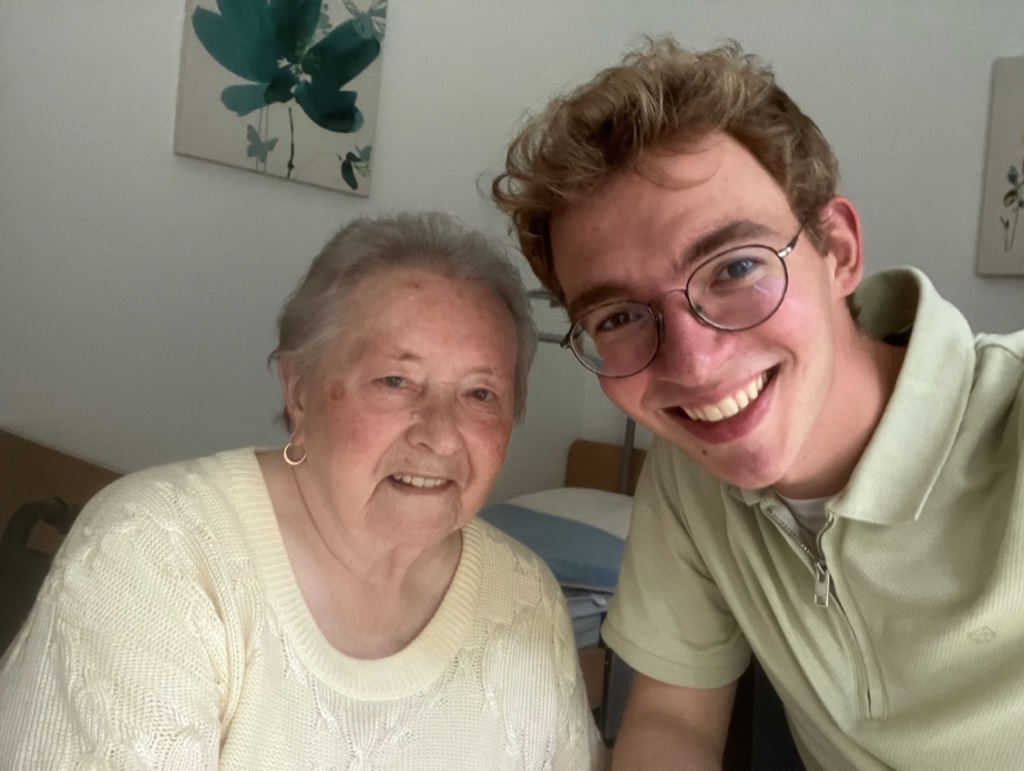
And so I began my weekly visits to the retirement home. On Mondays, I would visit two specific residents, with whom I chatted and exchanged stories with. One gentleman, whose name I will not share for privacy reasons, a Bremen native who was mentally very sharp, despite being unable to leave his bed. We enjoyed talking about German literature together and he would recite poems from the likes of Goethe and Schiller from memory. And then there was an elderly woman, Frau Krause, who had migrated to Bremen from Poland in the 1970s, with whom I spent the most time. Frau Krause had been a teacher for Polish, German, and Choir in a neighboring school district. She told me stories about learning German as an immigrant, how she managed to gain respect in the classroom as a young teacher with an accent, her home in Poland, and her grandchildren.
On Wednesdays, I assisted with the larger gardening group, which served as a good opportunity to bring the residents outdoors and get some fresh air. Both my individual visits and time spent gardening with the residents were great fun. I enjoyed bringing positive energy into the home and virtually everything I shared with the residents was met with wonder. I don’t know if I have ever encountered a more supportive bunch than the retirees who constantly expressed what a kind young man I was and that I was bound to accomplish great things.
Too soon, it was time for me to depart back to the United States. On my last day at the home, the staff and residents threw me a goodbye party, emphasizing that if I were to ever come back to Bremen, that I should not hesitate to stop by for a visit. I said goodbye with a heavy heart, knowing that, if I were return someday, many of the residents I had gotten to know over the past four months would no longer be there.
I had, however, learned a great deal from the residents and my visits to the retirement home. I learned, for instance, that there is a personal benefit to community engagement while abroad, beyond the benefits that one provides to the community. By getting involved in Bremen, I felt a sense of belonging and the responsibility for something beyond just myself that I had been lacking. Second, simply by conversating and chatting with the residents, my German speaking and comprehension skills improved. And lastly, through my many conversations with Frau Krause, I learned two things: that I shouldn’t fear making mistakes in the language and that immigrants like her and millions of others can really, truly overcome the challenges of living in a new place and succeed. Her example was the undeniable proof that I, too, could adapt and thrive.
Link to the Freiwilligen-Agentur Bremen: https://www.freiwilligen-agentur-bremen.de/